Address
SELLERSBURG, IN 47172


When evaluating sunroom vs home extension, homeowners are usually in a dilemma on which product gives them better value, functionality and performance in the long-term. The two solutions increase the living area, however, they vary drastically in terms of building, price, application, and general effects on the lifestyle. At Home Makeover, we explain these differences to the homeowners in Indiana to make them know which solution is right to invest in. You can be tempted to add a full structure or even think about sunrooms, but the decision should be in accordance with your budget, property plan and day to day living requirements.
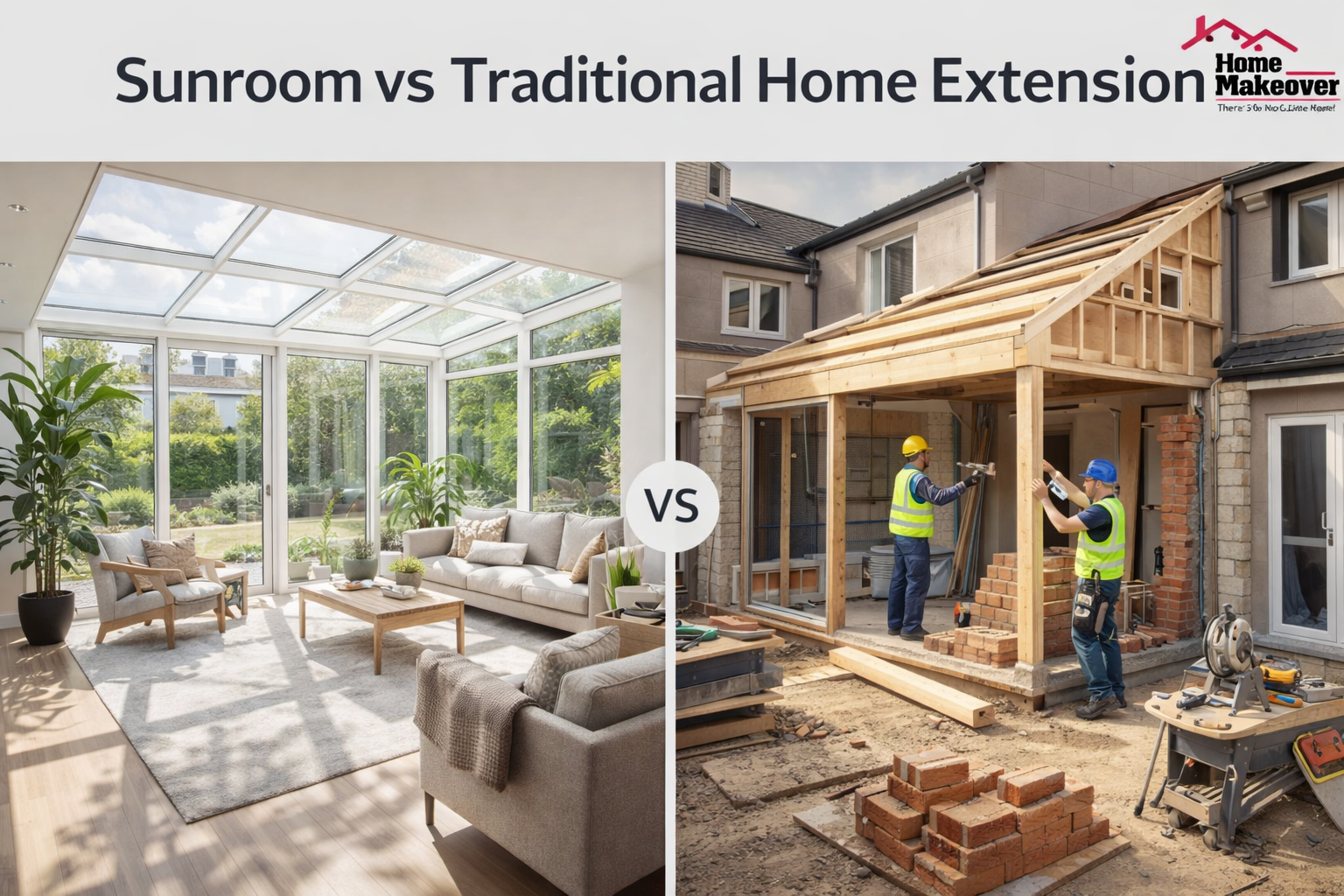
The best home extension comparison can start with the comprehension of the design and usage of each of the two options. Traditional extensions are permanent structural remodeling whereas sunrooms are generally lighter and glass-oriented extensions, which bridge outside and inside life. While both options increase usable space, sunroom addition benefits often appeal to homeowners seeking natural light and quicker installation, whereas full extensions offer complete integration with existing interiors and utilities.
Choosing between a sunroom and a traditional extension requires evaluating structural complexity, materials, and long-term usability.
The traditional methods of home extensions include the work of the foundations, load-bearing walls, the integration of the roofing, and complete utility supply. This forms a smooth indoor environment that acts as any other room, which has durability and increases value of the property in the long run.
Sunrooms are built with glass, aluminum framing, and simplified foundations that are used to create open, bright spaces. These structures are quicker to install and ideal for enjoying outdoor views while staying protected, showcasing strong benefits for lifestyle-focused homeowners.
Extensions typically include full HVAC, plumbing, and electrical systems, making them suitable for year-round use. Sunrooms may require additional insulation or climate solutions depending on Indiana’s seasonal temperature variations.
Traditional extensions often involve stricter building codes, permits, and inspections. Sunrooms, while still regulated, may have simplified approval processes depending on design and structural impact.
The appeal of sunrooms lies in its ability to create a transitional space that blends indoor comfort with outdoor aesthetics. It is particularly suitable for homeowners who prioritise natural light, relaxation, and visual openness. In Indiana, where seasonal changes are significant, sunrooms can be designed with insulated glass, UV protection, and ventilation systems to ensure comfort across different weather conditions. These enhancements further highlight the practical sunroom addition benefits for modern households.
When considering home expansion, the decision depends on how the additional space will be used daily. A traditional extension is ideal for functional rooms such as kitchens, bedrooms, or offices that require privacy and full utilities. On the other hand, a sunroom works best as a leisure space, dining area, or relaxation zone. Home Makeover helps Indiana homeowners align their decision with their lifestyle goals and property potential.
A detailed cost comparison reveals that traditional extensions generally require higher investment due to structural work, labour, materials, and compliance requirements. However, they also offer higher resale value and long-term usability. Sunrooms are typically more cost-effective, with faster installation timelines and lower labour costs. For homeowners seeking affordability combined with aesthetic enhancement, sunrooms often provide an attractive balance between cost and value.
Evaluating lifestyle benefits is essential when choosing between these two options. Traditional extensions provide privacy, insulation, and multi-purpose functionality, making them suitable for growing families and long-term use. Sunrooms, however, enhance well-being by increasing natural light exposure and creating a calming environment. They are perfect for entertaining, relaxation, or enjoying outdoor views without exposure to weather elements, reinforcing key sunroom addition benefits.
Both options require professional planning, quality materials, and advanced tools to ensure durability and compliance with local standards.
Concrete, timber framing, steel reinforcements, and roofing materials are used to create durable and permanent additions. These materials ensure long-term performance and structural integrity.
Double-glazed panels, UV-resistant coatings, and aluminum frames are commonly used in sunrooms. These materials enhance energy efficiency and comfort while maintaining aesthetic appeal.
Professional-grade tools ensure accurate measurements, secure fittings, and consistent construction quality. This reduces installation errors and improves overall durability.
Both sunrooms and extensions must meet Indiana building regulations, ensuring safe construction practices, proper insulation, and long-term reliability.
Understanding potential challenges helps homeowners make informed decisions and avoid costly mistakes.
Poor planning can result in underutilised or impractical spaces. Professional consultation ensures optimal layout and functionality for both sunrooms and extensions.
Indiana’s weather requires proper insulation, ventilation, and material selection. Failing to address these factors can reduce comfort and energy efficiency.
Unexpected costs and delays can occur without proper planning. Detailed project estimates help manage expectations and ensure smooth execution.
Low-quality materials may reduce durability and increase maintenance costs. Investing in premium materials ensures better performance and longevity.
It is not only a matter of design preference when it comes to the choice between sunroom and home extension as it requires knowledge of what to do technically, what to comply with, and how it should be done. Home Makeover delivers tailored solutions for Indiana homeowners by combining advanced construction techniques, high-quality materials, and a deep understanding of local building standards. Whether you are exploring sunroom addition benefits or you are opting to extend your house entirely, expert advice can only guarantee you the best value to your investment.
Transform your living space with expert guidance and precision-built solutions tailored to your needs. If you’re considering sunroom vs home extension, our team ensures quality, compliance, and lasting value. Get in touch with Home Makeover today to explore the best option for your Indiana home and bring your vision to life with confidence.