Address
SELLERSBURG, IN 47172


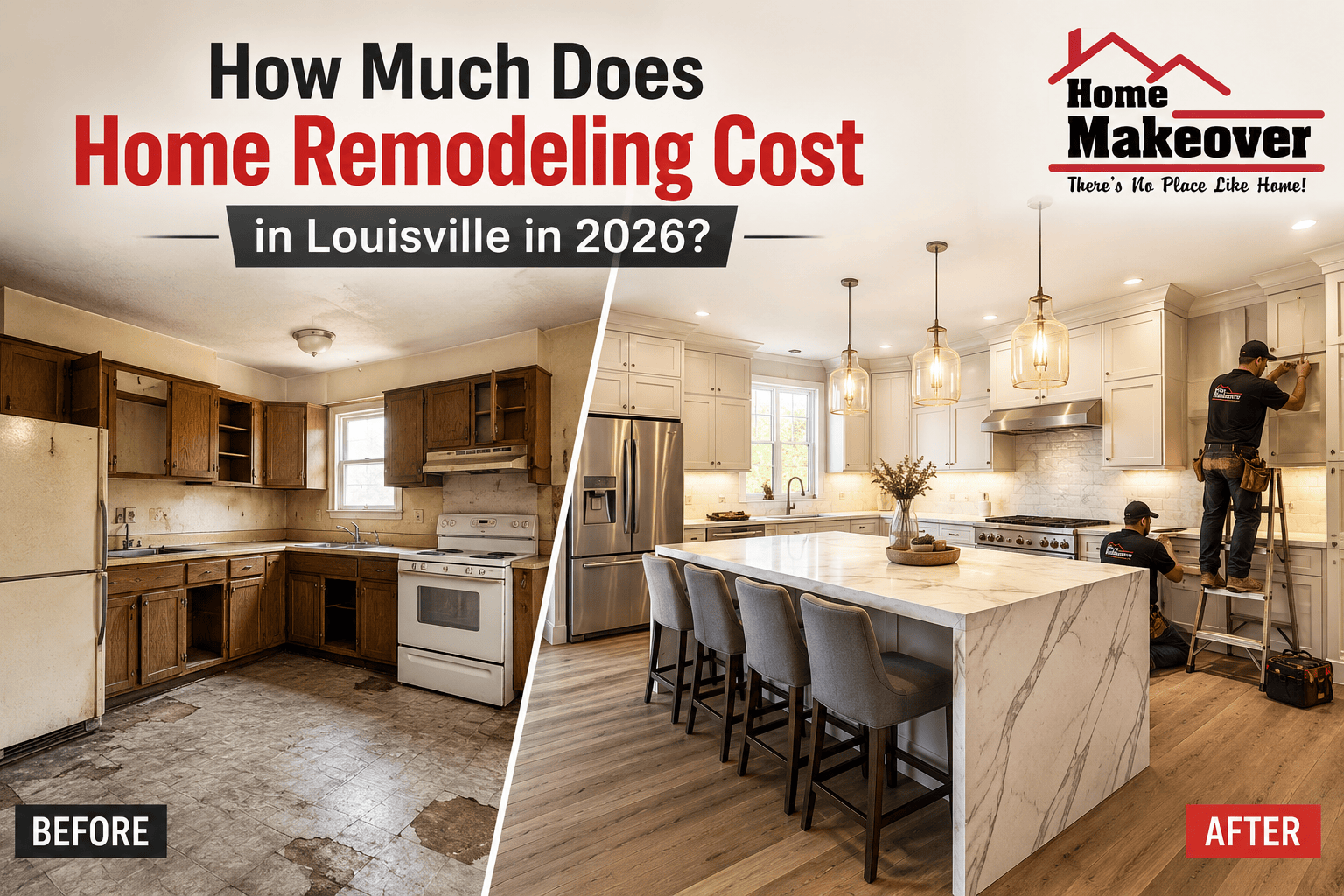
Planning a home remodel in 2026? One of the first questions homeowners ask is simple: how much will it actually cost? The reality is, home remodeling cost in Louisville can vary widely depending on the scope, materials, and planning approach.
Surprises often come from choices set months ahead of any building work starting. It is not mystery prices that trip people up – rather, it is how many moving parts hide inside each decision. What seems small at first can shift the whole budget sideways.
Nowadays, renovation costs respond strongly to inflation, access to materials, or workforce shortages. Comfort matters more to homeowners, so do practical layouts along with lower energy use – leading many to adjust their original project size.
This guide breaks down real-world costs, practical insights, and what to expect when budgeting for a remodel. With experience-driven input from professionals like Home Makeover, you’ll get a clearer picture of how to plan effectively and avoid costly surprises.
The home renovation cost in Louisville depends on several key factors, including project size, complexity, and material choices.
While every project is unique, typical ranges include:
Right now, what workers cost, what supplies run, and how much people want things shape these numbers in Louisville. Not every city moves like this one does – here it sticks close to those three pieces. Most people fixing up homes usually land right in the middle – tackling several updates at once, simply because it makes sense when you want results without paying crews twice.
One thing shaping remodel prices in 2026 is how smoothly materials move through supply lines – when delays hit, costs shift. Contractor schedules matter too, since their workload changes with seasonal demand peaks and dips.
Kitchen renovations are among the most popular—and expensive.
Typical costs:
Costs increase with custom cabinetry, premium appliances, and layout changes.
In real-world scenarios, shifting a sink slightly – or sticking in an island – ramps up expenses fast, thanks to hidden changes needed for water lines and wiring. Costs climb not just from materials, but from the work behind walls too.
Bathrooms offer strong return on investment but vary based on size and finishes.
Typical costs:
Upgrades such as walk-in showers, custom vanities, and high-end fixtures can quickly push costs higher, especially when waterproofing and tiling complexity increase.
A full remodel significantly increases the house remodel budget in Louisville.
Typical costs:
This includes structural changes, electrical upgrades, and complete interior transformations.
Home Makeover often recommends phased remodeling for homeowners looking to manage large-scale costs more efficiently while maintaining quality across all areas.
Proper renovation planning is one of the biggest cost influencers.
Poor planning often leads to:
Projects that begin with clear timelines, defined scopes, and realistic expectations tend to run smoother and avoid costly mid-project changes.
Material choices significantly impact renovation pricing.
Examples:
A small upgrade in materials can increase costs by 20–40%, especially when multiplied across an entire home.
Labor is a major component of any contractor quote.
Costs depend on:
Working with experienced professionals like Home Makeover ensures transparency in quotes and reduces unexpected expenses caused by incomplete or unclear pricing.
Altering room configurations, like shifting pipes or knocking down partitions, often leads to much higher expenses.
These modifications require:
From experience, structural changes are one of the most underestimated cost drivers in remodeling projects.
Looking at a remodel quote, most people pay attention to what they can see right away.
However, hidden expenses often include:
Midway through a project, pressure on finances usually appears when forecasts overlook hidden expenses. Factoring in known and unforeseen charges creates a more grounded projection.
Home Makeover emphasises detailed estimates to help clients avoid budget surprises during construction.
A person living in Louisville decided to update their kitchen. The project was expected to cost $50,000.
Initial plan included:
What changed:
Final cost: ~$75,000
Often, things unfold this way. Even minor adjustments mid-project tend to shift the total renovation expense – particularly if several enhancements arrive at once.
Avoid underestimating costs. Always include a contingency buffer of 10–20% to handle unexpected changes.
Focus on spaces that provide the most value, such as kitchens and bathrooms, before expanding to other areas.
Compare multiple quotes and ensure they include all cost components, timelines, and potential variations.
Midway design shifts pile on expenses, sometimes stalling timelines. A single tweak mid-build can ripple through schedules, slowing everything down.
When funds are tight, breaking the work into phases helps keep costs in check.
Home Makeover often guides homeowners through phased remodeling strategies to maintain financial flexibility and reduce stress.
Later on, money gets tight when plans stay vague because most people skip careful preparation at home.
Low-cost contractors may lead to higher long-term expenses due to poor workmanship and rework.
Skipping permits can result in legal issues, fines, and costly corrections in the future.
Custom-built layouts often raise expenses while making building more difficult, even when simpler options would work just fine.
From industry experience, professionals consistently recommend:
By following clear guidelines, Home Makeover keeps work on track without overspending, meeting what clients actually want. Efficiency grows when every choice supports both budget and vision – results stay grounded in real needs rather than assumptions.
In 2026, remodeling costs continue to be influenced by:
Homeowners are increasingly investing in:
Though first costs rise with these changes, benefits usually follow over time – lower expenses plus stronger resale appeal. A heavier price today can mean lighter bills tomorrow while boosting what the home is worth.
Understanding home remodeling cost in Louisville is not just about numbers, it’s about planning, decision-making, and execution. Starting strong often means planning deeply – this brings smoother outcomes, less stress, later gains. When redoing one space or reshaping every corner of a house, guidance from seasoned experts shifts the whole process. It changes how things unfold.
Reality takes shape when plans meet steady hands. Home Makeover walks beside those rebuilding their spaces, offering clear guidance shaped by real work done before. Ideas gain form without losing grip on schedule, expense, or craftsmanship. Each step forward stays grounded in what actually happens onsite, not promises made too soon.
The average cost ranges from $40,000 to $100,000 for mid-range projects, while larger renovations can exceed $200,000 depending on scope and materials.
Key factors include material selection, labor costs, project complexity, and structural changes. Planning also plays a major role in controlling expenses.
Quotes are accurate when detailed properly. However, unexpected issues or design changes can increase costs during the project.
Phased renovation is often more manageable financially and allows better control over budget and planning.
Focus on essential upgrades, avoid unnecessary customisation, and work with experienced contractors who provide transparent pricing and efficient execution.