Address
SELLERSBURG, IN 47172



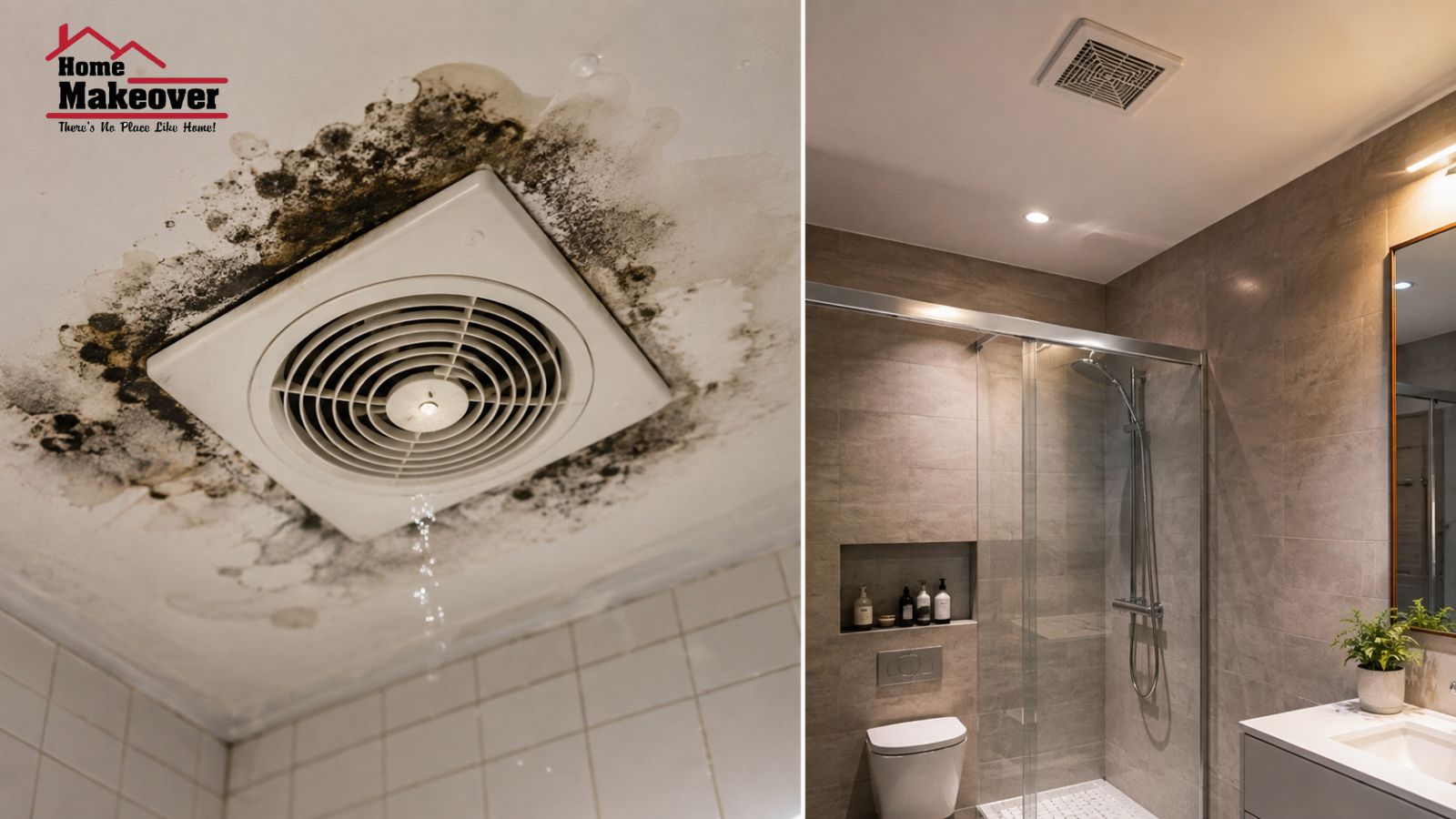
A bathroom can look spotless and still have a hidden moisture problem. Every hot shower sends warm, humid air into the room, and without effective bathroom ventilation, that moisture can settle on walls, ceilings, mirrors, grout and other surfaces. Over time, repeated exposure can contribute to mold growth, peeling paint, damaged finishes and even more expensive repairs.
The problem is rarely caused by one unusually steamy shower. More often, it comes from small ventilation decisions that are repeated every day. Understanding these Bathroom Ventilation Mistakes can help homeowners improve moisture control, protect finishes and maintain healthier indoor air quality.
Good ventilation is more than simply removing an unpleasant smell. Its primary job is to control humidity by moving moisture-laden air out of the bathroom and replacing it with drier air. When that process works properly, surfaces dry more quickly and the room is less likely to remain damp for long periods.
Bathrooms naturally produce significant moisture. A long shower, bath or even running hot water at the basin can raise humidity quickly. If humid air remains trapped inside the room, condensation can form on cooler surfaces. Repeated condensation creates conditions that can encourage mold and mildew while gradually affecting building materials and finishes.
Effective ventilation also supports indoor air quality. Bathrooms can accumulate odours, airborne particles and pollutants from cleaning products and personal-care products. An appropriately sized and correctly installed exhaust system can help remove these contaminants rather than allowing them to linger.
Many homeowners assume that installing an exhaust fan automatically solves every moisture problem. It does not. The fan needs to move enough air, operate for an appropriate period and discharge that air correctly.
A fan that is too small for the room may struggle to remove moisture efficiently. A fan with a clogged grille or dirty components may perform below its original capacity. Even a powerful fan can be ineffective if its ductwork is poorly installed, restricted or terminating somewhere it should not.
Ventilation should therefore be considered as a complete system rather than a single appliance.
Some ventilation problems are surprisingly easy to prevent. Others develop because homeowners do not realise that bathroom design, plumbing, waterproofing and ventilation all influence one another.
The cheapest fan is not necessarily the most economical choice over its lifetime. A bathroom needs an exhaust fan with suitable airflow capacity for the room and a design that suits how the space is used.
When selecting a fan, consider:
A very quiet fan that moves insufficient air may leave the room humid, while an unnecessarily powerful fan may create other issues if the overall ventilation design is poorly balanced.
Fan placement matters. Ideally, the exhaust point should effectively capture humid air before it spreads throughout the room. A fan placed far away from the shower may not remove steam as efficiently as one positioned to capture moisture near its source.
However, placement also needs to account for lighting, cabinetry, shower enclosures, structural components and electrical requirements. Simply choosing a convenient spot in the ceiling is not always the best approach.
During a renovation, this is one reason ventilation should be planned before walls and ceilings are finished.
A common misconception is that the bathroom only needs ventilation while someone is showering. In reality, moisture remains in the air and on surfaces after the water has stopped running.
A bathroom may still have elevated humidity for some time after a shower. Walls, tiles, glass and fixtures can remain wet, and towels may continue releasing moisture as they dry.
That is why allowing the exhaust fan to continue operating after bathing can be useful. The exact operating period depends on the room, fan and moisture conditions, but the underlying principle is simple: ventilation should continue long enough to help the room dry.
Switching the fan off immediately after stepping out of the shower is one of the simplest habits to change.
If the bathroom remains steamy, leaving the fan running for longer can help remove residual humidity. A timer switch or suitable humidity-sensing control can make this easier because the homeowner does not have to remember to switch the fan on and off manually.
The goal is not to run the fan unnecessarily all day. It is to give the ventilation system enough time to perform its intended job.
Mold does not appear simply because a bathroom has water in it. Bathrooms are designed to handle water. Problems occur when moisture is allowed to remain where it should not, particularly when surfaces repeatedly stay damp.
Consistently elevated humidity can create favourable conditions for mold growth. Mold may appear around ceiling corners, grout lines, silicone joints, window frames and other areas where moisture accumulates.
Good moisture control combines several measures:
A small amount of surface mildew can sometimes be addressed through appropriate cleaning. But recurring mold should prompt homeowners to investigate why the area remains damp.
For example, if black spotting repeatedly develops on the same ceiling area despite cleaning, the underlying problem could involve insufficient ventilation, condensation, a plumbing leak or another moisture source.
Simply repainting the affected area without identifying the cause may only hide the problem temporarily.
Long-term moisture exposure can affect materials throughout a bathroom. Paint may blister or peel, timber can deteriorate, metal components can corrode, and sealants can break down. Persistent moisture can also contribute to unpleasant odours and deterioration around fixtures.
This is where ventilation connects with the broader bathroom construction system.
During bathroom plumbing upgrades, for example, walls and ceilings may already be open, providing an opportunity to inspect concealed areas and consider ventilation improvements at the same time. Coordinating different elements of a renovation can be much easier than discovering a ventilation problem after everything has been finished.
Ventilation and waterproofing solve different problems, but both are important in a well-designed bathroom.
Waterproofing is intended to manage water exposure and prevent moisture from penetrating building elements where it should not. Ventilation, by contrast, manages humid air and condensation.
A properly waterproofed bathroom can still experience mold or condensation if humid air is not removed effectively. Likewise, excellent ventilation cannot compensate for defective waterproofing or a concealed plumbing leak.
This misunderstanding can lead to expensive decisions. Some homeowners assume that because their shower has been waterproofed, moisture cannot cause building problems.
Waterproofing does not prevent humid air from condensing on surfaces. It also does not stop moisture from accumulating on ceilings, mirrors, grout or other exposed areas.
A healthy bathroom needs both water management and air management.
The layout of a bathroom can influence how easily moisture is removed. Large shower enclosures, enclosed wet areas and poorly positioned openings can change airflow patterns.
A beautifully designed bathroom may still perform poorly if ventilation is treated as an afterthought.
For example, a frameless glass shower enclosure can create a visually open space while also concentrating steam within the enclosure during use. If the exhaust system does not effectively remove that humid air, condensation may remain longer than expected.
This is one reason ventilation should be considered during the design stage rather than added after the renovation is complete.
An exhaust fan needs replacement air to work effectively. If a bathroom is completely sealed when the door is closed, the fan may struggle to draw air through the room.
The solution does not necessarily mean leaving the door wide open. Depending on the design, an appropriate gap beneath the door or another planned air pathway can allow replacement air to enter while the exhaust system removes humid air.
The exact arrangement should suit the home’s ventilation strategy, but the principle is important: air needs a path into the room as well as a path out.
Even a well-designed ventilation system needs maintenance. Dust and debris can accumulate around the fan grille and internal components, reducing airflow.
Homeowners should periodically inspect and clean accessible fan components according to the manufacturer’s instructions. Unusual noise, reduced airflow or persistent condensation can also indicate that the system needs attention.
A useful practical check is to observe how the bathroom behaves after a normal shower. If the mirror, ceiling or walls remain heavily covered in condensation long after the shower ends, the ventilation system may not be performing adequately.
Not every moisture problem comes from shower steam. A slow leak behind a vanity, toilet, bath or wall can introduce moisture into areas that are difficult to see.
Signs worth investigating include:
Ventilation cannot solve a plumbing leak. If moisture continues entering the building from a hidden source, improving the exhaust fan alone will not address the underlying issue.
A bathroom remodel provides an excellent opportunity to reassess ventilation because walls, ceilings, lighting, electrical systems and plumbing may already be undergoing changes.
Before finalising the design, homeowners should consider:
Addressing these points before finishes are installed can help avoid opening the ceiling again later.
Small daily habits can support the performance of a properly designed system.
Switch the fan on when showering and allow it to continue operating afterwards for an appropriate period. A timer or humidity-sensing control can make this more convenient.
Dust buildup can restrict airflow. Clean accessible components according to the manufacturer’s instructions and arrange professional attention if the fan develops faults.
Occasional condensation is normal in many bathrooms. Persistent heavy condensation, damp patches or recurring mold deserves investigation rather than repeated cosmetic treatment.
A quick wipe of heavily wet shower surfaces can reduce the amount of moisture that must eventually evaporate into the room.
A small plumbing leak can become a major repair when moisture remains concealed for a long time. Do not assume every damp smell or mould patch is caused by poor ventilation.
One of the most useful lessons from bathroom projects is that moisture problems rarely have only one possible cause. When a homeowner reports persistent mould, the right response is not automatically to install a larger fan.
Start by asking where the moisture is coming from, where it is going and how long it remains.
Is the exhaust fan working? Is the airflow adequate? Is the ductwork properly configured? Is there enough replacement air? Are surfaces staying wet? Is there a plumbing leak? Is waterproofing performing correctly? Is condensation occurring because of temperature differences?
Answering these questions creates a much more reliable solution than treating the visible symptom.
Some warning signs should not be ignored, especially when they continue despite normal cleaning and ventilation habits.
Consider having the system assessed if:
Professional assessment can help distinguish between ventilation deficiencies, plumbing problems, waterproofing failures and surface-level maintenance issues.
The most expensive bathroom moisture problems often begin with something that seems minor: a fan that is too weak, poor airflow, inadequate maintenance, a fan switched off too quickly or a leak that went unnoticed. Avoiding these Bathroom Ventilation Mistakes means looking beyond the exhaust fan and considering the entire moisture-management system.
For homeowners planning a new bathroom or updating an existing one, ventilation should be considered alongside layout, plumbing, waterproofing and everyday use. Home Makeover Pro approaches bathroom improvements with this whole-room perspective, helping homeowners think through practical design and moisture-management considerations before problems become expensive.
If you are considering a renovation or concerned about recurring moisture, Home Makeover Pro can help you evaluate the practical aspects of your bathroom project. A thoughtful approach to ventilation, waterproofing and bathroom plumbing upgrades can make the finished space more comfortable, durable and easier to maintain for years to come.
There is no single time that works for every bathroom. Room size, fan capacity, shower duration, humidity and airflow all affect drying time. In general, the fan should continue operating after the shower rather than being switched off immediately. A timer or humidity-sensing control can help maintain ventilation without requiring homeowners to remember when to turn it off.
Yes, inadequate ventilation can contribute to persistent humidity and condensation, which may create favourable conditions for mold growth. However, recurring mold can also indicate plumbing leaks, defective waterproofing or other moisture sources. If mould repeatedly returns in the same area, it is better to investigate the moisture source rather than repeatedly cleaning and repainting the affected surface.
Not necessarily. The exhaust system should be appropriately matched to the bathroom and its ventilation requirements. A larger fan does not automatically correct poor ductwork, unsuitable placement or inadequate replacement airflow. Noise, energy use and installation conditions also matter. The objective is effective air movement and moisture removal, not simply choosing the largest available fan.
A renovation is often a sensible time to review ventilation because the ceiling, walls, electrical systems and other components may already be accessible. Planning ventilation alongside plumbing, waterproofing and bathroom layout can reduce the likelihood of having to modify finished areas later. It also gives homeowners an opportunity to address existing problems rather than carrying them into the new bathroom.
Ventilation manages humid air and helps control condensation, while waterproofing protects building elements from water penetration. They address different moisture risks and should not be treated as interchangeable. A bathroom can have effective waterproofing but still suffer from condensation if humid air is trapped. Similarly, good ventilation cannot correct defective waterproofing or a concealed plumbing leak.