Address
SELLERSBURG, IN 47172



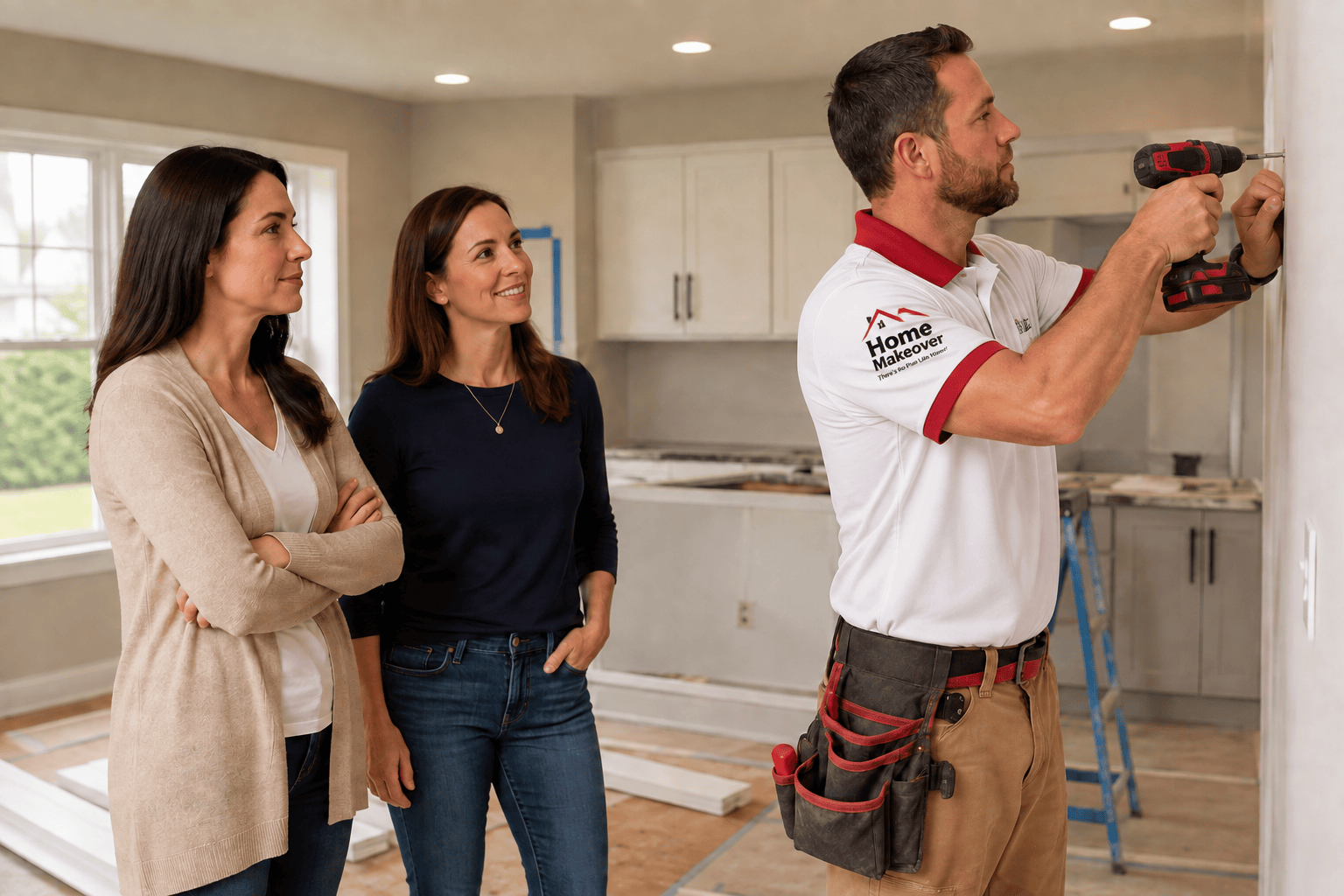
A remodeling project can look outstanding when the final coat of paint dries, the new flooring is installed, and the furniture is moved back into place. But how long will that renovation continue to look and perform that way?
That question matters just as much as the initial design.
For homeowners researching home improvement contractors in Louisville, the quality of construction behind the finished appearance can have a major influence on long-term durability. A beautiful kitchen, bathroom, basement, or living space can develop problems sooner than expected when surfaces are poorly prepared, materials are incorrectly installed, moisture is ignored, or finishing details are rushed.
The Best Home Improvement Contractors in Louisville understand that successful remodeling is not simply about making a home look newer. It is about creating improvements that can withstand everyday use, seasonal changes, moisture, movement, cleaning, and the general wear that comes with living in a home.
Professional craftsmanship connects all of these elements. From accurate measurements and substrate preparation to fastening, sealing, finish carpentry, and final inspection, seemingly small decisions can influence the performance of an entire remodeling project.
This article explores how craftsmanship affects project durability, what homeowners should look for when comparing contractors, and how better construction decisions can help a remodeling investment perform well for years.
Craftsmanship is often associated with visual details such as straight trim lines, clean joints, level cabinets, and smooth finishes. Those details are important, but craftsmanship goes considerably deeper.
In remodeling, craftsmanship means applying the right skills and construction techniques at every stage of the project.
A skilled contractor considers:
For example, installing new flooring is not simply a matter of laying boards or tiles across a room. The contractor must consider the condition and levelness of the subfloor, transitions between rooms, expansion or movement requirements, moisture exposure, and the manufacturer’s installation specifications.
If those factors are overlooked, even a high-quality flooring product can experience premature problems.
That is why quality workmanship should be considered part of the value of a remodeling project, rather than an optional finishing feature.
A remodeling project is made up of interconnected components. The performance of one component can affect another.
Consider a bathroom renovation.
The homeowner may select attractive tile, a modern vanity, premium fixtures, and a durable countertop. However, if waterproofing is inadequately addressed behind the finished surfaces, moisture can eventually cause deterioration that is hidden until significant damage has occurred.
The finished bathroom may have looked perfect at handover.
The problem was not the visible materials. It was the workmanship behind them.
The same principle applies to kitchens, basements, additions, flooring projects, doors, cabinetry, and finish carpentry.
Good workmanship helps reduce the likelihood of:
Durability does not mean that nothing will ever require maintenance. Every home experiences normal wear. The objective is to ensure that the remodeling work is properly constructed so ordinary use does not unnecessarily shorten its useful life.
One of the most important stages of remodeling happens before the new finishes are installed.
Homeowners understandably focus on what they can see. Contractors, however, need to evaluate what is underneath and behind those finishes.
Before beginning work, an experienced contractor may inspect:
Imagine installing expensive hardwood flooring over an uneven subfloor.
The hardwood itself may be excellent, but movement underneath it can eventually contribute to squeaking, gaps, uneven areas, or premature wear.
Correcting the underlying condition before installation can prevent those problems.
The same concept applies to cabinetry.
If the wall is significantly out of level and the installer simply forces cabinets into position, doors may become difficult to align and gaps may appear. Proper preparation and careful installation provide a more stable result.
An experienced remodeling contractor therefore treats preparation as part of the finished product.
Materials have different performance characteristics.
A contractor should not simply recommend a product because it looks attractive or carries a premium price tag. The material needs to be appropriate for its intended environment.
For example, a high-traffic entryway may require flooring that can handle frequent foot traffic and dirt. A bathroom requires materials and installation methods appropriate for regular moisture exposure. A basement may require special consideration of humidity and existing moisture conditions.
Material selection can involve evaluating:
Higher cost does not automatically equal better performance.
A premium material can still perform poorly when it is inappropriate for the application or incorrectly installed.
Likewise, a reasonably priced material can provide excellent service when it is properly selected, correctly installed, and appropriately maintained.
This is where professional expertise becomes useful. A knowledgeable contractor can explain the practical differences between options rather than simply recommending the most expensive product.
Installation is the point at which materials become part of the home.
Even excellent materials can fail prematurely if installation is careless.
Examples of installation problems include:
These issues may not immediately become obvious.
A homeowner could live with a newly remodeled room for months before noticing a cabinet shifting, a floor separating, or a trim joint opening.
That delayed visibility is why installation quality deserves as much attention as product selection.
Quality installation generally involves precision, patience, and verification.
Depending on the project, this may include:
The goal is not merely to make everything fit. The goal is to make it fit correctly and perform as intended.
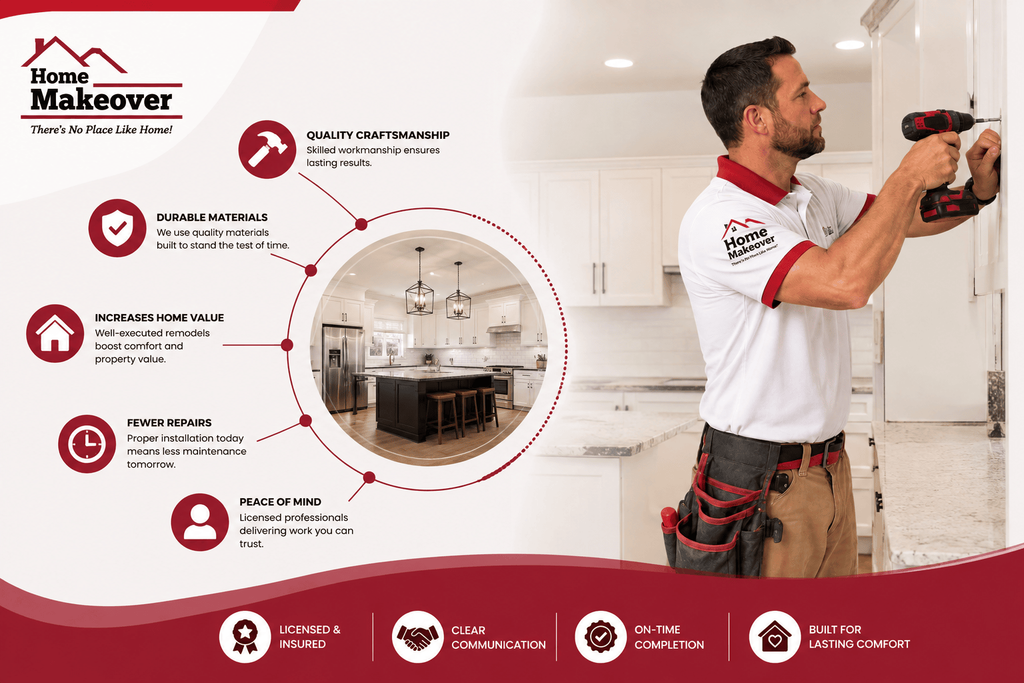
Finish carpentry is one of the clearest examples of visible craftsmanship.
Baseboards, door casings, crown molding, built-ins, shelving, window trim, and other detailed woodwork require accurate measurements and careful fitting.
Small inaccuracies become highly visible in finished carpentry.
Poor workmanship can produce:
Quality finish carpentry creates a cleaner appearance while also ensuring components are properly fitted and secured.
A small gap may seem insignificant when a project is first completed. However, repeated expansion and contraction, impact, cleaning, and everyday movement can make poorly fitted joints more noticeable over time.
A contractor who pays attention to these details during installation is less likely to rely on temporary cosmetic fixes later.
Professional remodeling should be performed according to applicable building requirements, manufacturer specifications, and accepted construction practices.
The exact requirements depend on the nature and location of the work.
Projects involving structural changes, electrical systems, plumbing, ventilation, additions, or other regulated work may involve specific permitting or inspection requirements.
Homeowners should ask contractors what requirements apply to their particular project.
Where licensing is required for a particular trade or type of work, homeowners should verify that the appropriately qualified licensed contractors or tradespeople are involved.
Licensing is not the only measure of quality, but it can be an important part of evaluating qualifications.
A trustworthy contractor should also be willing to discuss:
Transparency is an important part of trust.
Every remodeling project begins with an existing property, and that property has its own characteristics.
Louisville-area homes can encounter seasonal temperature changes, humidity, rainfall, and freezing conditions. Older homes may also contain construction methods or materials that differ considerably from newer properties.
These factors can affect remodeling decisions.
For example, wood components naturally respond to changes in moisture and temperature. Flooring, doors, trim, and cabinetry may experience movement as environmental conditions change.
Moisture management is also important in areas such as:
A contractor who evaluates the property rather than applying the same approach to every project can identify conditions that may influence long-term performance.
Consider two homeowners completing similar kitchen renovations.
Both purchase attractive cabinets and durable flooring.
The first homeowner chooses a contractor primarily because the estimate is substantially lower. During demolition, an uneven portion of the existing floor is discovered. Instead of properly correcting the condition, the contractor proceeds with installation.
The completed kitchen looks excellent.
Several years later, flooring movement becomes noticeable and some cabinet alignment needs attention.
The second homeowner uses a contractor who identifies the same condition and explains why it needs to be corrected before the new finishes are installed.
The second project requires additional preparation and costs more initially.
However, the additional work addresses an underlying issue rather than hiding it.
This is a useful lesson for anyone researching home improvement contractors in Louisville:
The cheapest visible solution is not always the least expensive solution over the life of the renovation.
Homeowners on the Indiana side of the Louisville metropolitan area may also compare home remodeling contractors in Southern Indiana when planning a renovation.
The same evaluation principles apply.
Rather than choosing solely on price, compare contractors according to:
A contractor should be able to explain why a particular construction approach is appropriate.
That explanation is often more valuable than a generic statement about being experienced.
Selecting a remodeling contractor is partly an exercise in risk management.
You are giving another party responsibility for modifying one of your largest assets.
Ask to see projects comparable to yours.
A contractor experienced in small cosmetic updates may have a different skill set from one regularly handling major renovations.
Look for evidence of experience with:
A written proposal should provide enough information to understand what you are actually purchasing.
Look for clarity regarding:
Two estimates should not be compared solely by their final totals if the scopes are different.
Remodeling often reveals conditions that were not visible before demolition.
A responsible contractor should have a process for handling unexpected findings.
Ask:
What happens if damaged framing, moisture, outdated wiring, or an unsuitable substrate is discovered?
The answer can tell you a great deal about how the contractor manages risk and communicates with homeowners.
A low bid can be useful, but it should not be the only selection criterion.
A lower estimate may reflect differences in materials, preparation, labor, supervision, or project scope.
Covering an existing problem with a new finish does not necessarily solve it.
If the substrate, structure, or moisture condition is unsuitable, the new finish may eventually show the consequences.
Many products have specific requirements for installation, adhesives, fasteners, spacing, substrate conditions, or environmental conditions.
Ignoring those instructions can compromise performance and may also affect applicable product warranties.
A remodel should look good, but visual appeal should not come at the expense of sound construction.
Beautiful finishes cannot compensate for poor underlying work.
Frequent changes during construction can create coordination problems, delays, and additional costs.
Finalizing important design and material decisions early can help the contractor maintain a controlled installation process.
Homeowners can make several decisions that support better long-term results.
Tell your contractor about your household’s actual routines.
For example, a kitchen used heavily every day may require different material and storage considerations than one used occasionally.
When the budget becomes tight, homeowners often reduce spending on structural or preparatory work because it cannot be seen.
That can be counterproductive.
Proper preparation, moisture management, substrate correction, and installation may contribute more to longevity than upgrading a decorative finish.
Do not be afraid to ask:
Why is this material appropriate for this room?
A good contractor should be able to explain the reasoning.
Before considering the project complete, inspect:
Raise concerns while the contractor is still actively working on the project.
Retain:
This information can become valuable years later.
An experienced final inspection should go beyond asking whether the room looks finished.
The contractor should evaluate whether the work functions properly.
Depending on the project, this may include checking:
The purpose of a final inspection is to identify small issues before they become homeowner maintenance problems.
Not every remodeling project requires the highest-priced option in every category.
A better strategy is to determine where durability matters most.
For a family bathroom, moisture management and proper installation may deserve priority.
For a heavily used kitchen, cabinet construction, hardware, countertop installation, and flooring durability may be more important.
For a basement, moisture-related considerations can become particularly significant.
The right allocation depends on the room, household, property, and expected length of ownership.
This is where a contractor’s practical experience can help homeowners distinguish between upgrades that provide meaningful long-term value and upgrades that primarily increase initial cost.
Professional craftsmanship provides value in several ways.
First, properly installed materials are more likely to perform according to their intended specifications.
Second, good workmanship can reduce premature repairs.
Third, careful finishing improves the appearance of the home over time.
Fourth, thoughtful construction can make future maintenance easier.
Finally, a well-executed remodeling project can provide homeowners with greater confidence that the money invested in the property was used effectively.
The objective is not to eliminate every possible future repair. Homes require maintenance regardless of construction quality.
The objective is to avoid preventable problems caused by shortcuts, poor preparation, unsuitable materials, or careless installation.
A remodeling project should not be judged only by how it looks when construction ends.
The more meaningful test is how that project performs after years of everyday use.
Quality craftsmanship helps create that longevity. Proper preparation establishes a reliable foundation. Suitable materials provide appropriate performance. Correct installation protects those materials. Careful finish carpentry improves both appearance and fit. Attention to applicable remodeling standards adds another layer of reliability.
For homeowners comparing the Best Home Improvement Contractors in Louisville, these are the factors worth investigating before signing an agreement.
Ask what is being done.
Ask why it is being done.
Ask how the work will perform over time.
And most importantly, ask what steps are being taken now to prevent avoidable problems later?
A successful remodeling project is more than a visual transformation. It is an investment in how a home functions, feels, and performs for years to come. Choosing contractors who place craftsmanship, preparation, installation quality, and project durability at the center of their work can make that investment considerably more valuable over its useful life.
There is rarely one single factor. Proper preparation, appropriate materials, skilled installation, moisture management, and quality control all contribute to durability. In practice, the weakest part of a remodeling system can determine how well the overall project performs.
Experienced home improvement contractors in Louisville are more likely to recognize common site conditions, understand how different materials interact, and anticipate construction challenges before they become expensive problems. Homeowners should still verify qualifications, insurance, references, project scope, and applicable licensing rather than relying on experience claims alone.
Installation quality can determine whether a material performs as intended. For example, premium flooring can develop problems when installed over an unsuitable substrate, and quality cabinetry can become difficult to operate when installed without proper alignment and support. Product quality and installation quality should therefore be evaluated together.
Ask:
Detailed answers can help you understand how carefully the contractor approaches the project.
The Best Home Improvement Contractors in Louisville are not necessarily the companies offering the lowest estimate or the most elaborate marketing. Strong contractors distinguish themselves through consistent workmanship, transparent communication, appropriate qualifications, careful preparation, accurate installation, and the ability to explain construction decisions clearly. Their focus extends beyond making a remodel look good on completion day to making sure it performs properly afterward.