Address
SELLERSBURG, IN 47172


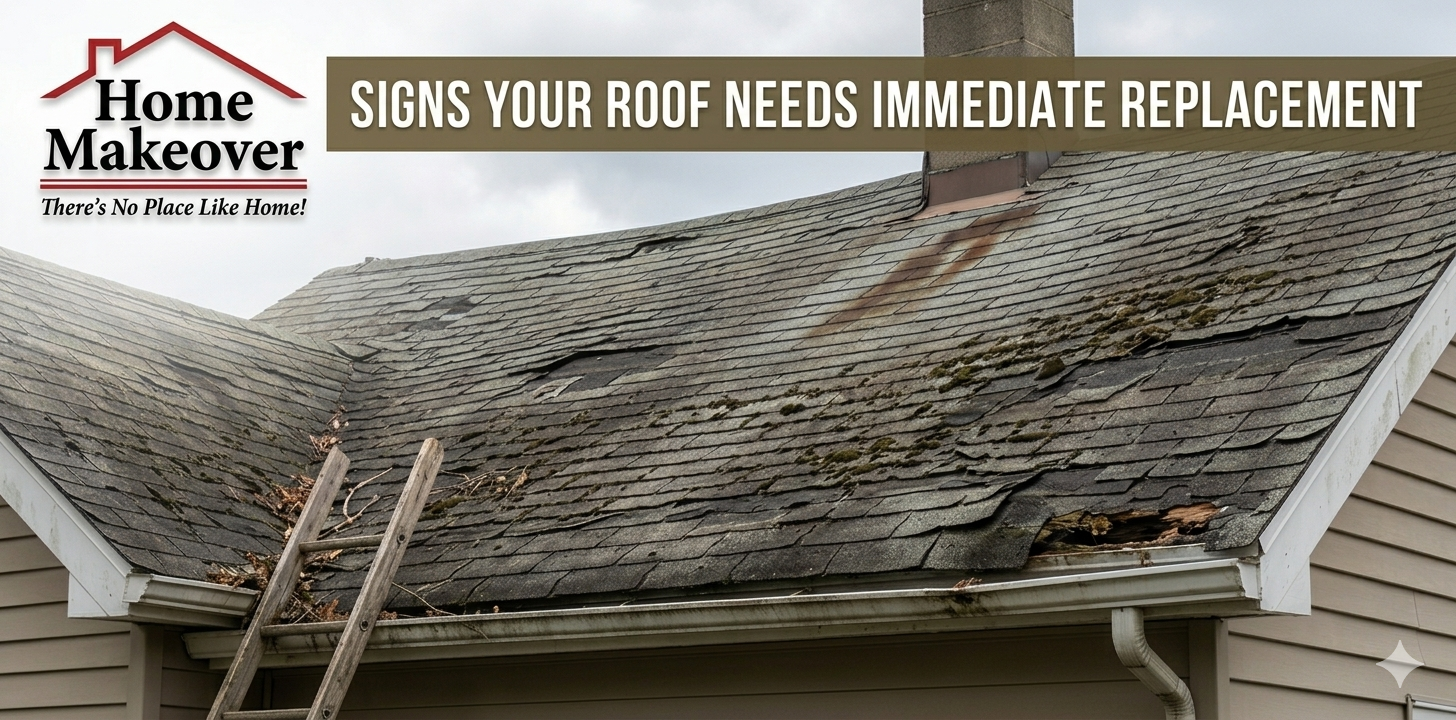
Your roof rarely fails overnight. In most cases, it gives clear warnings long before major damage happens. The problem is that many homeowners ignore these signals until water leaks, mold growth, or structural issues become impossible to avoid. Understanding the signs you need roof replacement can help you act early, protect your property, and avoid far more expensive repairs later.
At Home Makeover Pro, one of the most common situations we see is homeowners spending money on repeated repairs when the roof has already reached the end of its lifespan. A few missing shingles or a small leak may not seem urgent, but underlying damage can spread quickly beneath the surface.
This guide explains the most important roof damage warning signs, what causes them, and how to determine whether repairs are enough or if a full replacement is the smarter long-term investment. You’ll also find practical roof inspection tips, expert insights, and common mistakes homeowners should avoid.
A roof does much more than keep rain out. It protects insulation, ceilings, electrical systems, framing, and even indoor air quality. Once roofing materials begin to fail, moisture can enter hidden areas of the home and create damage that is difficult and expensive to repair.
Many homeowners delay action because the roof still “looks okay” from the ground. However, roofing systems often deteriorate internally before exterior problems become obvious.
Common causes of roof deterioration include:
Recognizing early roof damage warning signs gives homeowners more control over costs and prevents emergency situations.
One of the clearest signs you need roof replacement is simple roof aging. Every roofing material has a lifespan, and once that lifespan is exceeded, the system becomes increasingly unreliable.
Even if your roof appears intact, aging materials lose their waterproofing ability over time.
When shingles begin curling at the edges or buckling in the middle, it often means prolonged moisture exposure and heat damage have weakened them.
If you notice large amounts of granules in gutters or downspouts, your shingles are deteriorating. Granules protect against UV rays, and once they wear away, shingles age rapidly.
Uneven coloration may indicate sections of the roof are aging at different rates, especially if past repairs were done inconsistently.
A roof needing repeated patchwork is often no longer cost-effective to maintain.
Sagging may indicate trapped moisture or structural weakening underneath the roofing system.
Experienced contractors often recommend replacement instead of repair once a roof enters its final years because repairs become temporary solutions rather than long-term fixes.
A leaking roof is one of the most obvious and urgent signs of roofing failure. Unfortunately, leaks are often misunderstood. By the time water appears inside your home, the damage may already be extensive beneath the roofing layers.
Many homeowners only focus on visible water stains. However, roof leaks can also cause:
A homeowner noticed a small ceiling stain near a hallway light fixture and assumed it was minor condensation. Months later, a professional inspection revealed rotted roof decking across a large section of the home caused by slow water intrusion.
This is why early detection matters.
Here are several useful roof inspection tips homeowners can follow safely:
Even a small leak deserves professional evaluation because moisture spreads far beyond the visible entry point.
Missing shingles expose the underlayment and roof decking directly to rain, sunlight, and wind. Even one missing section can allow water penetration during storms.
Shingles may detach because of:
Temperature fluctuations can cause shingles to crack over time.
Shingles that no longer lie flat are vulnerable to wind uplift and water intrusion.
Visible dark patches often indicate missing protective granules.
Sections of uneven roofing may signal hidden structural deterioration.
If damage is isolated to one small area, repairs may work. However, widespread shingle failure across multiple sections usually indicates systemic roof deterioration.
Many older roofs also suffer from discontinued shingle styles, making matching repairs difficult and visually inconsistent.
Severe storm damage is one of the leading causes of sudden roof replacement needs.
Even if the roof appears intact immediately after a storm, hidden damage can weaken materials significantly.
Strong winds can loosen shingles, lift flashing, and expose vulnerable roof layers.
Hail impacts create bruising that weakens shingles and shortens roof lifespan.
Persistent moisture can infiltrate compromised areas.
Tree branches and debris can puncture roofing materials and decking.
After severe weather:
Storm damage often worsens if left untreated because compromised materials continue deteriorating with each rainfall.
Some roofing issues are cosmetic. Others indicate serious structural concerns requiring urgent action.
A sagging roof often points to:
This is one of the most serious signs you need roof replacement.
Roof decking weakens when exposed to long-term moisture. Soft or spongy areas may indicate internal decay.
If sunlight enters attic spaces through roof boards, water can enter as well.
Moss traps moisture against roofing materials and accelerates deterioration.
Persistent roof leaks can create unhealthy indoor environments and affect air quality.
Many homeowners never connect rising energy costs to roof deterioration.
Damaged roofing systems often allow:
If your HVAC system struggles to maintain indoor comfort, the roof may be contributing to the problem.
Older roofs with failing ventilation systems can dramatically reduce energy efficiency.
Understanding what not to do is just as important as recognizing roof damage warning signs.
Small leaks often become major structural problems.
Waiting too long allows hidden damage to spread.
Low-cost patch jobs may only delay necessary replacement.
Improper foot traffic can worsen damage and create safety hazards.
A roof can look acceptable from the street while serious deterioration exists underneath.
Routine inspections help homeowners identify roofing issues before emergencies develop.
Roofing professionals typically evaluate:
Routine inspections can extend roof lifespan and help homeowners budget for future replacement.
Many homeowners ask the same question:
“Can this roof still be repaired?”
The answer depends on several factors.
Repeated repairs on an aging roof often cost more over time than a properly installed replacement system.
A full replacement also improves:
Timing matters when planning roof replacement.
Emergency replacement may still be necessary after severe damage regardless of season.
Do not delay replacement if you notice:
Fast action can prevent secondary interior damage.
Your roof protects everything beneath it, yet many homeowners overlook serious warning signs until major problems develop. Recognizing the early signs you need roof replacement can help prevent structural damage, costly repairs, and ongoing water intrusion.
From roof aging and missing shingles to severe storm damage and a persistent leaking roof, every warning sign deserves careful attention. The longer roofing issues remain unresolved, the more expensive and disruptive they become.
Following practical roof inspection tips and scheduling professional evaluations regularly can help homeowners make informed decisions before emergencies occur.
At Home Makeover Pro, we always encourage homeowners to think long-term. A properly installed replacement roof not only protects your property but also improves comfort, efficiency, and overall peace of mind for years to come.
If your roof has leaks, missing shingles, sagging areas, or is over 20 years old, it may need replacement. Frequent repairs are also a major warning sign.
Small leaks can sometimes be repaired. But if leaks keep returning or water damage is widespread, replacing the roof is often the better long-term solution.
Common signs include cracked shingles, water stains on ceilings, granules in gutters, mold growth, and visible storm damage.
Homeowners should inspect their roof at least once a year and after major storms to catch problems early and avoid costly repairs.
Not always. Minor storm damage may only need repairs. However, severe wind, hail, or water damage can weaken the entire roof system and require replacement.