Address
SELLERSBURG, IN 47172



A bathroom remodel can look beautiful on the day it is completed, but the real test begins months and years later. Humidity, water exposure, daily cleaning, temperature changes, heavy use, and occasional plumbing problems can quickly expose weak material choices.
For homeowners researching Bathroom Remodeling Materials in Louisville, durability should be considered alongside appearance and cost. A material that looks impressive but requires constant maintenance may not be the best investment for a busy household. Likewise, choosing the cheapest surface today can create higher repair and replacement costs later.
Louisville and Southern Indiana homes also have to contend with seasonal changes in temperature and humidity. Bathrooms need materials that can tolerate moisture without becoming difficult to maintain.
The good news is that modern remodeling materials offer plenty of options for creating attractive, practical bathrooms. From porcelain tile and quartz vanities to waterproof flooring and moisture-resistant wall finishes, the right combination can improve both everyday usability and long-term performance.
This guide explains how to select bathroom remodeling materials for modern homes, what characteristics matter most, where homeowners commonly make mistakes, and how material choices should work together as part of a complete bathroom remodeling project.
Durability in a bathroom is not simply about whether a product is physically strong. A material also needs to perform well under repeated exposure to moisture, cleaning products, temperature fluctuations, and everyday use.
When evaluating Bathroom Materials, consider these factors:
For example, a beautiful natural stone may be extremely durable, but some varieties require sealing and more maintenance than porcelain. Similarly, a wood-look surface can provide warmth and character without introducing the same moisture concerns as untreated natural wood.
The best choice depends on how the bathroom will actually be used.
A guest bathroom that receives limited daily traffic can tolerate different maintenance requirements than a busy family bathroom used several times a day.
Bathroom remodeling in Louisville involves more than choosing attractive colors and finishes. Moisture management is one of the most important considerations.
Bathrooms regularly experience:
Poorly selected or improperly installed materials can allow moisture to reach areas where it does not belong. Over time, this can contribute to staining, deterioration, mold growth, or damage to surrounding construction.
This is why a durable bathroom should be viewed as a system rather than a collection of individual products.
The Tile, Vanity, Flooring, waterproofing layers, plumbing fixtures, ventilation, sealants, and wall finishes all need to work together.
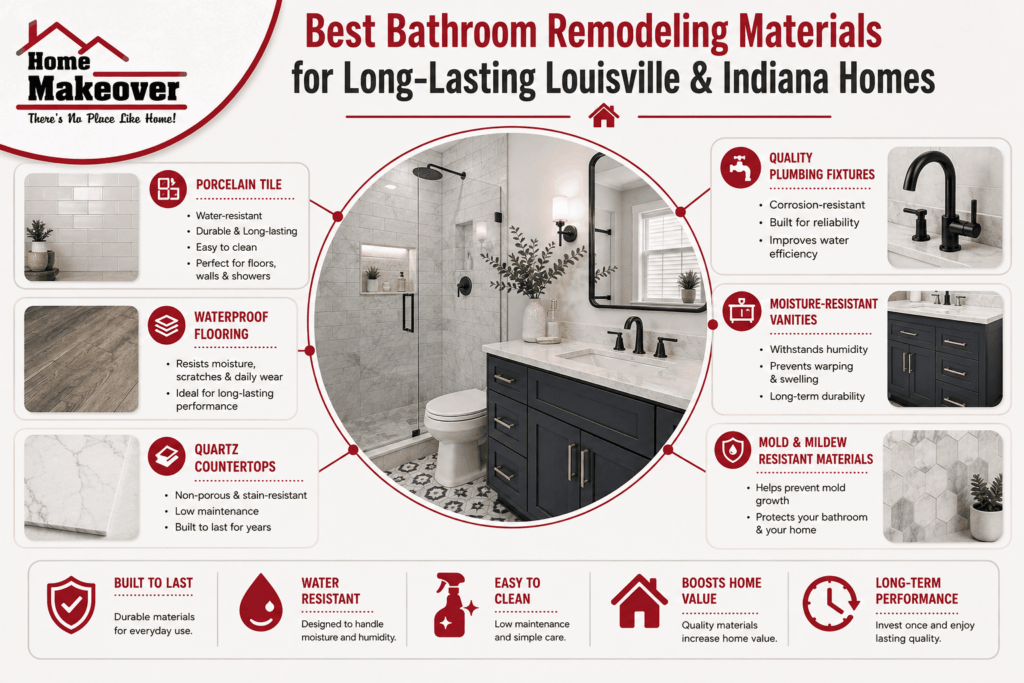
Porcelain tile is one of the most practical choices for bathrooms because it combines durability, water resistance, and design flexibility.
It can be used on:
Porcelain is available in designs that imitate natural stone, concrete, marble, and even wood. This makes it easier to achieve a high-end appearance without necessarily choosing a material with higher maintenance requirements.
A well-installed porcelain tile surface can handle everyday bathroom conditions effectively. It is also relatively easy to clean and available in many sizes and textures.
Large-format porcelain is particularly useful for contemporary bathrooms because fewer grout joints can create a cleaner visual appearance.
However, fewer grout lines do not eliminate the importance of installation. Proper substrate preparation, waterproofing, tile setting, movement accommodation, and grout selection remain critical.
A homeowner should not assume that buying premium tile automatically guarantees a durable bathroom. Installation quality matters just as much.
Bathroom flooring experiences a different type of wear than walls. It has to handle standing water, wet feet, cleaning, furniture loads, and repeated foot traffic.
Waterproof flooring can be a practical option when homeowners want durability without sacrificing design flexibility.
Depending on the bathroom design and installation requirements, suitable flooring options may include porcelain tile and other specifically manufactured waterproof or water-resistant flooring systems.
When comparing flooring materials, evaluate:
A polished surface may look luxurious but can become less practical when wet. For bathrooms used by children, older adults, or anyone with mobility concerns, traction should be part of the material-selection conversation.
The vanity is one of the most frequently used elements in a bathroom. It has to withstand water, toiletries, cosmetics, cleaning products, and regular contact with hands and objects.
A quartz vanity can be an excellent choice for homeowners looking for a durable, contemporary surface with relatively straightforward maintenance.
Quartz surfaces are available in many colors and patterns, including designs inspired by marble and natural stone.
Quartz is especially appealing for:
One advantage is consistency. Manufactured quartz can provide a more uniform appearance than many natural stones.
That does not mean quartz is indestructible. Homeowners should still follow the manufacturer’s care instructions and avoid treating the surface as completely maintenance-free.
Paint is often treated as an aesthetic decision, but bathroom wall coatings also need to cope with humidity.
Moisture resistant paint can be appropriate for areas exposed to elevated bathroom humidity, particularly when paired with effective ventilation.
The paint itself should not be considered a substitute for waterproofing.
For example, a shower wall requires an appropriate waterproofing system behind the finished surface. Simply applying moisture-resistant paint to a wall does not make that wall suitable for continuous water exposure.
Consider moisture exposure when deciding where to use painted surfaces.
Areas outside the direct shower zone may be suitable for appropriately selected bathroom paint, while continuously wet areas generally require a properly designed and installed waterproof surface system.
Good ventilation also matters. A bathroom fan that effectively removes humid air can help reduce condensation and moisture accumulation.
Tile often receives most of the attention during remodeling, while grout is treated as an afterthought.
That can be a mistake.
Grout contributes to the appearance, maintenance, and overall performance of a tiled surface. The appropriate grout type depends on the application, joint width, exposure, and manufacturer’s recommendations.
For frequently wet areas, grout selection should be considered alongside the entire tile installation rather than chosen solely by color.
Homeowners should think about:
Light grout can create a bright, clean appearance, but it may show dirt more readily in high-traffic areas.
Darker grout can be more forgiving visually, although it still requires appropriate cleaning and maintenance.
The key is choosing a grout system that suits both the material and the bathroom’s actual usage.
A successful bathroom remodel is not necessarily the one with the most expensive finishes. It is the one where the selected finishes make sense for the household.
Durable finishes should be selected according to where and how they will be used.
For example, a homeowner with children may prioritize easy-clean flooring and stain-resistant vanity surfaces. Someone remodeling a primary bathroom may place greater emphasis on luxurious visual details and spa-like finishes.
Ask practical questions before selecting finishes:
These answers can significantly change the ideal material combination.
A remodeling project is often the right opportunity to evaluate hidden plumbing conditions.
Bathroom plumbing upgrades may involve replacing aging supply lines, updating drainage components, improving fixture connections, or addressing plumbing layouts that no longer meet the household’s needs.
However, plumbing work and finish selection should be coordinated.
For example, if a shower layout is being changed, the plumbing and waterproofing details need to be planned before the final tile is installed.
A new faucet can improve appearance, but it does not necessarily address an aging plumbing system.
During a renovation, professionals may assess:
Addressing appropriate plumbing concerns before closing walls or installing finished surfaces can prevent unnecessary disruption later.
One of the most important lessons in bathroom remodeling is that the visible finish is only part of the system.
A premium tile installation can still fail if water gets behind the finished surface.
Proper Waterproofing should be designed around the wet area and installed according to the manufacturer’s system requirements and applicable building practices.
This may include appropriate waterproof membranes, seams, corners, penetrations, transitions, and drainage details.
Imagine a homeowner chooses expensive marble-look tile for a new shower.
The tile itself may be excellent. But if the shower’s waterproofing system is poorly installed around corners or plumbing penetrations, water can reach areas behind the tile.
The problem may not become obvious immediately.
Months later, signs such as staining, persistent dampness, loose tile, or musty odors may appear.
The lesson is simple: beautiful tile cannot compensate for poor waterproofing.
Natural stone remains popular for luxury bathrooms because each piece can have unique patterns and variations.
Materials such as marble, granite, and other stones can create an impressive appearance, but homeowners should understand the maintenance requirements before choosing them.
Manufactured surfaces can provide more predictable patterns and may offer simpler maintenance.
Neither category is automatically better.
The right decision depends on:
For homeowners planning a luxury bathroom renovation, it can be worthwhile to combine premium-looking materials with practical surfaces in high-use areas.
For example, a statement stone feature may provide visual impact while porcelain is used in areas exposed to more demanding daily conditions.
Choosing bathroom remodeling materials for modern homes should start with performance rather than appearance.
A practical selection process can look like this:
Separate the bathroom into wet zones and relatively dry zones.
A shower interior has dramatically different requirements from a wall outside the shower.
Be honest about how much upkeep you are prepared to perform.
If you want a bathroom that is easy to maintain, prioritize surfaces with appropriate stain resistance, simple cleaning requirements, and fewer difficult-to-maintain details.
Do not evaluate tile, flooring, or countertops in isolation.
Ask how each product interacts with:
A material that costs slightly more but lasts significantly longer may provide better value.
However, higher price does not automatically mean higher performance.
Always compare the material’s actual characteristics rather than relying on marketing language.
The best bathrooms usually have a controlled material palette.
For example, homeowners might combine:
This creates visual consistency without making every surface identical.
A material may look fantastic in a showroom but perform poorly for your particular bathroom.
Always consider the environment in which it will be installed.
These terms should not be treated as interchangeable.
A product’s actual specifications and intended application matter.
Tile is not maintenance-free simply because the tile itself is durable.
Grout joints still need appropriate care.
Highly polished surfaces can create practical problems when wet.
Floor texture and slip considerations deserve attention during material selection.
Even high-quality materials perform better when the bathroom has effective humidity control.
A bathroom with poor ventilation can experience persistent condensation and moisture problems.
It can be tempting to spend heavily on tile, lighting, and fixtures while overlooking the systems beneath them.
A durable remodel needs adequate attention to waterproofing, substrate preparation, plumbing, ventilation, and installation quality.
Experienced remodeling decisions often come down to details that are not immediately visible.
Prioritize wet-area preparation. The shower and tub area deserve careful planning because they receive the greatest amount of water exposure.
Use materials according to their intended application. Do not assume that a product suitable for a wall is automatically appropriate for flooring or a continuously wet area.
Buy enough material. Keeping spare tile from the original installation can make future repairs much easier, especially if the product is discontinued.
Coordinate plumbing before finishing surfaces. Fixture and plumbing changes should be addressed before final wall and floor finishes are installed.
Do not ignore transitions. Doorways, shower thresholds, floor-to-wall connections, and plumbing penetrations all deserve careful attention.
Plan for cleaning. A bathroom that looks beautiful but has difficult-to-clean corners and excessive maintenance requirements may become frustrating over time.
Balance luxury with practicality. A high-end bathroom does not need every surface to be delicate or maintenance-heavy.
There is no single combination that works for every home.
However, a practical modern bathroom might combine durable porcelain tile in wet areas, an appropriately selected waterproof flooring system, a quartz vanity surface, moisture-appropriate paint outside direct wet zones, and a properly designed waterproofing system.
A more luxurious design could introduce natural stone or statement surfaces while retaining durable materials in areas that receive heavy daily use.
The important principle is to assign each material a purpose.
A beautiful bathroom should not only photograph well. It should withstand the way your household actually lives.
Choosing Bathroom Remodeling Materials in Louisville is ultimately a decision about performance, maintenance, design, and long-term value.
The best bathroom materials are not necessarily the most expensive. They are the materials that are appropriate for the environment, correctly installed, and suited to the people using the space.
When selecting bathroom remodeling materials for modern homes, pay particular attention to moisture exposure, flooring safety, vanity durability, grout maintenance, waterproofing, ventilation, and the condition of existing plumbing.
Whether you are planning a practical family bathroom or a luxury bathroom renovation, thoughtful material selection can make the finished space easier to maintain and more enjoyable to use for years.
A successful remodeling project begins with asking not just, “What looks good?” but also, “What will continue to perform well in this bathroom?”
Porcelain tile, appropriately rated waterproof flooring, quartz vanity surfaces, moisture-appropriate wall finishes, and properly installed waterproofing systems are among the practical options to consider. The best combination depends on the bathroom’s moisture exposure, household usage, maintenance expectations, and overall design.
For wet areas, performance and installation should take priority over appearance alone. A durable material can still perform poorly if it is installed over an unsuitable substrate or without the required waterproofing system.
Porcelain is a strong choice because it offers durability, water resistance, design versatility, and relatively straightforward maintenance. It is available in numerous patterns and can imitate materials such as marble, concrete, and wood.
However, “better” depends on the application. Natural stone may be appropriate for homeowners prioritizing a specific luxury aesthetic, while other tile products may make sense for different locations and budgets. The material’s specifications and installation requirements should always be considered.
Quartz can be an excellent option for a bathroom vanity because it provides a durable, consistent surface and comes in many contemporary designs. It is particularly attractive for homeowners who want a sophisticated appearance without the maintenance associated with some natural stones.
Even so, quartz should still be cared for according to the manufacturer’s recommendations. Avoid assuming that any countertop material is completely resistant to damage from excessive heat, harsh chemicals, impacts, or improper cleaning.
Proper waterproofing is fundamental. Expensive tile cannot prevent moisture problems if the underlying wet-area system has been incorrectly designed or installed.
A bathroom should be treated as a complete assembly. Waterproofing, substrate preparation, drainage, tile installation, grout, sealants, and transitions all contribute to long-term performance.
This is particularly important around showers, tubs, corners, plumbing penetrations, and other areas where water can reach vulnerable parts of the structure.
Start by choosing materials appropriate for their intended application and ensuring they are installed correctly. Regular cleaning, prompt attention to leaks, adequate bathroom ventilation, and following manufacturer maintenance recommendations can also extend the useful life of many finishes.
It is equally important to address plumbing or waterproofing concerns early. A small leak that is ignored can cause significantly more damage than the original plumbing problem. A durable bathroom is therefore the result of good material selection combined with proper installation and ongoing maintenance.