Address
SELLERSBURG, IN 47172


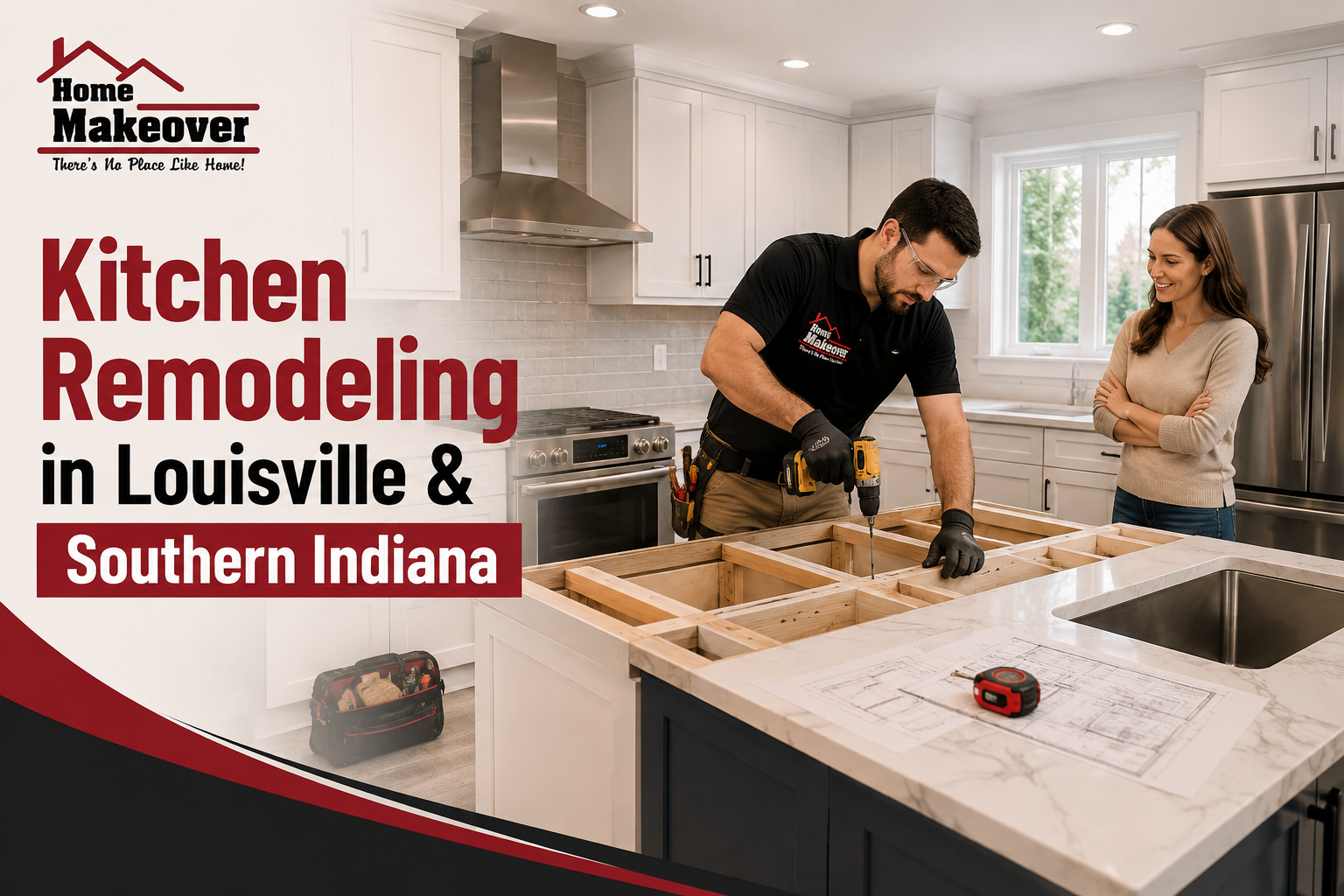
A kitchen remodel is no longer simply about replacing outdated cabinets or installing a new countertop. For homeowners across Louisville and Southern Indiana, the kitchen has become one of the most important spaces for cooking, entertaining, working, gathering, and everyday family life.
That shift is influencing how homeowners approach kitchen remodeling in Louisville & Southern Indiana in 2026. Instead of following short-lived design fads, many homeowners are prioritizing layouts that improve functionality, materials that can handle daily use, energy-efficient features, and designs that feel personal without becoming difficult to maintain.
From warm modern kitchens and mixed materials to better storage, natural lighting, smart appliances, and sustainable kitchen choices, today’s remodeling trends combine appearance with practical performance.
If you are considering a remodel this year, understanding these trends can help you separate genuinely useful improvements from features that may look impressive but add little value to your daily routine.
Kitchen design has changed considerably over the past few years. Homeowners are paying closer attention to how they actually use their kitchens rather than simply copying a showroom display.
A family that cooks every evening may need significantly more countertop workspace and storage than a household that primarily uses the kitchen for quick meals. Someone who entertains frequently may prioritize a large island and seating, while another homeowner may prefer a compact, efficient work triangle.
Local housing characteristics also matter. Older homes in Louisville may have enclosed kitchens, limited storage, aging electrical systems, or awkward transitions between the kitchen and dining areas. Homes throughout Southern Indiana can present different challenges depending on their age, floor plan, and construction style.
That is why successful kitchen remodeling Indiana projects increasingly begin with evaluating the existing space before choosing finishes.
The goal is not simply to make a kitchen look newer. It is to create a space that works better for the people living in the home.
Minimalist white kitchens have remained popular for years, but 2026 design is moving toward a warmer interpretation of contemporary style.
Modern kitchens are increasingly combining clean lines with natural-looking materials, softer colors, wood tones, textured surfaces, and comfortable seating areas.
Instead of creating an environment that feels overly polished or sterile, homeowners are looking for kitchens that feel inviting.
Popular combinations include:
For example, a homeowner with an older Louisville kitchen may not need an entirely white space to achieve a modern appearance. Replacing dated cabinets with warm neutral cabinetry, adding a wood island, improving lighting, and simplifying the backsplash can create a contemporary look without making the room feel cold.
This approach is especially useful for homeowners who want their renovation to remain attractive several years from now.
One of the most noticeable 2026 Kitchen Trends is the thoughtful use of mixed materials.
Using one finish throughout an entire kitchen can make the room feel visually flat. Combining two or three complementary materials can create depth and define different areas of the space.
For example, a kitchen might combine:
The important word is “thoughtful.” Mixed materials should create visual balance rather than competition.
A common mistake is selecting too many statement finishes at once. If the countertop has a dramatic pattern, the backsplash may work better as a quieter surface. Likewise, if the cabinetry is heavily textured, simpler hardware and lighting can prevent the space from feeling visually crowded.
For homeowners planning kitchen remodeling in Louisville & Southern Indiana, material samples should be viewed together under the actual lighting conditions of the kitchen whenever possible. A finish that looks perfect under a showroom’s bright lighting may appear significantly different in a home.
Lighting can completely change the appearance and usability of a kitchen.
In 2026, homeowners are giving more attention to natural lighting before making decorative decisions. A kitchen with excellent cabinetry and countertops can still feel uncomfortable if work areas are poorly illuminated.
Natural lighting may be improved through:
However, natural light should not be treated as the only lighting solution.
A well-designed kitchen typically needs multiple layers of artificial lighting, including ambient, task, and accent lighting.
Under-cabinet lighting is particularly valuable because it illuminates the actual work surface without forcing homeowners to rely on overhead fixtures.
For example, someone preparing food at night may discover that a beautifully renovated kitchen still has shadows across the countertop. Adding properly positioned task lighting can make a bigger practical difference than upgrading a decorative pendant.
Smart appliances are another major trend, but homeowners are becoming more selective about which technology actually deserves a place in the kitchen.
Connected refrigerators, ovens, dishwashers, and ventilation systems can offer useful features such as remote monitoring, cooking notifications, energy tracking, customized settings, and maintenance alerts.
However, technology should solve a problem rather than exist simply because it is new.
Before choosing smart appliances, consider:
For a busy household, a smart oven that provides cooking notifications may be genuinely useful. For another homeowner, the same feature may never be used.
The best approach is to prioritize functionality first and technology second.
Open shelving continues to appear in contemporary kitchen designs, but homeowners are becoming more realistic about its maintenance requirements.
Open shelving can make a kitchen feel more spacious and provide a convenient place for frequently used dishes, cookware, or decorative pieces.
It can work particularly well when used in a limited area rather than replacing every upper cabinet.
For example, a kitchen might retain closed cabinets around the primary preparation area while incorporating one or two open shelves near a coffee station or breakfast area.
This provides the visual openness homeowners want without creating excessive dusting and organizing work.
Before choosing open shelving, ask whether the items stored there will remain reasonably organized. If the answer is no, traditional cabinetry may provide a better long-term solution.
Sustainability is becoming a practical consideration in kitchen remodeling rather than simply a design buzzword.
A sustainable kitchen can involve several decisions made throughout the remodeling process.
Homeowners may consider:
Durability is particularly important.
A cheaper material that needs replacement after several years may not be the most economical or environmentally responsible choice. Paying more for a well-made cabinet, durable countertop, or reliable appliance can sometimes reduce long-term replacement costs.
When planning a luxury kitchen renovation, sustainability does not have to conflict with premium design. High-quality materials, efficient appliances, thoughtful storage, and timeless finishes can work together to create a kitchen that feels upscale while remaining practical.
Kitchen islands remain a major feature in Louisville and Southern Indiana remodeling projects, but their role is changing.
The island is no longer simply a large countertop with seating. Homeowners are using islands as multifunctional workstations.
Depending on the available space, an island may provide:
However, bigger is not always better.
An oversized island can restrict movement and create an uncomfortable work area. Adequate clearance around the island is essential, especially when multiple people use the kitchen simultaneously.
A practical island should fit the room rather than forcing the room to accommodate it.
Many homeowners initially focus on cabinet color or countertop material, but storage often has a greater impact on daily satisfaction.
A kitchen may appear spacious while still having poor storage because cabinets are difficult to access or contain too much unused vertical space.
Modern remodeling can improve this through:
Consider a homeowner who keeps heavy cookware in a low cabinet. A deep pull-out drawer can make those items much easier to access than a traditional cabinet shelf.
These small changes may not be obvious in photographs, but they can significantly improve everyday kitchen use.
If you are collecting kitchen renovation ideas Louisville homeowners can realistically use, start with the problems you experience every day.
Ask yourself:
This process helps turn inspiration into a practical remodeling plan.
For example, replacing a countertop may improve appearance, but relocating an inefficient work zone could improve the entire cooking experience.
A successful remodel should respect the home’s existing character while improving functionality.
Some older Louisville homes have architectural details worth preserving, such as original trim, distinctive windows, hardwood flooring, or traditional proportions.
Rather than removing every older element, homeowners can combine existing character with updated features.
A traditional home might benefit from:
A more contemporary home may work better with:
The objective is not to force every property into the same design trend.
A beautiful kitchen can still be frustrating if the refrigerator, sink, cooktop, and preparation areas are poorly positioned.
Start with workflow before selecting finishes.
Trends are useful for inspiration, but a kitchen renovation is a significant investment.
Avoid building the entire design around a feature that may feel dated quickly.
A single ceiling fixture rarely provides enough illumination for food preparation, cleaning, and entertaining.
Plan lighting early rather than treating it as a finishing detail.
Homeowners sometimes sacrifice cabinet storage for decorative elements and later regret it.
Storage should be planned around actual possessions and habits.
A surface may look beautiful but require more maintenance than you are willing to provide.
Think about cooking frequency, children, pets, entertaining, and cleaning habits before finalizing materials.
Large islands can be impressive, but they can also make circulation difficult.
The island should support the kitchen layout rather than dominate it.
Appliance dimensions, electrical requirements, ventilation, plumbing, and cabinet layouts all need to work together.
Appliances should be selected early enough to influence the overall design.
Experienced remodeling decisions usually come down to balancing design, budget, durability, and everyday usability.
Separate your project into three categories:
Must-have: Problems that need to be solved.
Nice-to-have: Features that would improve convenience.
Decorative: Changes that primarily affect appearance.
This makes it easier to make decisions if costs change during the project.
Cabinet hardware, drawer systems, faucets, countertops, and appliances receive frequent use.
These areas can justify higher-quality selections.
Decorative features that are rarely interacted with may not need the same investment.
A kitchen should work not only for today’s needs but also for how you expect to use the home several years from now.
Consider accessibility, storage height, lighting, appliance controls, and ease of cleaning.
Remodeling schedules can be affected by material availability, appliance delivery, custom cabinetry, and fabrication timelines.
Confirm lead times before setting a firm installation schedule.
Older kitchens can hide unexpected conditions behind cabinets and walls.
Electrical updates, plumbing changes, subfloor repairs, or structural concerns can sometimes appear only after demolition.
A reasonable contingency fund can help prevent an unexpected discovery from forcing major design compromises.
The strongest 2026 Kitchen Trends do not require homeowners to make their kitchens look like a showroom from a particular year.
A better strategy is to use timeless materials for expensive, difficult-to-replace elements and introduce trends through easier-to-change details.
For example:
Timeless:
Cabinet construction, countertop quality, functional layout, durable flooring.
Flexible:
Hardware, pendant lights, paint colors, stools, decorative accessories.
This strategy allows homeowners to refresh the appearance later without undergoing another major renovation.
A kitchen should reflect current preferences while still making sense five or ten years from now.
The best remodeling projects are rarely defined by one spectacular feature.
Instead, success usually comes from many smaller decisions working together.
The kitchen has adequate storage. The lighting reaches the work surfaces. Appliances are positioned logically. The island does not block movement. Countertops are durable enough for everyday use. Materials complement one another. The design suits the home.
Most importantly, the finished space supports the way the household actually lives.
That is the central principle behind effective kitchen remodeling in Louisville & Southern Indiana.
The most useful remodeling trends for 2026 are not simply about making kitchens look newer. They are about making them work better.
For homeowners considering kitchen remodeling in Louisville & Southern Indiana, the strongest approach is to combine thoughtful planning with durable materials, efficient storage, comfortable lighting, practical technology, and a design that complements the home’s character.
Whether you are gathering kitchen renovation ideas Louisville homeowners can adapt or planning a complete transformation, begin with the way you cook, entertain, organize, and live in the space.
Modern design can inspire, but functionality should guide the final decisions. A well-planned kitchen should feel beautiful when you first see it and remain useful every day after the renovation is complete.
Homeowners are showing strong interest in warm modern kitchens, mixed materials, functional islands, improved storage, layered lighting, energy-efficient appliances, selective open shelving, and natural-looking finishes. The emphasis is shifting toward designs that combine visual appeal with everyday practicality rather than relying entirely on dramatic decorative features.
Use timeless elements for major investments and introduce current trends through flexible features. Neutral cabinetry, durable countertops, quality flooring, and a practical layout can provide a long-lasting foundation. You can then incorporate contemporary hardware, lighting, stools, paint, or decorative accents that can be changed more easily later.
Open shelving can work well when used selectively. It is useful for frequently accessed dishes, cookbooks, decorative items, or coffee-station supplies. However, it requires more organization and cleaning than closed cabinetry. If you prefer a visually tidy kitchen with minimal maintenance, keeping most storage behind cabinet doors may be a better solution.
Start with layout, workflow, storage, lighting, and appliance placement. These elements affect how the kitchen functions every day. Once those priorities are addressed, choose cabinetry, countertops, flooring, hardware, backsplash materials, and decorative features. This approach helps prevent spending heavily on finishes while leaving major functional problems unresolved.
Some are, particularly trends based on functionality rather than appearance. Better storage, efficient appliances, improved lighting, durable materials, practical islands, and flexible layouts can remain valuable for years. However, highly specific colors, decorative features, or technology should be selected based on personal preference rather than assuming every current trend will remain popular.