
Category Archives: Blog

Whole Home Remodeling vs Room-by-Room Renovation in Southern Indiana & Louisville: Which Approach Saves More Money?

Renovating a home is rarely just a matter of choosing new cabinets, flooring or paint. The bigger financial decision comes much earlier: Should you renovate the entire house at once, or tackle one room at a time?

For homeowners considering a whole house renovation in Southern Indiana, that decision can have a substantial effect on the final cost. The same is true for homeowners planning interior home remodeling in Louisville, particularly when several rooms need updating or older electrical, plumbing, flooring or structural components are involved.

A room-by-room renovation can feel safer because the initial investment is smaller. You might renovate the kitchen this year, the bathroom next year and the living areas later. But repeated demolition, multiple contractor mobilisations, changing material prices and duplicated preparation work can make phased projects more expensive over time.

On the other hand, a whole-home remodel requires a larger upfront commitment. It also demands stronger planning, a realistic renovation budget, temporary disruption and careful project scheduling.

So which option actually saves more money?

The honest answer is: it depends on the house and the scope of work. A carefully planned whole-home renovation can be more cost-efficient when multiple systems and rooms need attention. A phased approach can be financially sensible when the house is fundamentally sound and the homeowner only needs targeted improvements.

Understanding the difference before work begins can prevent expensive decisions later.

Whole House Renovation or Room-by-Room Remodeling: What Is the Difference?

The basic distinction is how the work is organised.

A whole house renovation treats the property as one connected project. Instead of looking at the kitchen, bathroom, bedrooms and living areas as completely separate jobs, the renovation team develops an overall plan for the house.

That plan may include:

  • Kitchen and bathroom renovations
  • Flooring throughout multiple areas
  • Interior painting
  • Lighting and electrical upgrades
  • Plumbing improvements
  • Wall and ceiling repairs
  • Doors, trim and millwork
  • Insulation improvements
  • Layout changes
  • Structural modifications
  • Heating and cooling considerations
  • Finish selections across the property

Room-by-room renovation takes a different approach. One area is completed before another begins.

For example:

Year 1: Kitchen
Year 2: Primary bathroom
Year 3: Living room and flooring
Year 4: Bedrooms and hallway

Neither model is inherently better.

The key question is whether the rooms and systems are independent or whether changing one part of the house affects another.

That distinction becomes particularly important in older homes throughout Southern Indiana and the Louisville area, where a visually outdated room may also contain aging infrastructure that needs to be addressed during renovation.

Renovation Budget: Why the Cheapest Starting Point Is Not Always the Cheapest Overall

One of the most common homeowner assumptions is that room-by-room renovation automatically costs less.

It can reduce the amount of money you need immediately. That is an important advantage.

However, cash flow and total project cost are not the same thing.

Imagine a homeowner renovates a kitchen and installs new flooring. Two years later, they renovate the hallway and adjoining living room. The new flooring has to be protected, transitions have to be matched and some trim may need to be removed and reinstalled.

The homeowner has effectively paid for mobilisation, protection and finishing work more than once.

A whole-home project may consolidate those costs.

There can also be savings through:

  • Fewer contractor mobilisation periods
  • More efficient material purchasing
  • Better coordination between trades
  • Reduced repeated demolition
  • One overall design and planning process
  • More efficient waste removal
  • Consistent flooring and trim installation
  • Fewer repeated site preparations

That does not mean a whole-home renovation will always have the lower price.

If your kitchen is outdated but the rest of the house is in excellent condition, renovating everything simply to achieve a “whole-home” label could create unnecessary spending.

The goal is not to make the biggest renovation possible.

The goal is to spend money where it produces the greatest long-term value.

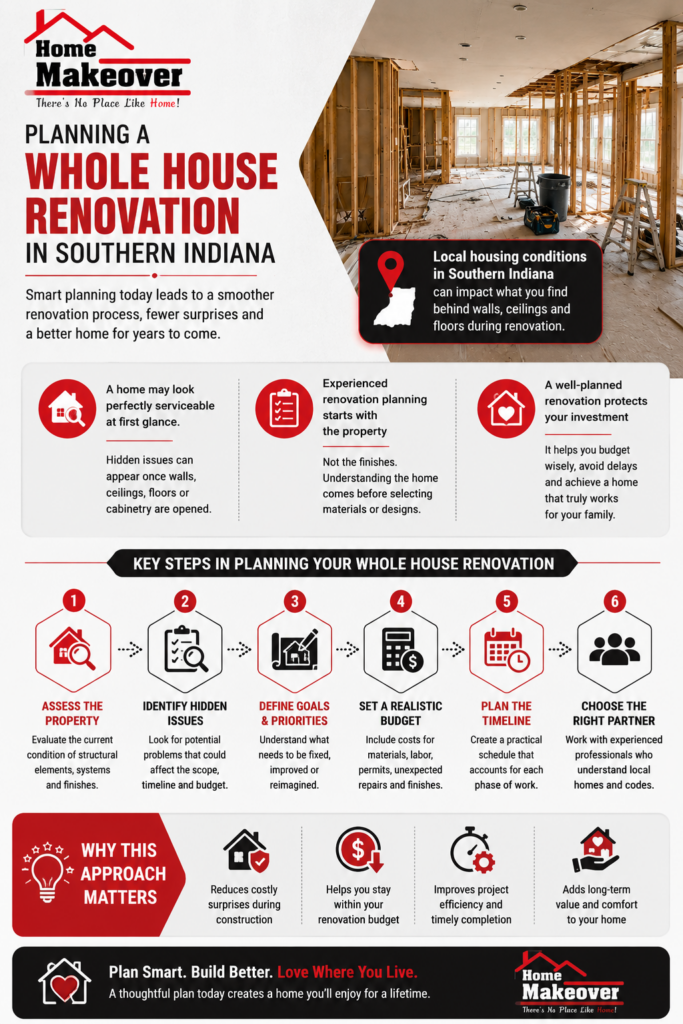
Planning a Whole House Renovation in Southern Indiana

Local housing conditions can influence how you approach renovation planning.

A home may look perfectly serviceable during a casual inspection but reveal additional requirements once walls, ceilings, floors or cabinetry are opened.

Experienced renovation planning therefore starts with the property rather than the finishes.
Whole House Renovation in Southern Indiana

Before selecting countertops or paint colours, consider:

1. What Is the Actual Condition of the House?

Identify issues involving:

  • Electrical systems
  • Plumbing
  • Water intrusion
  • Roofing
  • Insulation
  • HVAC
  • Structural components
  • Windows and doors
  • Flooring substrates
  • Moisture or deterioration

Aesthetic improvements should not hide unresolved building problems.

2. Which Improvements Are Connected?

This is where whole-home planning can become financially valuable.

Suppose you want to:

  • Remove a wall
  • Relocate kitchen plumbing
  • Add lighting
  • Replace flooring
  • Install new cabinets
  • Repaint adjoining rooms

Those tasks are interconnected.

It may be inefficient to finish the kitchen completely and then return later to modify the neighbouring room.

3. How Long Will You Own the Property?

A homeowner planning to stay for another 10 or 15 years may approach renovation differently from someone considering selling within two years.

Long-term homeowners can prioritise durability, functionality and personal comfort.

Shorter-term owners may focus more heavily on improvements that address obvious deficiencies and support marketability.

Home Remodeling vs Room-by-Room Renovation: Which Is More Cost-Effective?

The most useful way to compare the two approaches is to look at where the money goes.

Whole-Home Remodeling

A whole-home project can offer greater efficiency when several areas require work simultaneously.

For example, if the kitchen, hallway and living room all need new flooring, doing them together may reduce duplicated labour and create a consistent finished surface.

Similarly, if an electrical upgrade affects several rooms, coordinating it during one renovation can be more efficient than repeatedly opening finished areas.

The biggest advantage is coordination.

Trades can follow a planned remodeling sequence instead of repeatedly returning to the same rooms.

Room-by-Room Renovation

Room-by-room renovation can be the better choice when:

  • Only one or two rooms need improvement
  • The house’s major systems are already reliable
  • The homeowner needs to spread payments over time
  • The family cannot temporarily vacate the property
  • The renovation scope is clearly limited
  • Existing finishes can remain undisturbed

This approach can also make family planning easier.

A family might decide to renovate the bathroom during a period when travel or school schedules make the disruption manageable, then postpone another project until later.

The downside is that every additional phase creates another round of planning and coordination.

Budget Planning: Account for the Costs You Do Not See

Homeowners often budget for visible materials:

  • Cabinets
  • Countertops
  • Tile
  • Flooring
  • Fixtures
  • Paint

But renovation costs also come from less visible activities.

Consider:

Design and planning → demolition → preparation → rough-ins → inspections → installation → finishing → cleanup

Each stage has labour and scheduling implications.

There may also be unexpected conditions behind finished surfaces.

For example, a contractor removing old flooring may discover damaged subflooring. A wall opened for electrical work may reveal previous modifications that do not meet current requirements. A bathroom renovation may expose plumbing that needs attention before new finishes can be installed.

A responsible renovation budget should therefore include a contingency appropriate to the property’s age, condition and scope.

The exact amount should not be treated as a universal percentage. A recently updated home with a clearly defined cosmetic scope presents a different risk profile from an older property undergoing significant structural and systems work.

Remodeling Sequence: Why Order Matters More Than Many Homeowners Realise

One of the strongest arguments for coordinated remodeling is the importance of construction order.

Renovation is not simply a collection of independent tasks.

A typical sequence might involve:

  1. Initial assessment and detailed planning
  2. Design and selections
  3. Permitting where required
  4. Site preparation
  5. Demolition
  6. Structural modifications
  7. Rough plumbing and electrical
  8. HVAC-related work
  9. Insulation and wall preparation
  10. Drywall or other wall finishes
  11. Flooring and cabinetry
  12. Painting
  13. Fixtures, trim and hardware
  14. Final adjustments and cleanup

The exact sequence varies by project.

But the principle remains the same: some work must happen before other work can begin.

If flooring is installed too early, it may need expensive protection. If walls are painted before rough-in work is finished, surfaces may need to be repaired and repainted.

Good contractor efficiency comes from anticipating those dependencies rather than reacting to them.

Project Scheduling: Whole-Home Renovation vs Phased Remodeling

Scheduling is another major cost consideration.

With a whole-home project, multiple trades can often be coordinated around a single master schedule.

With phased remodeling, each phase may require its own:

  • Contractor availability
  • Material ordering
  • Site preparation
  • Demolition
  • Waste removal
  • Inspections
  • Cleanup
  • Final walkthrough

This does not automatically make phased work inefficient.

In fact, phased remodeling can be extremely practical when carefully planned.

The problem occurs when phases are created without considering the final renovation plan.

For instance, replacing a kitchen floor without knowing that a future wall will be removed could result in unnecessary patching or replacement.

A better approach is to create a long-term renovation map, even if the work will happen gradually.

A Real-World Example: When Room-by-Room Renovation Makes Sense

Consider a Southern Indiana homeowner with a structurally sound home.

The kitchen cabinets are outdated, but:

  • The electrical system has already been updated
  • Plumbing is in good condition
  • Flooring does not need replacement
  • Bathrooms are functional
  • Windows are relatively new
  • The homeowner likes the existing layout

There may be little financial justification for a whole-home remodel.

A focused kitchen renovation could deliver the desired improvement without disturbing functioning parts of the property.

The homeowner can then revisit other spaces when there is a genuine need.

This is an example where room-by-room renovation can protect the renovation budget.

A Real-World Example: When Whole-Home Remodeling Can Save Money

Now consider a Louisville-area home where the homeowner wants to update the kitchen, three bathrooms, flooring, lighting and several interior walls.

The electrical and plumbing systems also need improvements.

Doing these projects separately could mean reopening finished spaces multiple times.

Instead, a coordinated project can establish one overall remodeling sequence.

Electrical work can happen before walls are closed. Plumbing can be addressed while areas are already open. Flooring can be installed across connected rooms during the same phase. Painting can follow the major construction activities.

This is where whole-home remodeling may deliver better contractor efficiency.

The initial invoice is larger, but the overall project can be more efficient because the work is treated as one connected system.

Timeline Considerations: How Long Will Your Home Be Disrupted?

A whole-home renovation can involve substantial disruption.

Depending on scope, homeowners may need to plan around:

  • Temporary kitchen arrangements
  • Bathroom access
  • Dust and noise
  • Furniture storage
  • Pet safety
  • Child safety
  • Contractor access
  • Temporary relocation

A room-by-room approach can reduce the immediate disruption because most of the house remains usable.

That can be a significant advantage for families.

However, the trade-off is that disruption can return every time another phase begins.

For a family with a predictable schedule, completing several related projects together may actually be easier than living through multiple smaller renovations over several years.

How Homeowners Can Choose the Right Approach

Before deciding, ask these questions.

Does the House Need Cosmetic Work or Systemic Work?

If the issue is mainly paint, flooring and fixtures, room-by-room work may be appropriate.

If several systems require attention, whole-home planning deserves serious consideration.

Are You Changing the Layout?

Moving walls, plumbing or electrical components increases the importance of an overall plan.

Can You Fund the Project Comfortably?

Do not choose a whole-home renovation simply because it may be more efficient if financing it would create uncomfortable financial pressure.

Can Your Family Handle the Disruption?

Consider work schedules, children, pets, guests and temporary living arrangements.

Are You Planning More Renovations Later?

If you already know that the kitchen will be followed by bathrooms and flooring, design those future phases into the current plan.

That can prevent costly conflicts.

Common Renovation Mistakes That Increase Costs

Starting Demolition Before Planning Is Complete

Demolition can feel like progress, but opening walls before decisions are made can expose problems without giving the contractor a clear path forward.

Choosing Materials Too Late

Cabinetry, windows, tile, fixtures and specialty products may have lead times.

Delayed selections can affect the entire project scheduling process.

Treating Each Room as Completely Separate

Electrical, plumbing, flooring and structural components often cross room boundaries.

A room-by-room mindset can overlook those connections.

Focusing Only on the Visible Price

The cheapest quote is not necessarily the lowest total cost.

Compare scope, allowances, materials, preparation, project management and exclusions.

Changing the Plan Mid-Construction

Change orders are sometimes unavoidable, particularly when hidden conditions are discovered.

But frequent discretionary changes can quickly affect both cost and timeline.

Expert Tips for Keeping a Renovation on Budget

Build the Long-Term Plan Before Choosing the First Phase

Even if you cannot renovate the entire house today, understand where you ultimately want the property to go.

Separate Needs From Upgrades

Address safety, water intrusion, structural concerns and failing systems before purely cosmetic improvements.

Coordinate Connected Work

If multiple rooms need electrical, plumbing or flooring work, investigate whether completing those activities together makes financial sense.

Protect Finished Work

A good remodeling sequence reduces damage to newly completed areas.

Keep Contingency Funds Available

Do not allocate every dollar to finishes. Older homes can reveal conditions that were not visible during initial planning.

Ask How Future Phases Affect Today’s Work

This is one of the most useful questions a homeowner can ask.

“If we renovate this room now, will it make the next renovation harder or more expensive?”

That single question can prevent avoidable rework.

Whole House Renovation: Planning, Budget, Remodeling & Timeline

A successful Whole House Renovation starts with careful Planning. Before work begins, homeowners should identify priority areas, establish a realistic Budget, choose materials and decide how different spaces will be completed.

Good Remodeling planning also helps prevent unnecessary rework. For example, completing connected areas together can reduce repeated preparation, labour and material costs.

A clear Timeline is equally important. Allow time for material ordering, preparation, construction and finishing rather than assuming every stage will happen immediately. Older homes may also require flexibility if unexpected conditions are discovered during renovation.

For homeowners in Southern Indiana and Louisville, the best approach is to consider the entire property before starting individual rooms. Even when renovation happens in phases, an overall plan can help each stage work toward the final result.

How Home Renovation Services in Southern Indiana Can Be Evaluated

When comparing home renovation services in Southern Indiana, look beyond photographs of completed kitchens.

Ask potential contractors:

  • How do you handle unexpected conditions?
  • Who coordinates subcontractors?
  • How are changes documented?
  • What is included in the quoted scope?
  • How are material delays handled?
  • What happens if an inspection identifies an issue?
  • How will finished surfaces be protected?
  • How often will project progress be communicated?
  • What assumptions are included in the schedule?

A professional renovation process should make these issues understandable before work begins.

Trust is built through clarity, not promises.

FAQS

1. Is a whole house renovation cheaper than renovating one room at a time?

Not necessarily. Whole-home renovation can reduce duplicated mobilisation, demolition, preparation and coordination costs when several rooms require connected work. However, if only one or two areas need improvement, renovating the entire property could increase spending unnecessarily.

The best comparison is the total cost required to achieve the homeowner’s actual goals, not simply the size of the initial invoice.

2. When does phased remodeling make more financial sense?

Phased remodeling can make sense when the home is generally sound and the renovation needs are clearly separated. It is also useful when the homeowner needs to spread expenses over several years or cannot tolerate a large-scale construction disruption.

The important step is to create an overall plan first. Each phase should support the eventual finished design rather than becoming an isolated project.

3. How much should I budget for unexpected renovation costs?

There is no single contingency percentage that is appropriate for every house. A cosmetic renovation in a recently updated home has less uncertainty than a major renovation involving an older property, structural changes or concealed plumbing and electrical systems.

Ask your contractor to identify the specific risks associated with the property and scope. Then reserve funds accordingly rather than treating contingency as an arbitrary number.

4. Does renovating multiple rooms at once reduce the project timeline?

It can, particularly when trades and materials can be coordinated efficiently. For example, electrical and plumbing work can be completed across several areas before walls are closed, followed by finishing activities.

However, a larger project does not automatically finish faster. Its success depends heavily on material availability, contractor coordination, inspections, design decisions and the complexity of the work.

5. How should homeowners in Southern Indiana or Louisville decide between the two approaches?

Start with the condition of the property and your long-term goals.

If several rooms need work and the improvements are interconnected, a whole-home plan may offer better overall efficiency. If one room has a clearly defined need and the rest of the house is in good condition, room-by-room renovation may be the more sensible financial decision.

For homeowners comparing Home Remodeling vs Room-by-Room Renovation, the strongest strategy is often to think about the entire property first, even if the construction itself will happen in phases.

Final Takeaway

The cheapest renovation is not always the one with the smallest initial price tag.

A well-planned whole house renovation in Southern Indiana can make financial sense when multiple rooms, finishes and building systems need coordinated work. Similarly, interior home remodeling in Louisville can be approached room by room when the property is fundamentally sound and the scope is genuinely limited.

The deciding factors are condition, scope, budget, disruption, future plans and construction sequence.

If several renovations are already on your long-term list, develop the whole-house strategy before beginning the first phase. If only one area genuinely needs attention, there may be no reason to renovate everything.

Home Makeover Pro can help homeowners think through the scope, sequencing and practical considerations of a renovation before committing to a construction approach. The objective should always be the same: make informed decisions, avoid unnecessary rework and invest the renovation budget where it delivers lasting value.Whole Home Remodeling vs Room-by-Room Renovation in Southern Indiana & Louisville: Which Approach Saves More Money?

Best Bathroom Materials That Last Longer in Southern Indiana & Louisville Homes

A bathroom remodel can look beautiful on the day it is completed, but the real test begins months and years later. Humidity, water exposure, daily cleaning, temperature changes, heavy use, and occasional plumbing problems can quickly expose weak material choices.

For homeowners researching Bathroom Remodeling Materials in Louisville, durability should be considered alongside appearance and cost. A material that looks impressive but requires constant maintenance may not be the best investment for a busy household. Likewise, choosing the cheapest surface today can create higher repair and replacement costs later.

Louisville and Southern Indiana homes also have to contend with seasonal changes in temperature and humidity. Bathrooms need materials that can tolerate moisture without becoming difficult to maintain.

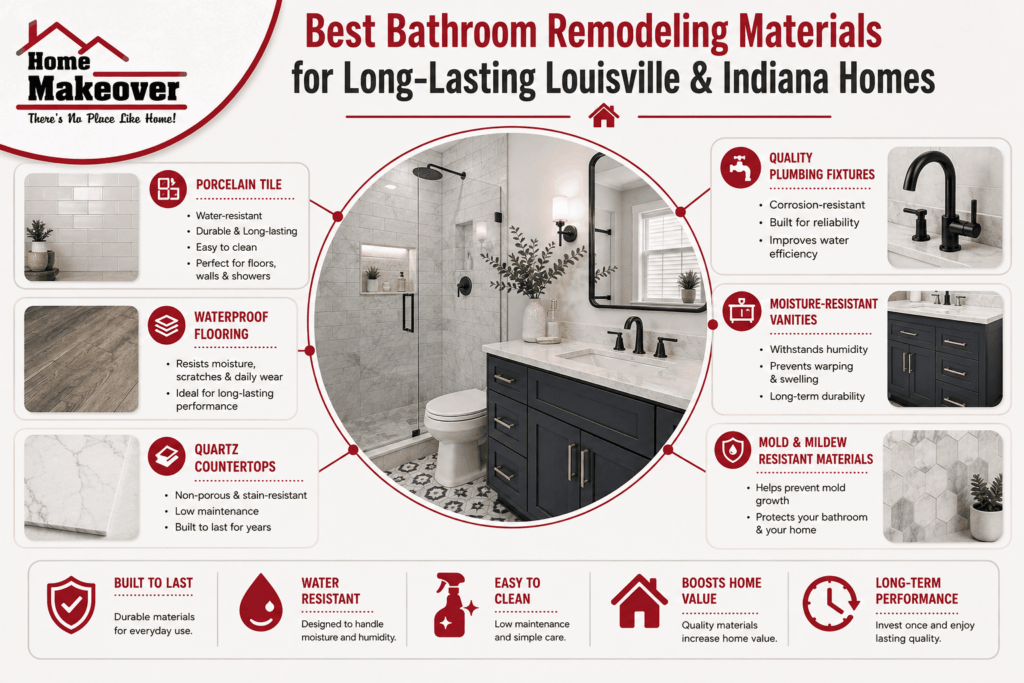
The good news is that modern remodeling materials offer plenty of options for creating attractive, practical bathrooms. From porcelain tile and quartz vanities to waterproof flooring and moisture-resistant wall finishes, the right combination can improve both everyday usability and long-term performance.

This guide explains how to select bathroom remodeling materials for modern homes, what characteristics matter most, where homeowners commonly make mistakes, and how material choices should work together as part of a complete bathroom remodeling project.

What Makes a Bathroom Material Durable?

Durability in a bathroom is not simply about whether a product is physically strong. A material also needs to perform well under repeated exposure to moisture, cleaning products, temperature fluctuations, and everyday use.

When evaluating Bathroom Materials, consider these factors:

  • Resistance to water and humidity
  • Resistance to staining
  • Ease of cleaning
  • Scratch and impact resistance
  • Maintenance requirements
  • Resistance to mold and mildew
  • Compatibility with the existing bathroom structure
  • Expected lifespan
  • Installation requirements
  • Availability of replacement materials

For example, a beautiful natural stone may be extremely durable, but some varieties require sealing and more maintenance than porcelain. Similarly, a wood-look surface can provide warmth and character without introducing the same moisture concerns as untreated natural wood.

The best choice depends on how the bathroom will actually be used.

A guest bathroom that receives limited daily traffic can tolerate different maintenance requirements than a busy family bathroom used several times a day.

Why Material Selection Matters in Louisville and Southern Indiana?

Bathroom remodeling in Louisville involves more than choosing attractive colors and finishes. Moisture management is one of the most important considerations.

Bathrooms regularly experience:

  • Shower steam
  • Water splashes
  • Wet floors
  • Frequent cleaning
  • Condensation
  • Changes in indoor humidity
  • Plumbing leaks or failures

Poorly selected or improperly installed materials can allow moisture to reach areas where it does not belong. Over time, this can contribute to staining, deterioration, mold growth, or damage to surrounding construction.

This is why a durable bathroom should be viewed as a system rather than a collection of individual products.

The Tile, Vanity, Flooring, waterproofing layers, plumbing fixtures, ventilation, sealants, and wall finishes all need to work together.

Porcelain Tile: A Reliable Choice for High-Moisture Areas

Porcelain tile is one of the most practical choices for bathrooms because it combines durability, water resistance, and design flexibility.

It can be used on:

  • Shower walls
  • Bathroom floors
  • Tub surrounds
  • Accent walls
  • Backsplashes
  • Feature areas

Porcelain is available in designs that imitate natural stone, concrete, marble, and even wood. This makes it easier to achieve a high-end appearance without necessarily choosing a material with higher maintenance requirements.

Why Porcelain Works Well?

A well-installed porcelain tile surface can handle everyday bathroom conditions effectively. It is also relatively easy to clean and available in many sizes and textures.

Large-format porcelain is particularly useful for contemporary bathrooms because fewer grout joints can create a cleaner visual appearance.

However, fewer grout lines do not eliminate the importance of installation. Proper substrate preparation, waterproofing, tile setting, movement accommodation, and grout selection remain critical.

A homeowner should not assume that buying premium tile automatically guarantees a durable bathroom. Installation quality matters just as much.

Waterproof Flooring for Everyday Bathroom Use

Bathroom flooring experiences a different type of wear than walls. It has to handle standing water, wet feet, cleaning, furniture loads, and repeated foot traffic.

Waterproof flooring can be a practical option when homeowners want durability without sacrificing design flexibility.

Depending on the bathroom design and installation requirements, suitable flooring options may include porcelain tile and other specifically manufactured waterproof or water-resistant flooring systems.

What Should You Look For?

When comparing flooring materials, evaluate:

  • Water resistance
  • Slip resistance
  • Surface texture
  • Cleaning requirements
  • Durability under foot traffic
  • Compatibility with the subfloor
  • Installation method
  • Long-term maintenance

A polished surface may look luxurious but can become less practical when wet. For bathrooms used by children, older adults, or anyone with mobility concerns, traction should be part of the material-selection conversation.

Quartz Vanity Surfaces for Low-Maintenance Bathrooms

The vanity is one of the most frequently used elements in a bathroom. It has to withstand water, toiletries, cosmetics, cleaning products, and regular contact with hands and objects.

A quartz vanity can be an excellent choice for homeowners looking for a durable, contemporary surface with relatively straightforward maintenance.

Quartz surfaces are available in many colors and patterns, including designs inspired by marble and natural stone.

Where Quartz Makes Sense?

Quartz is especially appealing for:

  • Primary bathrooms
  • Family bathrooms
  • High-use powder rooms
  • Contemporary bathroom designs
  • Low-maintenance remodeling projects

One advantage is consistency. Manufactured quartz can provide a more uniform appearance than many natural stones.

That does not mean quartz is indestructible. Homeowners should still follow the manufacturer’s care instructions and avoid treating the surface as completely maintenance-free.

Moisture Resistant Paint: Small Detail, Significant Impact

Paint is often treated as an aesthetic decision, but bathroom wall coatings also need to cope with humidity.

Moisture resistant paint can be appropriate for areas exposed to elevated bathroom humidity, particularly when paired with effective ventilation.

The paint itself should not be considered a substitute for waterproofing.

For example, a shower wall requires an appropriate waterproofing system behind the finished surface. Simply applying moisture-resistant paint to a wall does not make that wall suitable for continuous water exposure.

Choosing Bathroom Wall Finishes

Consider moisture exposure when deciding where to use painted surfaces.

Areas outside the direct shower zone may be suitable for appropriately selected bathroom paint, while continuously wet areas generally require a properly designed and installed waterproof surface system.

Good ventilation also matters. A bathroom fan that effectively removes humid air can help reduce condensation and moisture accumulation.

Grout: The Detail That Should Not Be Overlooked

Tile often receives most of the attention during remodeling, while grout is treated as an afterthought.

That can be a mistake.

Grout contributes to the appearance, maintenance, and overall performance of a tiled surface. The appropriate grout type depends on the application, joint width, exposure, and manufacturer’s recommendations.

For frequently wet areas, grout selection should be considered alongside the entire tile installation rather than chosen solely by color.

Practical Grout Considerations

Homeowners should think about:

  • Joint size
  • Expected water exposure
  • Cleaning requirements
  • Stain resistance
  • Color
  • Maintenance
  • Compatibility with the selected tile

Light grout can create a bright, clean appearance, but it may show dirt more readily in high-traffic areas.

Darker grout can be more forgiving visually, although it still requires appropriate cleaning and maintenance.

The key is choosing a grout system that suits both the material and the bathroom’s actual usage.

Durable Finishes for Long-Term Bathroom Performance

A successful bathroom remodel is not necessarily the one with the most expensive finishes. It is the one where the selected finishes make sense for the household.

Durable finishes should be selected according to where and how they will be used.

For example, a homeowner with children may prioritize easy-clean flooring and stain-resistant vanity surfaces. Someone remodeling a primary bathroom may place greater emphasis on luxurious visual details and spa-like finishes.

Match Materials to the User

Ask practical questions before selecting finishes:

  • Who will use the bathroom?
  • How often is it used?
  • Is it a family bathroom or guest bathroom?
  • Will children use the shower?
  • Are there pets that frequently enter the room?
  • How much maintenance are you willing to perform?
  • Is accessibility important?
  • How long do you expect to remain in the home?

These answers can significantly change the ideal material combination.

How Bathroom Plumbing Upgrades Affect Material Choices?

A remodeling project is often the right opportunity to evaluate hidden plumbing conditions.

Bathroom plumbing upgrades may involve replacing aging supply lines, updating drainage components, improving fixture connections, or addressing plumbing layouts that no longer meet the household’s needs.

However, plumbing work and finish selection should be coordinated.

For example, if a shower layout is being changed, the plumbing and waterproofing details need to be planned before the final tile is installed.

Look Beyond the Visible Fixtures

A new faucet can improve appearance, but it does not necessarily address an aging plumbing system.

During a renovation, professionals may assess:

  • Existing supply lines
  • Drain configuration
  • Fixture connections
  • Shutoff valves
  • Water pressure
  • Signs of previous leaks
  • Accessible plumbing areas
  • Compatibility with new fixtures

Addressing appropriate plumbing concerns before closing walls or installing finished surfaces can prevent unnecessary disruption later.

Waterproofing Is More Important Than Expensive Tile

One of the most important lessons in bathroom remodeling is that the visible finish is only part of the system.

A premium tile installation can still fail if water gets behind the finished surface.

Proper Waterproofing should be designed around the wet area and installed according to the manufacturer’s system requirements and applicable building practices.

This may include appropriate waterproof membranes, seams, corners, penetrations, transitions, and drainage details.

A Practical Example

Imagine a homeowner chooses expensive marble-look tile for a new shower.

The tile itself may be excellent. But if the shower’s waterproofing system is poorly installed around corners or plumbing penetrations, water can reach areas behind the tile.

The problem may not become obvious immediately.

Months later, signs such as staining, persistent dampness, loose tile, or musty odors may appear.

The lesson is simple: beautiful tile cannot compensate for poor waterproofing.

Natural Stone vs. Manufactured Materials

Natural stone remains popular for luxury bathrooms because each piece can have unique patterns and variations.

Materials such as marble, granite, and other stones can create an impressive appearance, but homeowners should understand the maintenance requirements before choosing them.

Manufactured surfaces can provide more predictable patterns and may offer simpler maintenance.

Neither category is automatically better.

The right decision depends on:

  • Budget
  • Design goals
  • Maintenance expectations
  • Location of the material
  • Water exposure
  • Household usage
  • Desired appearance

For homeowners planning a luxury bathroom renovation, it can be worthwhile to combine premium-looking materials with practical surfaces in high-use areas.

For example, a statement stone feature may provide visual impact while porcelain is used in areas exposed to more demanding daily conditions.

How to Choose Bathroom Remodeling Materials for Modern Homes?

Choosing bathroom remodeling materials for modern homes should start with performance rather than appearance.

A practical selection process can look like this:

1. Identify the Highest-Moisture Areas

Separate the bathroom into wet zones and relatively dry zones.

A shower interior has dramatically different requirements from a wall outside the shower.

2. Establish Your Maintenance Tolerance

Be honest about how much upkeep you are prepared to perform.

If you want a bathroom that is easy to maintain, prioritize surfaces with appropriate stain resistance, simple cleaning requirements, and fewer difficult-to-maintain details.

3. Consider the Entire Installation

Do not evaluate tile, flooring, or countertops in isolation.

Ask how each product interacts with:

  • Substrates
  • Waterproofing
  • Adhesives
  • Grout
  • Sealants
  • Plumbing
  • Ventilation

4. Think About Longevity

A material that costs slightly more but lasts significantly longer may provide better value.

However, higher price does not automatically mean higher performance.

Always compare the material’s actual characteristics rather than relying on marketing language.

5. Coordinate the Design

The best bathrooms usually have a controlled material palette.

For example, homeowners might combine:

  • Porcelain tile
  • Quartz vanity
  • Complementary grout
  • Durable hardware
  • Moisture-appropriate wall paint
  • Slip-conscious flooring

This creates visual consistency without making every surface identical.

Common Bathroom Remodeling Material Mistakes

Choosing Based Only on Appearance

A material may look fantastic in a showroom but perform poorly for your particular bathroom.

Always consider the environment in which it will be installed.

Assuming Waterproof and Water-Resistant Mean the Same Thing

These terms should not be treated as interchangeable.

A product’s actual specifications and intended application matter.

Ignoring Grout Maintenance

Tile is not maintenance-free simply because the tile itself is durable.

Grout joints still need appropriate care.

Selecting Slippery Flooring

Highly polished surfaces can create practical problems when wet.

Floor texture and slip considerations deserve attention during material selection.

Forgetting About Ventilation

Even high-quality materials perform better when the bathroom has effective humidity control.

A bathroom with poor ventilation can experience persistent condensation and moisture problems.

Spending the Budget Entirely on Visible Finishes

It can be tempting to spend heavily on tile, lighting, and fixtures while overlooking the systems beneath them.

A durable remodel needs adequate attention to waterproofing, substrate preparation, plumbing, ventilation, and installation quality.

Expert Tips for a Longer-Lasting Bathroom

Experienced remodeling decisions often come down to details that are not immediately visible.

Prioritize wet-area preparation. The shower and tub area deserve careful planning because they receive the greatest amount of water exposure.

Use materials according to their intended application. Do not assume that a product suitable for a wall is automatically appropriate for flooring or a continuously wet area.

Buy enough material. Keeping spare tile from the original installation can make future repairs much easier, especially if the product is discontinued.

Coordinate plumbing before finishing surfaces. Fixture and plumbing changes should be addressed before final wall and floor finishes are installed.

Do not ignore transitions. Doorways, shower thresholds, floor-to-wall connections, and plumbing penetrations all deserve careful attention.

Plan for cleaning. A bathroom that looks beautiful but has difficult-to-clean corners and excessive maintenance requirements may become frustrating over time.

Balance luxury with practicality. A high-end bathroom does not need every surface to be delicate or maintenance-heavy.

What Is the Best Material Combination for a Louisville Bathroom?

There is no single combination that works for every home.

However, a practical modern bathroom might combine durable porcelain tile in wet areas, an appropriately selected waterproof flooring system, a quartz vanity surface, moisture-appropriate paint outside direct wet zones, and a properly designed waterproofing system.

A more luxurious design could introduce natural stone or statement surfaces while retaining durable materials in areas that receive heavy daily use.

The important principle is to assign each material a purpose.

A beautiful bathroom should not only photograph well. It should withstand the way your household actually lives.

Final Thoughts

Choosing Bathroom Remodeling Materials in Louisville is ultimately a decision about performance, maintenance, design, and long-term value.

The best bathroom materials are not necessarily the most expensive. They are the materials that are appropriate for the environment, correctly installed, and suited to the people using the space.

When selecting bathroom remodeling materials for modern homes, pay particular attention to moisture exposure, flooring safety, vanity durability, grout maintenance, waterproofing, ventilation, and the condition of existing plumbing.

Whether you are planning a practical family bathroom or a luxury bathroom renovation, thoughtful material selection can make the finished space easier to maintain and more enjoyable to use for years.

A successful remodeling project begins with asking not just, “What looks good?” but also, “What will continue to perform well in this bathroom?”

Frequently Asked Questions

1. What are the best bathroom remodeling materials for Louisville homes?

Porcelain tile, appropriately rated waterproof flooring, quartz vanity surfaces, moisture-appropriate wall finishes, and properly installed waterproofing systems are among the practical options to consider. The best combination depends on the bathroom’s moisture exposure, household usage, maintenance expectations, and overall design.

For wet areas, performance and installation should take priority over appearance alone. A durable material can still perform poorly if it is installed over an unsuitable substrate or without the required waterproofing system.

2. Is porcelain tile better than other bathroom tile options?

Porcelain is a strong choice because it offers durability, water resistance, design versatility, and relatively straightforward maintenance. It is available in numerous patterns and can imitate materials such as marble, concrete, and wood.

However, “better” depends on the application. Natural stone may be appropriate for homeowners prioritizing a specific luxury aesthetic, while other tile products may make sense for different locations and budgets. The material’s specifications and installation requirements should always be considered.

3. Is quartz a good choice for a bathroom vanity?

Quartz can be an excellent option for a bathroom vanity because it provides a durable, consistent surface and comes in many contemporary designs. It is particularly attractive for homeowners who want a sophisticated appearance without the maintenance associated with some natural stones.

Even so, quartz should still be cared for according to the manufacturer’s recommendations. Avoid assuming that any countertop material is completely resistant to damage from excessive heat, harsh chemicals, impacts, or improper cleaning.

4. What is more important: expensive tile or proper waterproofing?

Proper waterproofing is fundamental. Expensive tile cannot prevent moisture problems if the underlying wet-area system has been incorrectly designed or installed.

A bathroom should be treated as a complete assembly. Waterproofing, substrate preparation, drainage, tile installation, grout, sealants, and transitions all contribute to long-term performance.

This is particularly important around showers, tubs, corners, plumbing penetrations, and other areas where water can reach vulnerable parts of the structure.

5. How can homeowners make bathroom materials last longer?

Start by choosing materials appropriate for their intended application and ensuring they are installed correctly. Regular cleaning, prompt attention to leaks, adequate bathroom ventilation, and following manufacturer maintenance recommendations can also extend the useful life of many finishes.

It is equally important to address plumbing or waterproofing concerns early. A small leak that is ignored can cause significantly more damage than the original plumbing problem. A durable bathroom is therefore the result of good material selection combined with proper installation and ongoing maintenance.

The Complete Home Remodeling Roadmap: From Your First Idea to Project Completion in Southern Indiana & Louisville

A successful home remodel rarely begins with a demolition crew. It starts with a homeowner asking a deceptively simple question: What do we actually want this house to do better?

Maybe the kitchen feels cramped. Perhaps the bathroom no longer works for a growing family. You might have an older home that needs several rooms updated at once, or you may simply want to make better use of the space you already own.

Whatever the reason, the difference between a stressful renovation and a well-managed one often comes down to what happens before construction begins.

Good home renovation planning gives you a roadmap for decisions about design, budget, materials, permits, scheduling and contractor coordination. It also helps you recognize which decisions need to happen early and which ones can wait.

For homeowners considering home remodeling in Louisville or residential home remodeling in Southern Indiana, understanding the process can make the entire experience more predictable.

This guide walks through the major stages of a remodeling project, from the first idea through the final walkthrough, with practical considerations that homeowners in the Louisville and Southern Indiana area should understand.

Home Remodeling: Start With the Reason for the Project

Before choosing cabinets, paint colors or flooring, identify the problem you are trying to solve.

A remodel should improve something specific about how your home looks, functions or performs.

For example:

  • A kitchen renovation may be intended to improve workflow and storage.
  • A bathroom renovation may address outdated fixtures, poor lighting or accessibility.
  • A whole-home renovation may bring several disconnected spaces into a consistent design.
  • A basement project may create additional living, entertainment or work space.
  • An aging-in-place renovation may focus on safer movement, easier access and long-term usability.

This first step sounds obvious, but it is surprisingly important.

When homeowners begin with a list of products rather than a list of problems, the project can quickly become unfocused. A beautiful countertop will not solve a kitchen layout that does not work. New flooring will not correct a moisture problem underneath it.

A useful starting exercise is to divide your goals into three categories:

Must have: Improvements that solve an important functional, structural or safety issue.

Would like: Features that would improve comfort or appearance but are not essential.

Future consideration: Ideas that may make sense later but do not need to be completed during this project.

That simple distinction can protect your budget when unexpected conditions appear during construction.

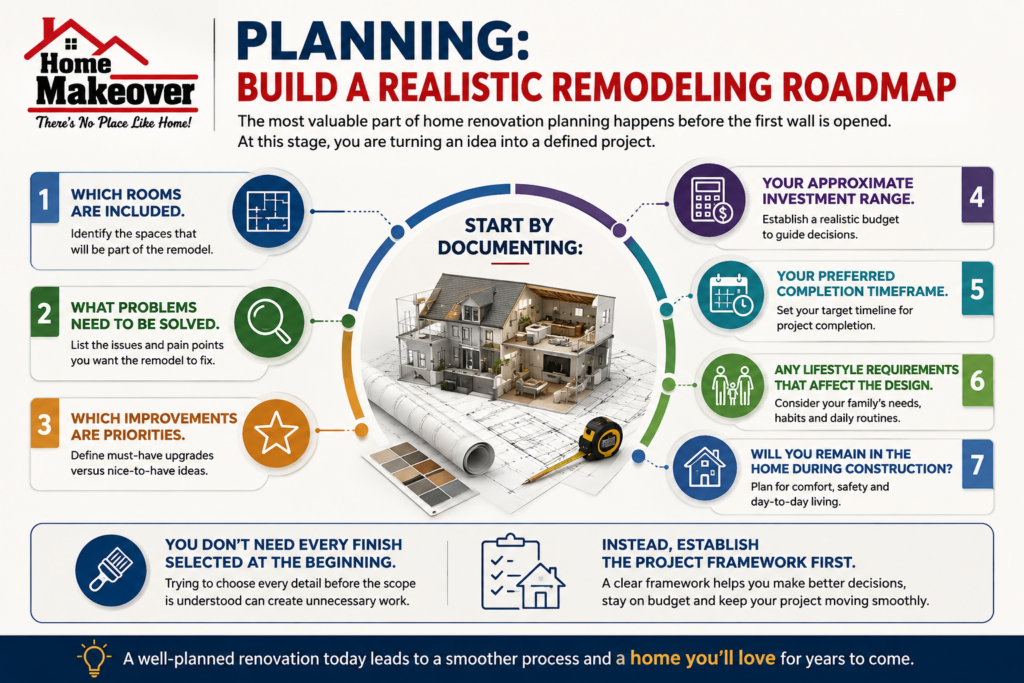
Planning: Build a Realistic Remodeling Roadmap

The most valuable part of home renovation planning happens before the first wall is opened.

At this stage, you are turning an idea into a defined project.

Start by documenting:

  1. Which rooms are included.
  2. What problems need to be solved.
  3. Which improvements are priorities.
  4. Your approximate investment range.
  5. Your preferred completion timeframe.
  6. Any lifestyle requirements that affect the design.
  7. Whether you will remain in the home during construction.

You do not need every finish selected at the beginning. In fact, trying to choose every detail before the scope is understood can create unnecessary work.

Instead, establish the project framework first.

Realistic Remodeling Roadmap

Create a Scope Before Creating a Shopping List

A remodeling scope should describe the work itself rather than simply naming products.

For example, “new kitchen” is vague.

A stronger scope might include:

  • Reconfigure kitchen layout.
  • Remove selected non-load-bearing walls.
  • Add or relocate electrical outlets.
  • Improve task lighting.
  • Replace cabinets and countertops.
  • Upgrade flooring.
  • Update plumbing connections.
  • Add storage where practical.
  • Repair or replace affected drywall and trim.

This gives the contractor and homeowner something concrete to discuss.

It also makes estimates easier to compare because you can determine whether different contractors are actually pricing the same work.

Consultation: What to Expect From a Professional Remodeling Consultation

A remodeling consultation should be more than a sales conversation.

It should be an opportunity to evaluate the property, discuss your goals and identify practical constraints that may affect the project.

During a productive remodeling consultation, expect questions about:

  • How you currently use the space.
  • What frustrates you about it.
  • How many people use the room.
  • Whether your needs may change.
  • Your preferred design direction.
  • Your budget expectations.
  • Your desired timeline.
  • Existing problems you already know about.

A good professional should also look beyond appearances.

Depending on the project, the discussion may involve structural conditions, electrical capacity, plumbing locations, ventilation, moisture, insulation, windows, roofing interfaces or other existing components.

A Real-World Example

Imagine a homeowner wants to remove a wall between a kitchen and dining room to create a more open layout.

The visual idea may be straightforward, but the wall could contain electrical wiring, plumbing or structural support.

A qualified remodeling team should identify those possibilities early rather than treating demolition as a surprise discovery.

That is one of the practical benefits of professional consultation: the earlier potential complications are identified, the more options you usually have for addressing them.

Contractor: Choosing the Right Remodeling Professional

Choosing a contractor is one of the highest-impact decisions in a renovation.

Price matters, but it should not be the only comparison point.

When evaluating a contractor for home remodeling services in Louisville, look at the overall picture:

  • Relevant experience with projects similar to yours.
  • Clear communication.
  • A detailed written scope.
  • Transparent pricing and allowances.
  • Evidence of proper licensing or registration where applicable.
  • Insurance coverage.
  • References or examples of completed work.
  • A defined process for changes.
  • Realistic scheduling.
  • Subcontractor and supplier coordination.
  • A clear approach to project cleanup and completion.

The right contractor should be able to explain not only what will be done, but also how the work will be coordinated.

Ask What Happens When Something Changes

Every substantial remodeling project involves decisions and, sometimes, unforeseen conditions.

Ask prospective contractors:

  • How are change orders handled?
  • Who approves additional work?
  • How are material substitutions communicated?
  • What happens if a selected product is delayed?
  • Who coordinates inspections?
  • How will schedule changes be communicated?
  • Who is responsible for coordinating subcontractors?

The answers can tell you a great deal about how the project will operate once construction begins.

Renovation Phases: Understanding What Happens After the Contract

A typical renovation moves through several overlapping phases. The exact sequence varies depending on the home’s condition and project scope, but understanding the basic structure helps homeowners know what to expect.

Phase 1: Discovery and Assessment

The project begins with understanding the existing home.

This may include reviewing the layout, measuring spaces, discussing goals and identifying visible or potential issues.

For older homes, additional investigation may be particularly important because previous renovations can create hidden conditions that are not obvious from the finished surfaces.

Phase 2: Design and Scope Development

The project is translated into plans, specifications and selections.

Depending on the project, this may include:

  • Floor plans.
  • Cabinet layouts.
  • Lighting plans.
  • Material selections.
  • Fixture specifications.
  • Finish schedules.
  • Structural details.
  • Mechanical considerations.

The more clearly these elements are defined before construction, the fewer major decisions need to be made while crews are working.

Phase 3: Permits and Pre-Construction

Projects requiring permits must follow the applicable local requirements.

The exact permitting process depends on the work and jurisdiction. Structural alterations, electrical work, plumbing modifications and additions can involve different requirements.

Your remodeling team should clarify which approvals are required and who is responsible for obtaining them.

This phase is also where material orders, subcontractor scheduling and site preparation become important.

Phase 4: Demolition and Preparation

Demolition is not simply “tear everything out.”

Careful demolition protects components that are staying and can reveal conditions behind walls, ceilings and floors.

For example, removing an old bathroom may reveal damaged subflooring or outdated plumbing. Discovering that condition is not necessarily evidence that the project was poorly planned; some conditions cannot be confirmed until concealed areas become accessible.

What matters is having a clear process for documenting and addressing them.

Phase 5: Rough Construction

This is where much of the work that eventually becomes invisible takes place.

Depending on the project, rough construction can include:

  • Framing.
  • Plumbing.
  • Electrical.
  • HVAC modifications.
  • Insulation.
  • Structural work.

Inspections may occur at appropriate points before walls are closed.

Phase 6: Installation and Finishes

Once the underlying work is complete, the project begins to look like the home you envisioned.

Cabinets, countertops, flooring, tile, fixtures, trim, paint, lighting and other finish elements are installed.

This is also where prior planning pays off. If selections were finalized early and materials arrived on schedule, the finishing phase can move much more efficiently.

Timeline: How Long Does a Home Renovation Take?

There is no single remodeling timeline that applies to every house.

A cosmetic update may take considerably less time than a whole-home renovation involving structural changes, multiple rooms, extensive mechanical work or custom materials.

A project timeline can be affected by:

  • Project size.
  • Design complexity.
  • Permit requirements.
  • Structural discoveries.
  • Material availability.
  • Custom fabrication.
  • Subcontractor availability.
  • Inspection scheduling.
  • Homeowner decisions.
  • Change orders.
  • Weather for exterior work.

For this reason, a responsible contractor should provide a realistic schedule rather than promising an unrealistically short completion date.

Why Material Decisions Can Affect the Schedule

Consider a kitchen renovation where cabinets are custom-built.

If cabinet dimensions affect countertop measurements, and countertop fabrication depends on cabinet installation, a delay in the cabinets can affect multiple downstream activities.

This is why contractor coordination matters.

A remodeling project is a sequence of dependencies. One delayed activity can sometimes affect several others.

Contractor Coordination: Keeping the Project Moving

A homeowner may see different crews arrive throughout a renovation, but those crews are part of a larger sequence.

Framers may need to complete their work before electricians and plumbers can finish rough-ins. Drywall may depend on inspections. Cabinets may need to be installed before countertops can be templated.

Effective contractor coordination keeps these dependencies organized.

Home Makeover Pro, for example, can serve as the central point of coordination for homeowners who want one team managing the moving pieces of their remodeling project rather than trying to organize every trade independently.

The important principle is not simply having multiple professionals involved. It is having someone responsible for making sure their work fits together.

Practical Home Improvement Project Tips for Louisville and Southern Indiana

Local homes can vary considerably in age, construction and previous renovation history. That makes property-specific assessment important.

If you are considering a home improvement project, keep these practical points in mind.

1. Do Not Assume the Existing Layout Can Stay Untouched

Sometimes a small change to one room makes sense only if another space is adjusted.

For instance, moving a kitchen sink may affect plumbing. Removing a wall may affect electrical routing. Expanding a bathroom may reduce useful space elsewhere.

Think about the home as a connected system.

2. Keep a Contingency Fund

Even a carefully planned renovation can uncover hidden conditions.

A contingency is not an invitation to spend more. It is protection against circumstances that could not reasonably be confirmed before construction.

Your contractor can help identify where uncertainty is highest.

3. Finalize Major Selections Early

Cabinetry, windows, specialty fixtures and custom materials can have longer lead times than standard items.

Ask which selections are schedule-critical and make those decisions first.

4. Plan for Daily Life During Construction

If you are staying in the home, determine how construction will affect:

  • Cooking.
  • Bathing.
  • Sleeping arrangements.
  • Children and pets.
  • Parking.
  • Access to the property.
  • Dust and noise.
  • Temporary storage.

A good renovation plan considers the people living in the house, not just the construction drawings.

Common Renovation Mistakes Homeowners Should Avoid

Mistake 1: Choosing a Contractor Based Only on the Lowest Price

A lower estimate may reflect a narrower scope, different material allowances or omitted work.

Compare what each proposal actually includes.

Mistake 2: Changing the Scope Repeatedly

Some changes are unavoidable. Others happen because decisions were not made before construction.

Repeated changes can increase costs and extend the schedule.

Mistake 3: Underestimating Existing-Home Conditions

Renovation differs from new construction because the contractor is working with something that already exists.

Walls may not be perfectly straight. Previous work may not meet current expectations. Plumbing and electrical systems may have limitations.

Expect some investigation.

Mistake 4: Treating the Timeline as a Guarantee

A schedule is a management tool, not a promise that nothing will ever change.

The better approach is to understand the project’s critical path and the factors that could move completion.

Mistake 5: Focusing Only on Appearance

A successful renovation should look good, but it should also function well.

Storage, lighting, circulation, maintenance, durability and accessibility can matter just as much as finishes.

Expert Advice: Make Decisions in the Right Order

One of the most useful principles in home renovation planning is to make decisions according to their impact on the project.

A practical order is:

Function → Layout → Structural considerations → Mechanical systems → Major materials → Fixtures → Finishes → Decorative details

For example, there is little value in spending hours choosing a backsplash before you know where the cabinets, appliances and electrical outlets will be located.

Likewise, choosing paint colors before confirming flooring and cabinetry can create unnecessary rework.

The earlier a decision affects the construction sequence, the earlier it should generally be resolved.

When to Reconsider the Original Plan

A good remodeling plan is not rigid.

Suppose demolition reveals significant moisture damage beneath an existing floor. You may have to decide whether to repair it immediately, modify the design or adjust another part of the budget.

That is where priorities become useful.

Return to the original question: What are we trying to accomplish with this project?

If the goal is to create a durable, functional kitchen for the next decade, addressing an underlying moisture issue may be more valuable than upgrading a decorative feature.

Good remodeling decisions are not always about getting everything you initially imagined. They are about protecting the improvements that matter most.

The Final Walkthrough and Project Completion

A renovation is not finished simply because the crews have left.

The final stage should include a careful walkthrough to identify incomplete or deficient items and confirm that the project matches the agreed scope.

Depending on the project, review:

  • Doors and drawers.
  • Cabinet alignment.
  • Fixtures.
  • Flooring.
  • Tile work.
  • Paint and trim.
  • Lighting.
  • Outlets and switches.
  • Plumbing fixtures.
  • Appliances.
  • Hardware.
  • Caulking and finish details.
  • Cleanup.
  • Outstanding documentation or warranties.

A professional final walkthrough gives both the homeowner and remodeling team an opportunity to address details before the project is considered complete.

Home Remodeling Should Be a Process, Not a Guess

The best remodeling experiences are rarely the result of luck.

They come from thoughtful home renovation planning, realistic budgeting, clear communication and disciplined execution.

Whether you are considering home remodeling in Louisville, a smaller renovation or residential home remodeling in Southern Indiana, the same principle applies: understand the goal first, define the scope, choose the right contractor, plan the sequence and communicate throughout the project.

Home Makeover Pro can help homeowners approach that process with greater clarity, from the initial remodeling consultation through project coordination and completion.

The goal is not simply to create a newer-looking house. It is to create a home that works better for the people who live there.

Final Takeaway

A successful remodel begins long before construction starts.

The strongest projects are built on clear goals, realistic home renovation planning, thoughtful design, qualified contractor coordination and an understanding of the major renovation phases.

If you are exploring home remodeling services in Louisville or planning residential home remodeling in Southern Indiana, take the time to build the roadmap before rushing into construction. The more clearly you understand the process, the easier it becomes to make informed decisions when the project is underway.

A well-planned renovation does more than update a house. It creates a space that better supports the way you live today—and the way you expect to live in the years ahead.

Frequently Asked Questions

1. How should I start planning a home remodel in Louisville?

Start by identifying the specific problems you want the renovation to solve rather than immediately choosing finishes or products. Document the rooms involved, your must-have improvements, your preferred timeframe and your approximate investment range.

Then schedule a professional remodeling consultation. A contractor can evaluate the existing property, discuss feasibility and help turn your ideas into a defined scope. For larger projects, early planning can also identify structural, plumbing, electrical or permitting considerations before construction begins.

2. How long does a typical home remodeling project take?

There is no universal timeline. A limited renovation may be relatively short, while a whole-home project can take considerably longer.

The remodeling timeline depends on project size, design complexity, permits, material lead times, inspections, subcontractor availability and whether unexpected conditions are discovered.

Ask your contractor for a project-specific schedule and identify which activities are on the critical path. This provides a much more useful expectation than relying on a generic “average” renovation time.

3. Should I stay in my house during a renovation?

It depends on the size and location of the project.

Staying home may be practical during an isolated room renovation, but a major kitchen remodel, whole-home renovation or project involving significant dust, noise, utility interruptions or restricted access can be much more disruptive.

Before construction begins, discuss temporary kitchen or bathroom arrangements, work zones, access routes, pets, children, parking and expected utility interruptions. A good contractor should help you understand the practical impact on daily life.

4. How can I avoid unexpected remodeling costs?

You cannot eliminate every possibility, particularly when renovating an existing home, but you can reduce surprises.

Start with a detailed scope and have the contractor explain allowances, exclusions and assumptions in the estimate. Ask how change orders are handled and maintain a reasonable contingency for unknown conditions.

It is also helpful to complete major design decisions before construction begins. Late changes to layouts, cabinetry, plumbing or electrical work can be significantly more disruptive than changing a decorative finish.

5. What should I look for when choosing a home remodeling contractor?

Look beyond the lowest bid. Choose a contractor who can demonstrate relevant experience, provide a clear written scope, communicate effectively and explain how the project will be scheduled and coordinated.

Ask about insurance, references, permits, subcontractor management, change orders, material procurement and the final walkthrough process.

Most importantly, pay attention to how the contractor communicates during the initial consultation. A remodeling professional who listens carefully, identifies potential problems and explains trade-offs clearly is often better positioned to manage the complexities that arise during construction.

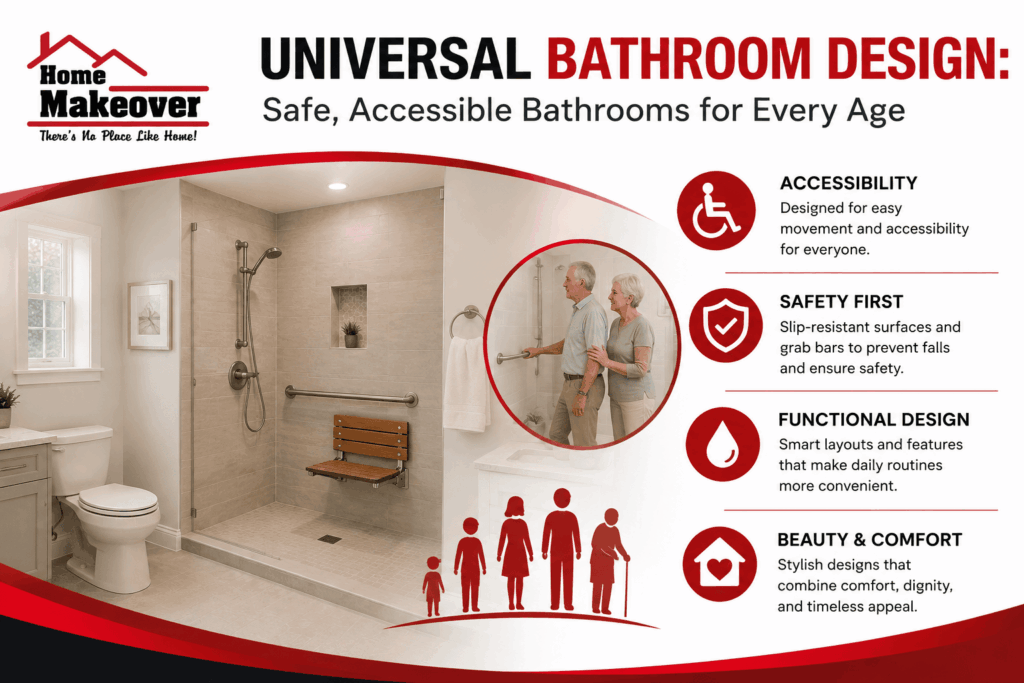
Universal Bathroom Design: Safe, Accessible Bathrooms for Every Age

Bathrooms tend to be among the most-used areas in any home, but conventional tile and step-entrance tubs create countless hurdles for toddlers, busy adults, and seniors. Universal design addresses standard accessibility concerns and offers improved safety with style.

Pick universal design to eliminate daily hassles. Create a more pleasing ambience. Whether you’re considering aging in place or just want to keep your toddler safe and happy, accessible bathroom remodeling in Southern Indianacan help. You will achieve luxury living and peace of mind.

Across Indiana, more homeowners are staying within their own homes for longer, and planning for the future is essential if you want to make sure you can continue living independently.

Inspire homes.

Traditional bathroom renovations typically focus on style. But universal bathroom design puts the emphasis on safety and comfort while still maintaining a beautiful appearance. Working with bathroom renovation contractors in Indiana can help you bring these concepts into play in your own bathroom remodeling project.

Features of an Accessible Bathroom

An accessible bathroom is a barrier-free bathroom that maintains its beauty and luxury appeal at the same time. Luxury bathroom renovation is now on the trend. 

Kitchen and Bath Remodeling 

1. Curbless Walk-In Showers

A modern alternative to standard high-entry tubs, the curbless shower eliminates the step-over barrier at the entrance to the showering area. Removing the step curb makes the transition from bathroom to shower seamless and easy while still allowing for a beautiful design that appeals to all ages and is safe.

2. Stylish Integrated Grab Bars

Grab bars have come a long way from the basic railings typically associated with hospitals. Many contractors offer grab bar installations that utilize integrated towel bars, toilet paper holders, or shelving in brushed nickel, matte black, and other fashionable finishes.

3. Slip Resistant Flooring with Safety

The number one culprit in bathroom falls is the smooth bathroom floor, which is often slippery even when dry. Using slip-resistant materials like textured porcelain tile, mosaic, or matte ceramic or stone, you can enjoy the security of a high-quality, beautiful bath. Luxury bathroom renovation ensures that these types of safety features offer help. 

4. Comfort-Height Toilets and Floating Vanities

Toilets with a slightly higher seat height allow for easier sitting and standing, and floating vanities give you the luxury appeal of a standard vessel sink without the difficulty of kneeling to clean around a fixed vanity.

5. Multi-Functional Shower Controls

Mounting a handheld showering unit on a slide bar offers the flexibility to shower while sitting down on a built-in shower bench or while standing, as needed. The addition of an anti-scald valve ensures that the water temperature remains consistent.

Universal Bathroom Design

How Accessible Remodeling Can Work?

Universal design works by incorporating several features into any bathroom to improve comfort and safety for everyone in the household. By working with licensed bathroom renovation contractors in Indiana, you can be assured that the underlying framing is reinforced to support the weight of grab bars and showering benches.

Common Mistakes to Avoid

Avoid these common pitfalls associated with accessible bathroom remodeling in Southern Indiana. 

Mistake #1: Installing grab bars without wall backing

Why it fails:

Mounting grab bars directly to the drywall can cause the bars to pull out and leave the user hanging, which can lead to serious injury.

Better alternative:

Wall blocking added during the demolition step can be utilized to secure grab bars and other heavy fixtures in place.

Mistake #2: Using glossy, high-shine floor tiles

Why it fails:

Shiny floor tiles tend to become slippery when wet.

Better alternative:

Rather than large format shiny tiles, look into smaller mosaic or textured porcelain and stone tiles that are slip-resistant.

Mistake #3: The failure to account for doorway widths

Why it fails:

28”-30” entry doors are standard in many homes but are too narrow for universal design.

Better alternative:

Expand the width of the door opening to 32-36” or take advantage of pocket doors to save space.

Tips to Get an Accessible Bathroom with Universal Design

Our expert tips will help you get accessible bathroom remodeling in Southern Indiana. 

Pro Tip #1: Layer your lighting sources

Combining overhead can lighting with sconces along the length of the vanity provides ample light while minimizing shadows.

Pro Tip #2: Upgrade to a heated shower seat

Adding a built-in bench inside your shower provides the perfect place to relax while also allowing you to sit and rinse your hair.

Pro Tip #3: Make sure to use either lever or touchless faucets

These are much easier to use and require far less hand strength than older knob-style fixtures.

United Disabilities Services

Pro Tip #4: Look ahead to future needs and address them now

While it may be years before you actually need them, installing the blocking and wider doorways now puts you in a much better position when it comes time to modify your home.

Accessible Remodeling Checklist

Here is a quick overview of the most important considerations for your upscale accessible bathroom remodeling project.

Step 1: Talk with an Experienced Local Contractor

What to do:

Discuss your goals, budget, and specific needs with an Indiana contractor.

Timeline:

~3-4 weeks before starting the project.

Expected result:

A design plan that incorporates your needs and preferences.

Step 2: Pick Universal Fixtures and Finishes

What to do:

Choose slip-resistant flooring, integrated grab bars, thermostatic shower controls, and comfort-height fixtures.

Timeline:

~2 weeks before beginning demolition.

Expected result:

All materials were purchased and inspected for workability.

Step 3: Framing and Plumbing Upgrades

What to do:

Widening doorways, adding wall blocking, and framing adjustments to prepare for curbless showers or other modifications.

Timeline:

First week of construction.

Expected result:

Structural upgrades necessary to support tile or curbless showers are complete. Luxury bathroom renovation requires creative plans. 

Conclusion 

An accessible bathroom remodeling in Southern Indiana is a great way to improve your home for years to come.

By combining a number of innovative design ideas with premium materials and finishes, you can create a space that will be enjoyable for everyone. Whether you’re aging in place or just want to enjoy the peace of mind that comes with a beautiful accessible bathroom, we encourage you to look into what local bathroom renovation contractors in Indiana have to offer! Home Makeover Pro is an expert in remodeling and renovation. Get in touch with us today. 

FAQS

1. What is the difference between an accessible bathroom and universal bathroom design?

An accessible bathroom typically centres on ADA requirements, whereas a universal design is intended to benefit people of all ages while avoiding the institutional look of conventional accessible bathrooms.

2. Can a curbless shower be installed in an existing Southern Indiana home?

Yes, a curbless shower can be installed by adjusting the subfloor framing or utilizing shallow-profile options in a remodel.

3. Do grab bars make a luxury bathroom look like a hospital?

Many grab bar styles are crafted in a range of contemporary finishes and can be incorporated into any bathroom decor, including being disguised as towel bars or shelf supports.

4. How wide should a bathroom doorway be for wheelchair accessibility?

A universal bathroom doorway should ideally be 32” or more to provide adequate clearance.

5. Does a universal bathroom remodel increase home resale value?

Yes, because universal design elements benefit people of all ages and abilities, they are highly desirable to many types of home buyers.

Bathroom Ventilation Mistakes That Lead to Mold, Moisture and Costly Repairs

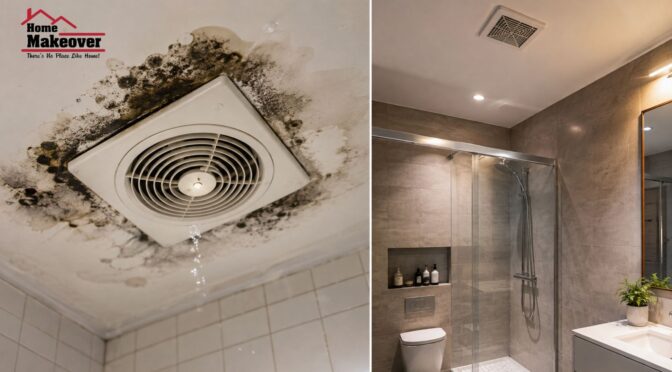
A bathroom can look spotless and still have a hidden moisture problem. Every hot shower sends warm, humid air into the room, and without effective bathroom ventilation, that moisture can settle on walls, ceilings, mirrors, grout and other surfaces. Over time, repeated exposure can contribute to mold growth, peeling paint, damaged finishes and even more expensive repairs.

The problem is rarely caused by one unusually steamy shower. More often, it comes from small ventilation decisions that are repeated every day. Understanding these Bathroom Ventilation Mistakes can help homeowners improve moisture control, protect finishes and maintain healthier indoor air quality.

Why Bathroom Ventilation Matters

Good ventilation is more than simply removing an unpleasant smell. Its primary job is to control humidity by moving moisture-laden air out of the bathroom and replacing it with drier air. When that process works properly, surfaces dry more quickly and the room is less likely to remain damp for long periods.

Bathrooms naturally produce significant moisture. A long shower, bath or even running hot water at the basin can raise humidity quickly. If humid air remains trapped inside the room, condensation can form on cooler surfaces. Repeated condensation creates conditions that can encourage mold and mildew while gradually affecting building materials and finishes.

Effective ventilation also supports indoor air quality. Bathrooms can accumulate odours, airborne particles and pollutants from cleaning products and personal-care products. An appropriately sized and correctly installed exhaust system can help remove these contaminants rather than allowing them to linger.

Ventilation Is More Than an Exhaust Fan

Many homeowners assume that installing an exhaust fan automatically solves every moisture problem. It does not. The fan needs to move enough air, operate for an appropriate period and discharge that air correctly.

A fan that is too small for the room may struggle to remove moisture efficiently. A fan with a clogged grille or dirty components may perform below its original capacity. Even a powerful fan can be ineffective if its ductwork is poorly installed, restricted or terminating somewhere it should not.

Ventilation should therefore be considered as a complete system rather than a single appliance.

Bathroom Ventilation Mistakes Homeowners Commonly Make

Some ventilation problems are surprisingly easy to prevent. Others develop because homeowners do not realise that bathroom design, plumbing, waterproofing and ventilation all influence one another.

Mistake 1: Choosing an Exhaust Fan Based Only on Price

The cheapest fan is not necessarily the most economical choice over its lifetime. A bathroom needs an exhaust fan with suitable airflow capacity for the room and a design that suits how the space is used.

When selecting a fan, consider:

  • Bathroom size and ceiling height
  • Frequency of bathroom use
  • Shower location
  • Existing ductwork
  • Noise levels
  • Ease of cleaning
  • Energy efficiency
  • Moisture load
  • Whether the fan is designed for the installation location

A very quiet fan that moves insufficient air may leave the room humid, while an unnecessarily powerful fan may create other issues if the overall ventilation design is poorly balanced.

Mistake 2: Installing the Fan in the Wrong Location

Fan placement matters. Ideally, the exhaust point should effectively capture humid air before it spreads throughout the room. A fan placed far away from the shower may not remove steam as efficiently as one positioned to capture moisture near its source.

However, placement also needs to account for lighting, cabinetry, shower enclosures, structural components and electrical requirements. Simply choosing a convenient spot in the ceiling is not always the best approach.

During a renovation, this is one reason ventilation should be planned before walls and ceilings are finished.

Moisture Problems Often Start After the Shower

A common misconception is that the bathroom only needs ventilation while someone is showering. In reality, moisture remains in the air and on surfaces after the water has stopped running.

A bathroom may still have elevated humidity for some time after a shower. Walls, tiles, glass and fixtures can remain wet, and towels may continue releasing moisture as they dry.

That is why allowing the exhaust fan to continue operating after bathing can be useful. The exact operating period depends on the room, fan and moisture conditions, but the underlying principle is simple: ventilation should continue long enough to help the room dry.

Mistake 3: Turning the Exhaust Fan Off Too Quickly

Switching the fan off immediately after stepping out of the shower is one of the simplest habits to change.

If the bathroom remains steamy, leaving the fan running for longer can help remove residual humidity. A timer switch or suitable humidity-sensing control can make this easier because the homeowner does not have to remember to switch the fan on and off manually.

The goal is not to run the fan unnecessarily all day. It is to give the ventilation system enough time to perform its intended job.

Mold Prevention Starts With Humidity Control

Mold does not appear simply because a bathroom has water in it. Bathrooms are designed to handle water. Problems occur when moisture is allowed to remain where it should not, particularly when surfaces repeatedly stay damp.

Consistently elevated humidity can create favourable conditions for mold growth. Mold may appear around ceiling corners, grout lines, silicone joints, window frames and other areas where moisture accumulates.

Good moisture control combines several measures:

  • Effective exhaust ventilation
  • Adequate airflow
  • Prompt drying of wet surfaces
  • Proper waterproofing
  • Fixing plumbing leaks quickly
  • Maintaining seals and grout
  • Reducing unnecessary condensation
  • Keeping bathroom surfaces clean

Mistake 4: Assuming Mold Is Only a Cleaning Problem

A small amount of surface mildew can sometimes be addressed through appropriate cleaning. But recurring mold should prompt homeowners to investigate why the area remains damp.

For example, if black spotting repeatedly develops on the same ceiling area despite cleaning, the underlying problem could involve insufficient ventilation, condensation, a plumbing leak or another moisture source.

Simply repainting the affected area without identifying the cause may only hide the problem temporarily.

Moisture Can Damage More Than Paint

Long-term moisture exposure can affect materials throughout a bathroom. Paint may blister or peel, timber can deteriorate, metal components can corrode, and sealants can break down. Persistent moisture can also contribute to unpleasant odours and deterioration around fixtures.

This is where ventilation connects with the broader bathroom construction system.

During bathroom plumbing upgrades, for example, walls and ceilings may already be open, providing an opportunity to inspect concealed areas and consider ventilation improvements at the same time. Coordinating different elements of a renovation can be much easier than discovering a ventilation problem after everything has been finished.

Waterproofing and Ventilation Work Together

Ventilation and waterproofing solve different problems, but both are important in a well-designed bathroom.

Waterproofing is intended to manage water exposure and prevent moisture from penetrating building elements where it should not. Ventilation, by contrast, manages humid air and condensation.

A properly waterproofed bathroom can still experience mold or condensation if humid air is not removed effectively. Likewise, excellent ventilation cannot compensate for defective waterproofing or a concealed plumbing leak.

Mistake 5: Treating Waterproofing as a Replacement for Ventilation

This misunderstanding can lead to expensive decisions. Some homeowners assume that because their shower has been waterproofed, moisture cannot cause building problems.

Waterproofing does not prevent humid air from condensing on surfaces. It also does not stop moisture from accumulating on ceilings, mirrors, grout or other exposed areas.

A healthy bathroom needs both water management and air management.

Bathroom Design Can Create Hidden Ventilation Challenges

The layout of a bathroom can influence how easily moisture is removed. Large shower enclosures, enclosed wet areas and poorly positioned openings can change airflow patterns.

A beautifully designed bathroom may still perform poorly if ventilation is treated as an afterthought.

For example, a frameless glass shower enclosure can create a visually open space while also concentrating steam within the enclosure during use. If the exhaust system does not effectively remove that humid air, condensation may remain longer than expected.

This is one reason ventilation should be considered during the design stage rather than added after the renovation is complete.

Mistake 6: Ignoring the Door and Airflow Path

An exhaust fan needs replacement air to work effectively. If a bathroom is completely sealed when the door is closed, the fan may struggle to draw air through the room.

The solution does not necessarily mean leaving the door wide open. Depending on the design, an appropriate gap beneath the door or another planned air pathway can allow replacement air to enter while the exhaust system removes humid air.

The exact arrangement should suit the home’s ventilation strategy, but the principle is important: air needs a path into the room as well as a path out.

Exhaust Fan Maintenance Is Often Overlooked

Even a well-designed ventilation system needs maintenance. Dust and debris can accumulate around the fan grille and internal components, reducing airflow.

Homeowners should periodically inspect and clean accessible fan components according to the manufacturer’s instructions. Unusual noise, reduced airflow or persistent condensation can also indicate that the system needs attention.

A useful practical check is to observe how the bathroom behaves after a normal shower. If the mirror, ceiling or walls remain heavily covered in condensation long after the shower ends, the ventilation system may not be performing adequately.

Mistake 7: Ignoring Plumbing Leaks Because the Bathroom Looks Dry

Not every moisture problem comes from shower steam. A slow leak behind a vanity, toilet, bath or wall can introduce moisture into areas that are difficult to see.

Signs worth investigating include:

  • Musty smells
  • Swollen cabinetry
  • Damp flooring
  • Discoloured walls
  • Peeling paint
  • Persistent mould in one location
  • Loose tiles
  • Unexpected increases in water use

Ventilation cannot solve a plumbing leak. If moisture continues entering the building from a hidden source, improving the exhaust fan alone will not address the underlying issue.

When a Bathroom Remodel Is the Right Time to Improve Ventilation

A bathroom remodel provides an excellent opportunity to reassess ventilation because walls, ceilings, lighting, electrical systems and plumbing may already be undergoing changes.

Before finalising the design, homeowners should consider:

  1. Where moisture is generated.
  2. Where the exhaust fan will be positioned.
  3. Whether existing ductwork is suitable.
  4. Where extracted air will discharge.
  5. How replacement air will enter the room.
  6. Whether the fan capacity suits the space.
  7. How the system will be maintained.
  8. Whether waterproofing and plumbing work need attention.

Addressing these points before finishes are installed can help avoid opening the ceiling again later.

Practical Bathroom Ventilation Tips for Homeowners

Small daily habits can support the performance of a properly designed system.

Use the Exhaust Fan Consistently

Switch the fan on when showering and allow it to continue operating afterwards for an appropriate period. A timer or humidity-sensing control can make this more convenient.

Keep the Fan Clean

Dust buildup can restrict airflow. Clean accessible components according to the manufacturer’s instructions and arrange professional attention if the fan develops faults.

Watch for Recurring Condensation

Occasional condensation is normal in many bathrooms. Persistent heavy condensation, damp patches or recurring mold deserves investigation rather than repeated cosmetic treatment.

Dry Wet Surfaces When Practical

A quick wipe of heavily wet shower surfaces can reduce the amount of moisture that must eventually evaporate into the room.

Address Leaks Promptly

A small plumbing leak can become a major repair when moisture remains concealed for a long time. Do not assume every damp smell or mould patch is caused by poor ventilation.

Expert Advice: Look at the Whole Moisture System

One of the most useful lessons from bathroom projects is that moisture problems rarely have only one possible cause. When a homeowner reports persistent mould, the right response is not automatically to install a larger fan.

Start by asking where the moisture is coming from, where it is going and how long it remains.

Is the exhaust fan working? Is the airflow adequate? Is the ductwork properly configured? Is there enough replacement air? Are surfaces staying wet? Is there a plumbing leak? Is waterproofing performing correctly? Is condensation occurring because of temperature differences?

Answering these questions creates a much more reliable solution than treating the visible symptom.

How to Know When Your Ventilation Needs Professional Attention

Some warning signs should not be ignored, especially when they continue despite normal cleaning and ventilation habits.

Consider having the system assessed if:

  • Mold repeatedly returns after cleaning.
  • The bathroom remains humid for an unusually long time.
  • The exhaust fan has become noticeably weaker.
  • The fan makes unusual noises.
  • Condensation regularly forms on ceilings and walls.
  • Paint or finishes repeatedly peel.
  • Musty smells persist.
  • Moisture damage appears outside the immediate shower area.
  • A bathroom renovation is being planned.

Professional assessment can help distinguish between ventilation deficiencies, plumbing problems, waterproofing failures and surface-level maintenance issues.

Final Takeaway

The most expensive bathroom moisture problems often begin with something that seems minor: a fan that is too weak, poor airflow, inadequate maintenance, a fan switched off too quickly or a leak that went unnoticed. Avoiding these Bathroom Ventilation Mistakes means looking beyond the exhaust fan and considering the entire moisture-management system.

For homeowners planning a new bathroom or updating an existing one, ventilation should be considered alongside layout, plumbing, waterproofing and everyday use. Home Makeover Pro approaches bathroom improvements with this whole-room perspective, helping homeowners think through practical design and moisture-management considerations before problems become expensive.

If you are considering a renovation or concerned about recurring moisture, Home Makeover Pro can help you evaluate the practical aspects of your bathroom project. A thoughtful approach to ventilation, waterproofing and bathroom plumbing upgrades can make the finished space more comfortable, durable and easier to maintain for years to come.

Frequently Asked Questions

1. How long should a bathroom exhaust fan run after a shower?

There is no single time that works for every bathroom. Room size, fan capacity, shower duration, humidity and airflow all affect drying time. In general, the fan should continue operating after the shower rather than being switched off immediately. A timer or humidity-sensing control can help maintain ventilation without requiring homeowners to remember when to turn it off.

2. Can poor ventilation cause bathroom mold?

Yes, inadequate ventilation can contribute to persistent humidity and condensation, which may create favourable conditions for mold growth. However, recurring mold can also indicate plumbing leaks, defective waterproofing or other moisture sources. If mould repeatedly returns in the same area, it is better to investigate the moisture source rather than repeatedly cleaning and repainting the affected surface.

3. Is a bigger exhaust fan always better?

Not necessarily. The exhaust system should be appropriately matched to the bathroom and its ventilation requirements. A larger fan does not automatically correct poor ductwork, unsuitable placement or inadequate replacement airflow. Noise, energy use and installation conditions also matter. The objective is effective air movement and moisture removal, not simply choosing the largest available fan.

4. Should ventilation be upgraded during a bathroom renovation?

A renovation is often a sensible time to review ventilation because the ceiling, walls, electrical systems and other components may already be accessible. Planning ventilation alongside plumbing, waterproofing and bathroom layout can reduce the likelihood of having to modify finished areas later. It also gives homeowners an opportunity to address existing problems rather than carrying them into the new bathroom.

5. What is the difference between ventilation and waterproofing?

Ventilation manages humid air and helps control condensation, while waterproofing protects building elements from water penetration. They address different moisture risks and should not be treated as interchangeable. A bathroom can have effective waterproofing but still suffer from condensation if humid air is trapped. Similarly, good ventilation cannot correct defective waterproofing or a concealed plumbing leak.

Shower and Bathtub Replacement in Louisville Trends Homeowners Should Know in 2026

A bathroom remodel can look straightforward until you start making decisions about the shower, bathtub, enclosure, fixtures, waterproofing, storage, and accessibility. What looks like a simple replacement can quickly become a long-term decision about comfort, maintenance, safety, and how well the bathroom fits your household.

For Louisville homeowners, Shower and Bathtub Replacement in Louisville is increasingly about more than updating an outdated appearance. Homeowners are looking for practical bathroom upgrades that improve daily use while creating a cleaner, more comfortable, and more durable space.

In 2026, the strongest remodeling choices are not necessarily the most expensive ones. They are the ones that match the home’s layout, the users’ needs, available space, maintenance expectations, and long-term plans.

This guide explores the latest considerations for replacing a shower or bathtub, including walk-in designs, freestanding tubs, shower enclosures, waterproofing, bathroom fixtures, accessibility, and design trends that can make a bathroom renovation more functional.

Why Shower and Bathtub Replacement Is Changing in 2026?

Bathroom remodeling has shifted from purely cosmetic upgrades toward practical improvements that homeowners can appreciate every day.

An older tub or shower may still function, but that does not mean it is performing well. Common problems include:

  • Difficult-to-clean surfaces
  • Cracked or deteriorated surrounds
  • Poorly functioning shower doors
  • Outdated plumbing fixtures
  • Limited storage
  • High thresholds that are difficult to step over
  • Water escaping from the shower area
  • Poor lighting
  • Insufficient ventilation
  • An inefficient bathroom layout

A replacement project provides an opportunity to address several of these problems at the same time.

The key is to avoid choosing products based solely on appearance. A beautiful shower can become frustrating if the enclosure is difficult to maintain. A large bathtub may look impressive but provide little practical value if nobody in the household uses it.

That is why today’s approach to shower and bathtub replacement Louisville projects increasingly starts with lifestyle and function before aesthetics.

Understanding Your Bathroom Before Choosing a Replacement

Before selecting a new Shower or Bathtub, evaluate the existing bathroom carefully.

Start by considering how the room is used. Is it primarily a family bathroom, a guest bathroom, a primary ensuite, or a bathroom used by someone with mobility concerns?

Then examine the existing configuration.

Important questions include:

  • Where are the existing water supply lines?
  • Where is the drain located?
  • How much floor space is available?
  • Does the bathroom have adequate ventilation?
  • Is the existing wall assembly suitable for a new wet area?
  • Are there signs of previous water damage?
  • Does the current layout make movement difficult?
  • Is a bathtub actually needed?
  • Would a larger shower improve daily use?

Keeping the existing plumbing locations can sometimes reduce the complexity of a renovation. However, preserving the existing layout should not automatically take priority over creating a substantially better bathroom.

An experienced remodeling professional should evaluate both options and explain the practical consequences before work begins.

Walk-In Shower Trends Louisville Homeowners Should Consider

The walk-in shower continues to be one of the most practical bathroom upgrades for homeowners who prioritize easy access and modern design.

Unlike a traditional tub-shower combination, a walk-in shower can provide a more open entry and eliminate the need to climb over a bathtub wall.

Why Are Walk-In Showers Popular?

A properly designed walk-in shower can provide:

  • Easier entry and exit
  • A more open visual appearance
  • Flexible sizing
  • Better accessibility
  • Convenient seating options
  • Multiple storage possibilities
  • Modern design flexibility

However, “walk-in” does not automatically mean “barrier-free.” The finished entry depends on the floor structure, drain configuration, waterproofing system, and overall design.

If the shower floor needs to transition to the bathroom floor with minimal height difference, the underlying structure may require careful planning.

Choosing the Right Walk-In Shower Size

Bigger is not always better.

A very large shower can consume valuable floor space that might otherwise be used for storage or comfortable movement.

For smaller Louisville bathrooms, a carefully planned shower can often provide a better result than simply maximizing the shower footprint.

Consider:

  • Door swing
  • Entry width
  • Showerhead location
  • Storage placement
  • Available elbow room
  • Cleaning access
  • Position of other bathroom fixtures

A good design should allow the user to move naturally without constantly working around the shower enclosure.

Freestanding Tub vs Traditional Bathtub Replacement

The freestanding tub remains an attractive choice for homeowners, creating a more upscale bathroom environment.

Its visual impact can make the bathtub a focal point, particularly in larger primary bathrooms.

However, a freestanding tub is not automatically the best solution.

When a Freestanding Tub Makes Sense?

A freestanding bathtub may work well when:

  • The bathroom has sufficient floor area
  • The homeowner regularly enjoys baths
  • There is adequate clearance around the tub
  • The floor can support the installation requirements
  • Plumbing can be positioned appropriately
  • Cleaning access is practical

A freestanding tub can also influence the rest of the layout. Water supply lines and drains may need to be positioned specifically for the tub’s location.

When a Built-In Tub May Be Better?

A built-in bathtub can make more sense when space is limited or when the tub needs to serve multiple functions.

For example, a family bathroom may need a tub for children while also providing a shower for adults. A tub-shower combination can sometimes deliver greater versatility than installing separate fixtures.

The best choice depends on how the household actually uses the room—not simply on what currently appears in design magazines.

Shower Enclosure Options and What to Look For

The shower enclosure is one of the most visible elements of a remodeled bathroom, but its performance matters just as much as its appearance.

Common options include framed, semi-frameless, and frameless glass designs.

Frameless Glass

Frameless glass can create an open, contemporary appearance and visually expand the bathroom.

However, homeowners should consider:

  • Glass thickness
  • Hardware quality
  • Door clearance
  • Cleaning requirements
  • Proper installation
  • Seal and drainage details

Framed and Semi-Frameless Designs

Framed or semi-frameless enclosures can provide a practical alternative, particularly when budget, structural requirements, or design preferences make a fully frameless system unnecessary.

The important consideration is not whether one style is universally better. It is whether the enclosure is appropriately designed and installed for the bathroom.

Waterproofing Is More Important Than the Tile

One of the most important lessons in bathroom remodeling is that attractive tile does not equal a waterproof shower.

The visible tile, grout, and decorative surfaces are only part of the system.

Proper waterproofing helps protect the structure behind the finished surface from moisture intrusion.

What Proper Shower Waterproofing Involves

Depending on the construction system, a professional installation may involve:

  • A suitable waterproof membrane
  • Properly treated wall joints
  • Correct shower pan or base preparation
  • Properly sealed penetrations
  • Appropriate transitions
  • Correct drainage
  • Careful treatment around niches and benches

The exact waterproofing approach can vary depending on the system and construction method.

Why Are Waterproofing Problems Expensive?

A leak that is not immediately visible can allow moisture to reach framing or other building materials.

By the time staining, swelling, odors, or other visible signs appear, the problem may be significantly more complicated.

This is why waterproofing should never be treated as an optional upgrade simply because it will not be visible after the project is finished.

For homeowners comparing remodeling proposals, ask what waterproofing system will be used and how critical transitions and penetrations will be handled.

Bathroom Fixtures Are Becoming More Purpose-Driven

Modern bathroom fixtures are increasingly selected for their combination of comfort, efficiency, appearance, and usability.

A bathroom replacement project may involve more than changing the showerhead.

Potential fixture upgrades include:

  • Handheld showerheads
  • Adjustable shower systems
  • Thermostatic or pressure-balancing controls
  • Modern faucets
  • Improved drains
  • Grab bars
  • Heated accessories
  • Water-efficient fixtures

The right combination depends on household needs.

For example, a handheld showerhead can be particularly useful for cleaning the shower, bathing children, or assisting someone who needs to sit while showering.

The goal should be to choose fixtures that solve an actual problem rather than adding features simply because they are available.

Accessibility Should Be Considered Before the Remodel Begins

Accessibility is not only relevant to homeowners with an immediate mobility concern.

People’s needs can change over time. A bathroom remodeled today may need to remain practical for many years.

Accessibility Features Worth Considering

Depending on the household, useful features may include:

  • Low-threshold shower entry
  • Wider shower access
  • Handheld showerheads
  • Strategically positioned grab bars
  • Built-in or fold-down seating
  • Slip-resistant flooring
  • Easy-to-reach controls
  • Adequate lighting
  • Clear floor space

One important consideration is grab-bar reinforcement.

If a homeowner thinks grab bars might be useful in the future, it is often worth discussing structural reinforcement before the walls are closed. Planning can be much easier than attempting to modify the wall structure later.

Accessibility should also look beyond the shower itself. The bathroom entrance, toilet clearance, vanity height, flooring transitions, and general circulation all contribute to usability.

Luxury Bathroom Renovation Does Not Have to Mean Overbuilding

A luxury bathroom renovation is sometimes misunderstood as simply adding expensive materials.

In practice, luxury can mean better functionality.

For one homeowner, luxury may be a spacious walk-in shower with a comfortable bench. For another, it could be a deep soaking tub, heated flooring, improved lighting, or exceptionally easy-to-clean surfaces.

Consider where an investment will make the greatest difference.

For example, spending heavily on decorative tile while using an inconvenient shower layout may produce a visually impressive but frustrating bathroom.

A better approach is to prioritize:

  1. Layout
  2. Waterproofing
  3. Structural integrity
  4. Functionality
  5. Fixtures
  6. Lighting
  7. Storage
  8. Finishing details

This approach helps keep the project focused on long-term value.

Bathroom Remodeling Services Should Begin With an Assessment

Professional bathroom remodeling services can vary considerably in scope.

A quality remodeling process should begin with understanding the existing bathroom rather than immediately recommending products.

A thorough assessment may consider:

  • Existing plumbing
  • Electrical requirements
  • Ventilation
  • Wall and floor conditions
  • Water damage
  • Drain configuration
  • Available space
  • Household accessibility requirements
  • Desired functionality
  • Finish preferences

Homeowners should also understand what is included in a remodeling proposal.

Ask whether the quote addresses demolition, disposal, plumbing modifications, waterproofing, installation, finishing, and cleanup.

A very low initial estimate may not be comparable with a more comprehensive proposal if important work has been excluded.

2026 Design Trends Worth Considering

Not every trend deserves a place in every bathroom. The strongest choices tend to combine contemporary design with long-term practicality.

Large-Format Wall Surfaces

Larger tiles or wall panels can reduce the number of visible joints and may create a cleaner appearance.

They can also make maintenance easier in some applications because there are fewer grout lines.

Integrated Storage

Built-in niches and thoughtfully positioned shelving can eliminate the need for bulky shower organizers.

However, niches need proper waterproofing and should be positioned at a comfortable height.

Neutral, Timeless Finishes

Neutral finishes can provide a flexible foundation for future decorating changes.

Instead of making every component highly trendy, homeowners can introduce personality through mirrors, lighting, hardware, accessories, and paint.

Better Lighting

A bathroom needs more than one overhead light.

Layered lighting can include:

  • General illumination
  • Vanity lighting
  • Shower-area lighting where appropriate
  • Accent lighting

Good lighting improves both functionality and the appearance of the finished materials.

Real-Life Scenarios to Think About

Consider three different Louisville homeowners.

Scenario 1: The Busy Family Bathroom

A family uses one bathroom for children and adults. The existing tub is functional but has an outdated surround.

Replacing it with a sophisticated freestanding tub may look attractive but may not solve the family’s needs.

A tub-shower combination with durable surfaces, handheld controls, storage, and easy-to-clean materials could provide greater everyday value.

Scenario 2: The Aging-in-Place Bathroom

A homeowner wants a bathroom that will remain practical as mobility changes.

A low-threshold walk-in shower, seating, handheld showerhead, appropriate grab-bar reinforcement, and slip-resistant flooring may be more important than decorative upgrades.

Planning these elements during the remodel can avoid expensive modifications later.

Scenario 3: The Primary Bathroom Upgrade

A couple rarely uses their existing bathtub but wants a more comfortable primary bathroom.

Instead of automatically replacing the tub with another tub, they could evaluate whether the space would be better used for a larger shower, improved storage, or a more accessible layout.

The right answer depends on how they live—not on a universal remodeling rule.

Common Mistakes Homeowners Should Avoid

Choosing Products Before Planning the Layout

A beautiful fixture can create problems if it does not work with the room’s dimensions.

Plan the layout first, then select products that fit.

Focusing Only on Visible Finishes

Tile, glass, faucets, and countertops receive attention because they are visible.

But waterproofing, substrate preparation, plumbing, drainage, and structural support are equally important.

Assuming Every Shower Can Be Made Barrier-Free

The existing floor and drain configuration can affect what is possible.

A professional should assess the construction before promising a completely level entry.

Ignoring Ventilation

Moisture management does not end with waterproofing.

Adequate bathroom ventilation helps control humidity and can contribute to a healthier, more durable bathroom environment.

Adding Too Many Features

Multiple showerheads, elaborate controls, oversized niches, and complicated fixtures can increase installation complexity.

Choose features because they improve the way you use the bathroom.

Expert Tips for a Better Shower and Bathtub Replacement

If you’re planning a shower and bathtub replacement in Louisville, keep these practical recommendations in mind:

Measure before shopping.
Record the bathroom dimensions, existing tub or shower footprint, door locations, and available clearances.

Think about the next five to ten years.
A remodel should not only solve today’s problems. Consider whether the bathroom will remain comfortable as household needs change.

Ask about waterproofing specifically.
Do not accept vague statements such as “the shower will be waterproof.” Ask which system is being used and how corners, seams, penetrations, and transitions will be treated.

Prioritize maintenance.
Consider how much time you want to spend cleaning grout, glass, hardware, and fixtures.

Don’t sacrifice function for trends.
A timeless layout with durable materials can remain useful long after a particular design trend has disappeared.

Compare complete proposals.
Look beyond the headline price. Determine whether demolition, disposal, plumbing, waterproofing, installation, finishing, and cleanup are included.

Use qualified professionals for complex work.
Bathroom remodeling can involve plumbing, electrical, structural, waterproofing, and finish work. The right expertise matters when these systems interact.

Questions to Ask Before Hiring a Remodeling Professional

Before approving a project, ask:

  • What condition is the existing shower or tub area in?
  • Will the plumbing need to move?
  • What waterproofing system will be installed?
  • How will the shower drain be handled?
  • Are structural modifications required?
  • What products are included in the proposal?
  • Who handles permits when they are required?
  • How will unexpected water damage be addressed?
  • What is the expected project timeline?
  • What work is excluded from the estimate?

A trustworthy professional should be comfortable explaining these details clearly rather than pressuring you into a quick decision.

Final Thoughts on Shower and Bathtub Replacement in Louisville

The best bathroom remodel is not necessarily the one with the most expensive fixtures or the trendiest finishes. It is the one that makes the space work better for the people who use it.

For homeowners considering Shower and Bathtub Replacement in Louisville, 2026 trends point toward practical design: comfortable walk-in showers, appropriately sized bathtubs, thoughtfully selected shower enclosures, reliable waterproofing, useful bathroom fixtures, better storage, and accessibility-conscious layouts.

Before choosing a product, evaluate the room. Before choosing a finish, understand the construction. And before accepting a remodeling proposal, make sure you understand what work is actually included.

A well-planned bathroom should look good on installation day—but more importantly, it should continue to function comfortably, safely, and reliably for years afterward.

FAQs

1. Is a walk-in shower better than a bathtub for a Louisville bathroom?

Neither is universally better. A walk-in shower can be a strong choice for homeowners who prioritize accessibility, quick daily use, and easier entry. A bathtub may be more appropriate for families with young children or homeowners who regularly take baths. The available space and household needs should determine the choice.

2. How do I choose between replacing my bathtub and installing a shower?

Start by evaluating how often the existing bathtub is actually used. If the tub is rarely used and the household would benefit from easier access, a shower replacement or tub-to-shower conversion may make sense. If the bathroom serves children or bathing is an important part of the household routine, retaining a bathtub may provide greater versatility.

3. What is the most important part of a shower replacement?

The visible finish is not necessarily the most important part. Proper substrate preparation, waterproofing, drainage, installation, and plumbing are fundamental to long-term performance. A shower can look excellent immediately after installation but still experience problems later if moisture-management details were handled poorly.

4. Should accessibility be considered during a standard bathroom remodel?

Yes. Even when accessibility is not an immediate concern, incorporating features such as a lower shower threshold, handheld showerhead, reinforced walls for future grab bars, good lighting, and adequate clearance can make the bathroom easier to use over time. Planning these details during construction is generally more practical than retrofitting them later.

5. What should I prioritize when budgeting for shower and bathtub replacement?

Prioritize the components that affect performance and durability first. These generally include the layout, plumbing, structural preparation, waterproofing, drainage, and quality installation. Once those fundamentals are addressed, allocate the remaining budget toward fixtures, tile, glass, storage, lighting, and decorative finishes.

How to Plan a Bathroom Remodeling Project for Long-Term Comfort and Functionality in Southern Indiana & Louisville

A bathroom can look beautiful on the day a renovation is completed and still become frustrating a few years later. A vanity may not provide enough storage, the shower may feel cramped, lighting may create shadows, or the plumbing layout may make future maintenance unnecessarily difficult.

That is why a successful Bathroom Remodeling Project should be planned around more than appearance. The goal is to create a space that works comfortably for the people using it today while remaining practical as household needs change.

For homeowners considering bathroom remodeling services in Louisville, thoughtful planning can make the difference between a renovation that simply looks updated and one that genuinely improves everyday life. The same principle applies when working with bathroom renovation contractors in Southern Indiana, particularly when adapting older bathrooms to modern family needs.

From layout and storage to lighting, plumbing, accessibility, materials, and long-term maintenance, every decision should have a practical reason behind it.

Why Planning Matters Before Bathroom Remodeling

One of the most common mistakes homeowners make is choosing finishes before deciding how the bathroom should function.

It is easy to become focused on tile colors, countertops, mirrors, and fixtures. Those details matter, but they are difficult to change once walls are closed and plumbing has been installed.

Good bathroom planning starts with questions such as:

  • Who uses the bathroom every day?
  • How many people need to use it during busy mornings?
  • Is it a family bathroom, guest bathroom, primary bathroom, or shared space?
  • Does the current layout create bottlenecks?
  • Is there enough storage for toiletries, towels, and cleaning supplies?
  • Does the shower provide enough space?
  • Are electrical outlets and lighting positioned appropriately?
  • Could mobility or accessibility become more important in the future?
  • Are there existing plumbing or ventilation problems?

Answering these questions early helps establish priorities before money is committed to cosmetic features.

A practical renovation also considers what happens several years from now. Children grow, household routines change, and homeowners may eventually want easier access, better storage, or lower-maintenance finishes.

The best renovation is therefore not necessarily the most expensive one. It is the one where the budget is directed toward improvements that provide lasting value.

Bathroom Remodeling: Start With the Existing Space

Before changing the bathroom, understand what you already have.

An experienced remodeling professional will normally assess the existing walls, flooring, fixtures, ventilation, electrical work, plumbing connections, moisture conditions, and structural limitations before recommending major changes.

This is particularly important in older homes.

A bathroom may have outdated fixtures on the surface, but there could also be hidden issues behind the walls. Previous repairs, aging plumbing, inadequate ventilation, water damage, or poorly planned electrical work can affect the scope of a renovation.

During the initial assessment, document:

  • Current room dimensions
  • Door and window positions
  • Existing fixture locations
  • Water supply and drain locations
  • Electrical outlets and switches
  • Exhaust fan location
  • Ceiling height
  • Available wall space
  • Existing storage
  • Signs of moisture or water damage

This information becomes the foundation for the remodeling plan.

It can also prevent a common problem: designing a beautiful bathroom on paper without considering the practical limitations of the existing building.

Layout: Design Around How Your Family Lives

Layout is one of the most important decisions in a bathroom renovation because it affects nearly everything else.

A bathroom with expensive fixtures can still feel uncomfortable if the toilet, vanity, shower, and door interfere with one another.

Think about movement first.

For a family bathroom, consider how two or more people may use the room at the same time. Can one person brush their teeth while another opens the shower door? Can someone access the vanity without blocking the entrance? Is there enough space around the toilet?

Small improvements to the layout can have a surprisingly large impact.

Consider the Plumbing Layout Before Moving Fixtures

Changing the plumbing layout can sometimes increase renovation complexity and cost. Moving a toilet, shower drain, or major water connection may require additional work beneath the floor or inside walls.

That does not mean plumbing should never be moved. Sometimes a new layout is worth the investment because it solves a major functional problem.

The key is to compare the long-term benefit with the additional construction requirements.

For example, moving a vanity several inches might create better circulation and make the room significantly easier to use. Moving every fixture to the opposite side of the room, however, may involve much more extensive plumbing work.

A professional remodeling consultation should evaluate these trade-offs before construction begins.

Storage: Plan for Real-Life Bathroom Needs

Storage is often underestimated during bathroom renovations.

Homeowners frequently plan for the vanity but forget about towels, toilet paper, toiletries, hair-care products, cleaning supplies, children’s items, and everyday personal products.

A bathroom can look clean and organized while still having inadequate storage.

Build Storage Into the Design

Depending on the available space, useful storage solutions may include:

  • Vanity drawers instead of only cabinet doors
  • Recessed shower niches
  • Built-in shelving
  • Tall linen cabinets
  • Mirrored medicine cabinets
  • Pull-out organizers
  • Towel storage near the shower
  • Dedicated storage for cleaning products

Think about what needs to be reached every day versus what can be stored farther away.

For example, frequently used skincare products should not have to be pulled from a deep cabinet every morning. Similarly, extra towels can be stored in a linen cabinet rather than occupying valuable vanity space.

Good storage is not simply about adding more cabinets. It is about placing storage where it makes daily routines easier.

Lighting: Create a Bathroom That Works Morning and Night

Lighting is another area where function should come before decoration.

A single ceiling fixture may technically illuminate a bathroom, but it can create shadows around the face when someone is shaving, applying makeup, styling hair, or getting ready for work.

A better lighting design usually combines several types of lighting.

Use Layers of Lighting

Consider three basic categories:

Ambient lighting:
Provides general illumination throughout the room.

Task lighting:
Helps with activities around the vanity, mirror, shower, or other work areas.

Accent lighting:
Adds visual interest and can highlight architectural details or decorative features.

Vanity lighting deserves particular attention. Properly positioned fixtures can reduce harsh shadows and make grooming tasks easier.

Nighttime lighting can also improve comfort. A low-level light source can help someone navigate the bathroom without turning on bright overhead lighting in the middle of the night.

When planning electrical work, think about switches, outlets, ventilation controls, heated features, and future technology as well as the light fixtures themselves.

Design: Choose Materials for Daily Use

A bathroom is exposed to moisture, humidity, temperature changes, cleaning products, and frequent use. Materials therefore need to be selected for both appearance and durability.

A finish that looks impressive in a showroom may not necessarily be the best choice for a busy family bathroom.

When selecting materials, consider:

  • Water resistance
  • Ease of cleaning
  • Slip resistance
  • Maintenance requirements
  • Durability
  • Availability of replacement materials
  • Compatibility with the room’s moisture levels

Flooring is particularly important. A bathroom floor should provide appropriate traction when wet rather than being selected purely because it looks attractive.

Similarly, grout color and tile size can influence maintenance. Some combinations show dirt more readily than others, while heavily textured surfaces may require more effort to clean.

The best design decisions balance appearance with the realities of everyday household use.

Plan the Bathroom Around Long-Term Comfort

A bathroom renovation is an opportunity to think beyond immediate needs.

Even if everyone in the household currently has excellent mobility, long-term planning can make the space more adaptable.

Some examples include:

  • A curbless or low-threshold shower
  • Comfortable shower controls
  • Handheld shower functionality
  • Wider clearances where practical
  • Easy-to-reach storage
  • Strong task lighting
  • Strategically placed wall reinforcement for future grab bars
  • Slip-resistant flooring

These features do not necessarily make a bathroom look institutional. When integrated thoughtfully, they can create a modern and comfortable space that is easier for almost everyone to use.

Long-term comfort is especially valuable in a home intended to remain in the family for many years.

Bathroom Planning Should Include Ventilation

Ventilation is one of the less glamorous parts of bathroom remodeling, but it is critical.

Bathrooms naturally produce moisture. Without adequate ventilation, humidity can accumulate on walls, ceilings, mirrors, and other surfaces.

Over time, excessive moisture can contribute to unpleasant odors, peeling finishes, deterioration, and moisture-related problems.

A properly planned exhaust system should effectively remove humid air from the bathroom rather than simply moving it into an attic or another enclosed area.

During a renovation, check whether the existing ventilation system is appropriately sized and correctly exhausted.

Improving ventilation may not be as visually exciting as installing a new vanity, but it can protect the investment you are making in the rest of the room.

Think About Maintenance Before Choosing Features

A beautiful bathroom should not become a high-maintenance bathroom.

Ask yourself how much time you realistically want to spend cleaning the space.

For example, intricate tile patterns may look impressive but can involve more grout lines. Frameless shower glass can create an open appearance but still requires regular cleaning. Large-format tiles may reduce grout lines in some applications.

This does not mean homeowners should avoid decorative features.

Instead, use high-maintenance elements selectively and make sure the overall design remains manageable.

A practical renovation considers not only how the bathroom will look after installation but also how it will look after hundreds of showers, countless hand-washing sessions, and years of regular cleaning.

Common Bathroom Remodeling Mistakes to Avoid

Mistake 1: Focusing Only on Appearance

A bathroom can be visually impressive while being difficult to use.

Function should establish the foundation. Finishes should support that foundation.

Mistake 2: Underestimating Storage

If storage is not planned before construction, homeowners often end up adding freestanding shelves or crowded countertop organizers later.

Mistake 3: Ignoring Lighting

Poor lighting can make an otherwise excellent renovation feel uncomfortable.

Plan lighting around activities, not just ceiling locations.

Mistake 4: Moving Plumbing Without Evaluating the Cost

A new layout may be worthwhile, but major plumbing changes should be evaluated carefully before demolition begins.

Mistake 5: Choosing Materials Without Considering Maintenance

Ask how a material will perform after years of moisture, cleaning, and everyday use—not just how it looks on installation day.

Mistake 6: Forgetting Ventilation

A new bathroom needs more than attractive finishes. Moisture management should be part of the plan from the beginning.

Mistake 7: Spending the Budget Too Early

It is easy to spend heavily on premium fixtures before addressing functional problems.

Prioritize the layout, plumbing, ventilation, storage, lighting, and durability first. Decorative upgrades can then be selected around the remaining budget.

Practical Strategies for Managing Your Remodeling Budget

A realistic budget should account for more than fixtures and visible finishes.

Depending on the project, costs may include:

  • Demolition
  • Plumbing
  • Electrical work
  • Waterproofing
  • Flooring
  • Wall finishes
  • Cabinets and vanity
  • Fixtures
  • Lighting
  • Ventilation
  • Labor
  • Permits where applicable
  • Unexpected repairs

It is also sensible to keep a contingency allowance for issues discovered after demolition.

For example, removing an old shower may reveal damaged materials that were not visible during the initial inspection. Having some budget flexibility prevents homeowners from being forced into rushed decisions.

When comparing estimates, look beyond the final price. Ask what is included, which materials are specified, how changes are handled, and whether the proposed scope addresses the underlying problems.

The cheapest estimate is not automatically the best value.

What to Discuss During a Remodeling Consultation

A useful remodeling consultation should be a two-way conversation.

Instead of simply showing a contractor photographs of bathrooms you like, explain how your current bathroom fails to meet your needs.

Discuss:

  • What you like about the existing bathroom
  • What frustrates you
  • Who uses the bathroom
  • How often it is used
  • Storage problems
  • Lighting problems
  • Water or moisture concerns
  • Accessibility considerations
  • Desired maintenance level
  • Preferred design style
  • Budget priorities
  • Long-term plans for the home

For example, saying “the bathroom feels crowded every morning” gives a professional a useful functional problem to solve.

Saying “I want a bigger vanity” identifies a desired feature but does not necessarily explain why it is needed.

The strongest remodeling decisions come from understanding the problem first.

When to Work With Bathroom Renovation Contractors in Southern Indiana

Some bathroom improvements are suitable for homeowners who enjoy DIY projects. Painting, replacing certain accessories, or installing simple storage may be manageable depending on experience.

More complicated renovations are different.

Once a project involves plumbing changes, electrical work, waterproofing, structural modifications, or extensive demolition, professional planning becomes particularly valuable.

Qualified bathroom renovation contractors in Southern Indiana can help evaluate the existing space, identify potential problems, coordinate trades, and develop a practical renovation sequence.

The same principle applies to larger projects in Louisville where multiple systems may need to be coordinated.

A professional team should be able to explain not only what they recommend but also why the recommendation makes sense for the space.

Expert Tips for a More Successful Bathroom Remodel

Experienced remodeling decisions often come down to small details that are easy to overlook.

Measure Before Ordering

Do not assume a fixture will fit because its listed dimensions appear suitable. Consider clearances, door swings, plumbing connections, wall thickness, and installation requirements.

Test the Height and Reach

Think about vanity height, mirror placement, shower controls, shelving, towel bars, and storage access from the perspective of the people who will actually use them.

Photograph Existing Connections

Before demolition, documenting existing plumbing and electrical locations can provide useful information during the renovation.

Decide Fixture Locations Before Finalizing Tile

Tile patterns and feature walls should work around the functional layout rather than forcing the layout to accommodate decoration.

Keep Future Repairs in Mind

Select products and systems that can be serviced without unnecessarily dismantling large portions of the bathroom.

Don’t Ignore Small Irritations

If something about your current bathroom annoys you every day, address it.

A poorly positioned towel bar may seem insignificant, but if it bothers you every morning for the next decade, fixing it during the renovation is worthwhile.

Choosing a Bathroom Remodel in Louisville With Long-Term Value

A well-planned bathroom remodel in Louisville should be evaluated by more than its visual impact.

Consider how the renovation will affect:

  • Daily convenience
  • Storage capacity
  • Safety
  • Cleaning time
  • Energy and water use
  • Maintenance
  • Resale appeal
  • Future household needs
  • Overall enjoyment of the home

This broader perspective helps homeowners avoid spending the majority of their budget on cosmetic features while overlooking the systems that make the room comfortable.

For homeowners evaluating bathroom remodeling services in Louisville, the most useful first step is usually a detailed assessment of the existing bathroom and a clear discussion of priorities.

Home Makeover Pro can be part of that planning conversation by helping homeowners think through practical improvements alongside the visual design.

Final Thoughts: Plan for the Bathroom You Will Actually Use

The most successful Bathroom Remodeling Project is not necessarily the one with the trendiest tile or most expensive fixtures. It is the one that makes everyday routines easier.

A well-planned bathroom has a sensible layout, adequate storage, effective lighting, reliable ventilation, practical plumbing, durable materials, and features that match the needs of the household.

Whether your home is in Southern Indiana or Louisville, start by identifying what is not working today. Then determine which changes will solve those problems for years rather than simply making the bathroom look different.

Good bathroom planning turns a renovation from a collection of attractive products into a coordinated improvement to the way your home functions.

If you are considering a renovation, take the time to plan the space before choosing finishes. The decisions made before construction often have the greatest influence on how comfortable and useful the finished bathroom will be.

Frequently Asked Questions

1. How long does a bathroom remodeling project take?

Most projects take a few weeks, depending on the size and work involved. Plumbing changes, custom materials, or unexpected repairs can add time.

2. Should I change my bathroom layout?

Change the layout if the current space feels crowded or difficult to use. A better layout can improve movement, storage, and comfort.

3. What should I prioritize on a small budget?

Focus first on plumbing, waterproofing, ventilation, lighting, and storage. Choose decorative upgrades after the important functional work is covered.

4. How can I make a family bathroom more useful?

Add enough storage, good lighting, durable surfaces, and practical vanity space. Make sure the bathroom is easy for everyone to use.

5. Should I follow the latest bathroom trends?

Trends can provide ideas, but choose durable designs for major features. Use accessories and décor to add trendy touches that are easy to change.

2026 Kitchen Remodeling Trends Shaping Louisville and Southern Indiana Homes

A kitchen remodel is no longer simply about replacing outdated cabinets or installing a new countertop. For homeowners across Louisville and Southern Indiana, the kitchen has become one of the most important spaces for cooking, entertaining, working, gathering, and everyday family life.

That shift is influencing how homeowners approach kitchen remodeling in Louisville & Southern Indiana in 2026. Instead of following short-lived design fads, many homeowners are prioritizing layouts that improve functionality, materials that can handle daily use, energy-efficient features, and designs that feel personal without becoming difficult to maintain.

From warm modern kitchens and mixed materials to better storage, natural lighting, smart appliances, and sustainable kitchen choices, today’s remodeling trends combine appearance with practical performance.

If you are considering a remodel this year, understanding these trends can help you separate genuinely useful improvements from features that may look impressive but add little value to your daily routine.

Why Kitchen Remodeling Trends Are Changing in 2026?

Kitchen design has changed considerably over the past few years. Homeowners are paying closer attention to how they actually use their kitchens rather than simply copying a showroom display.

A family that cooks every evening may need significantly more countertop workspace and storage than a household that primarily uses the kitchen for quick meals. Someone who entertains frequently may prioritize a large island and seating, while another homeowner may prefer a compact, efficient work triangle.

Local housing characteristics also matter. Older homes in Louisville may have enclosed kitchens, limited storage, aging electrical systems, or awkward transitions between the kitchen and dining areas. Homes throughout Southern Indiana can present different challenges depending on their age, floor plan, and construction style.

That is why successful kitchen remodeling Indiana projects increasingly begin with evaluating the existing space before choosing finishes.

The goal is not simply to make a kitchen look newer. It is to create a space that works better for the people living in the home.

Modern Kitchens Are Becoming Warmer and More Livable

Minimalist white kitchens have remained popular for years, but 2026 design is moving toward a warmer interpretation of contemporary style.

Modern kitchens are increasingly combining clean lines with natural-looking materials, softer colors, wood tones, textured surfaces, and comfortable seating areas.

Instead of creating an environment that feels overly polished or sterile, homeowners are looking for kitchens that feel inviting.

Popular combinations include:

  • Warm white or cream cabinetry
  • Natural wood islands
  • Matte black or brushed metal hardware
  • Quartz countertops with subtle patterns
  • Wood-look flooring
  • Soft neutral backsplashes
  • Integrated or concealed appliances
  • Textured cabinet finishes

For example, a homeowner with an older Louisville kitchen may not need an entirely white space to achieve a modern appearance. Replacing dated cabinets with warm neutral cabinetry, adding a wood island, improving lighting, and simplifying the backsplash can create a contemporary look without making the room feel cold.

This approach is especially useful for homeowners who want their renovation to remain attractive several years from now.

Mixed Materials Add Character Without Overcomplicating the Design

One of the most noticeable 2026 Kitchen Trends is the thoughtful use of mixed materials.

Using one finish throughout an entire kitchen can make the room feel visually flat. Combining two or three complementary materials can create depth and define different areas of the space.

For example, a kitchen might combine:

  • Painted perimeter cabinets with a wood island
  • Quartz countertops with natural wood accents
  • Metal hardware with textured tile
  • Smooth cabinetry with a slightly patterned backsplash
  • Wood flooring with stone-inspired surfaces

The important word is “thoughtful.” Mixed materials should create visual balance rather than competition.

A common mistake is selecting too many statement finishes at once. If the countertop has a dramatic pattern, the backsplash may work better as a quieter surface. Likewise, if the cabinetry is heavily textured, simpler hardware and lighting can prevent the space from feeling visually crowded.

For homeowners planning kitchen remodeling in Louisville & Southern Indiana, material samples should be viewed together under the actual lighting conditions of the kitchen whenever possible. A finish that looks perfect under a showroom’s bright lighting may appear significantly different in a home.

Natural Lighting Is Becoming a Bigger Design Priority

Lighting can completely change the appearance and usability of a kitchen.

In 2026, homeowners are giving more attention to natural lighting before making decorative decisions. A kitchen with excellent cabinetry and countertops can still feel uncomfortable if work areas are poorly illuminated.

Natural lighting may be improved through:

  • Larger windows where structurally practical
  • Wider openings into adjacent rooms
  • Glass doors
  • Skylights in suitable spaces
  • Lighter wall and cabinet colors
  • Reflective but not overly glossy surfaces

However, natural light should not be treated as the only lighting solution.

A well-designed kitchen typically needs multiple layers of artificial lighting, including ambient, task, and accent lighting.

Under-cabinet lighting is particularly valuable because it illuminates the actual work surface without forcing homeowners to rely on overhead fixtures.

For example, someone preparing food at night may discover that a beautifully renovated kitchen still has shadows across the countertop. Adding properly positioned task lighting can make a bigger practical difference than upgrading a decorative pendant.

Smart Appliances Are Becoming More Practical

Smart appliances are another major trend, but homeowners are becoming more selective about which technology actually deserves a place in the kitchen.

Connected refrigerators, ovens, dishwashers, and ventilation systems can offer useful features such as remote monitoring, cooking notifications, energy tracking, customized settings, and maintenance alerts.

However, technology should solve a problem rather than exist simply because it is new.

Before choosing smart appliances, consider:

  • How often the feature will actually be used
  • Whether the appliance integrates with existing devices
  • How easy it is to operate manually
  • Whether replacement parts and service are readily available
  • The expected lifespan of the appliance
  • Energy efficiency and operating costs

For a busy household, a smart oven that provides cooking notifications may be genuinely useful. For another homeowner, the same feature may never be used.

The best approach is to prioritize functionality first and technology second.

Open Shelving Works Best When Used Selectively

Open shelving continues to appear in contemporary kitchen designs, but homeowners are becoming more realistic about its maintenance requirements.

Open shelving can make a kitchen feel more spacious and provide a convenient place for frequently used dishes, cookware, or decorative pieces.

It can work particularly well when used in a limited area rather than replacing every upper cabinet.

For example, a kitchen might retain closed cabinets around the primary preparation area while incorporating one or two open shelves near a coffee station or breakfast area.

This provides the visual openness homeowners want without creating excessive dusting and organizing work.

Before choosing open shelving, ask whether the items stored there will remain reasonably organized. If the answer is no, traditional cabinetry may provide a better long-term solution.

Sustainable Kitchen Choices Are Moving Beyond Appearance

Sustainability is becoming a practical consideration in kitchen remodeling rather than simply a design buzzword.

A sustainable kitchen can involve several decisions made throughout the remodeling process.

Homeowners may consider:

  • Energy-efficient appliances
  • Durable countertops
  • Long-lasting cabinet construction
  • LED lighting
  • Water-efficient fixtures
  • Low-maintenance materials
  • Recycled or responsibly sourced materials
  • Repairable products
  • Efficient storage that reduces unnecessary waste

Durability is particularly important.

A cheaper material that needs replacement after several years may not be the most economical or environmentally responsible choice. Paying more for a well-made cabinet, durable countertop, or reliable appliance can sometimes reduce long-term replacement costs.

When planning a luxury kitchen renovation, sustainability does not have to conflict with premium design. High-quality materials, efficient appliances, thoughtful storage, and timeless finishes can work together to create a kitchen that feels upscale while remaining practical.

Kitchen Islands Are Becoming More Functional

Kitchen islands remain a major feature in Louisville and Southern Indiana remodeling projects, but their role is changing.

The island is no longer simply a large countertop with seating. Homeowners are using islands as multifunctional workstations.

Depending on the available space, an island may provide:

  • Food preparation space
  • Casual dining
  • Additional storage
  • A secondary sink
  • Appliance placement
  • Charging areas
  • Baking stations
  • Beverage preparation
  • Homework or work-from-home space

However, bigger is not always better.

An oversized island can restrict movement and create an uncomfortable work area. Adequate clearance around the island is essential, especially when multiple people use the kitchen simultaneously.

A practical island should fit the room rather than forcing the room to accommodate it.

Better Storage Is One of the Most Valuable Remodeling Improvements

Many homeowners initially focus on cabinet color or countertop material, but storage often has a greater impact on daily satisfaction.

A kitchen may appear spacious while still having poor storage because cabinets are difficult to access or contain too much unused vertical space.

Modern remodeling can improve this through:

  • Deep drawer storage
  • Pull-out pantry systems
  • Corner storage solutions
  • Vertical tray dividers
  • Appliance garages
  • Built-in recycling centers
  • Drawer organizers
  • Full-height cabinetry
  • Dedicated spice storage

Consider a homeowner who keeps heavy cookware in a low cabinet. A deep pull-out drawer can make those items much easier to access than a traditional cabinet shelf.

These small changes may not be obvious in photographs, but they can significantly improve everyday kitchen use.

Kitchen Renovation Ideas Louisville Homeowners Should Consider

If you are collecting kitchen renovation ideas Louisville homeowners can realistically use, start with the problems you experience every day.

Ask yourself:

  1. Where does clutter accumulate?
  2. Which cabinets are difficult to access?
  3. Is there enough countertop space?
  4. Where do people naturally gather?
  5. Does the lighting work after sunset?
  6. Are appliances positioned efficiently?
  7. Is there enough storage for cookware and food?
  8. Does the current layout encourage or restrict movement?
  9. Which materials are difficult to clean?
  10. Which improvements would make the kitchen easier to use?

This process helps turn inspiration into a practical remodeling plan.

For example, replacing a countertop may improve appearance, but relocating an inefficient work zone could improve the entire cooking experience.

Designing for Different Louisville and Southern Indiana Home Styles

A successful remodel should respect the home’s existing character while improving functionality.

Some older Louisville homes have architectural details worth preserving, such as original trim, distinctive windows, hardwood flooring, or traditional proportions.

Rather than removing every older element, homeowners can combine existing character with updated features.

A traditional home might benefit from:

  • Shaker-style cabinetry
  • Classic hardware
  • Natural stone or quartz surfaces
  • Warm wood accents
  • Traditional lighting with modern efficiency

A more contemporary home may work better with:

  • Flat-panel cabinets
  • Minimal hardware
  • Integrated appliances
  • Large-format surfaces
  • Simple geometric lighting

The objective is not to force every property into the same design trend.

Common Mistakes to Avoid During a Kitchen Remodel

Choosing Appearance Before Layout

A beautiful kitchen can still be frustrating if the refrigerator, sink, cooktop, and preparation areas are poorly positioned.

Start with workflow before selecting finishes.

Following Every Trend

Trends are useful for inspiration, but a kitchen renovation is a significant investment.

Avoid building the entire design around a feature that may feel dated quickly.

Underestimating Lighting

A single ceiling fixture rarely provides enough illumination for food preparation, cleaning, and entertaining.

Plan lighting early rather than treating it as a finishing detail.

Ignoring Storage

Homeowners sometimes sacrifice cabinet storage for decorative elements and later regret it.

Storage should be planned around actual possessions and habits.

Selecting Materials Without Considering Maintenance

A surface may look beautiful but require more maintenance than you are willing to provide.

Think about cooking frequency, children, pets, entertaining, and cleaning habits before finalizing materials.

Creating an Oversized Island

Large islands can be impressive, but they can also make circulation difficult.

The island should support the kitchen layout rather than dominate it.

Treating Appliances as an Afterthought

Appliance dimensions, electrical requirements, ventilation, plumbing, and cabinet layouts all need to work together.

Appliances should be selected early enough to influence the overall design.

Expert Tips for Planning Kitchen Remodeling in Louisville & Southern Indiana

Experienced remodeling decisions usually come down to balancing design, budget, durability, and everyday usability.

Establish Priorities Before Setting Finishes

Separate your project into three categories:

Must-have: Problems that need to be solved.

Nice-to-have: Features that would improve convenience.

Decorative: Changes that primarily affect appearance.

This makes it easier to make decisions if costs change during the project.

Spend More Where You Touch and Use the Most

Cabinet hardware, drawer systems, faucets, countertops, and appliances receive frequent use.

These areas can justify higher-quality selections.

Decorative features that are rarely interacted with may not need the same investment.

Plan for the Future

A kitchen should work not only for today’s needs but also for how you expect to use the home several years from now.

Consider accessibility, storage height, lighting, appliance controls, and ease of cleaning.

Order Materials Carefully

Remodeling schedules can be affected by material availability, appliance delivery, custom cabinetry, and fabrication timelines.

Confirm lead times before setting a firm installation schedule.

Keep a Contingency Budget

Older kitchens can hide unexpected conditions behind cabinets and walls.

Electrical updates, plumbing changes, subfloor repairs, or structural concerns can sometimes appear only after demolition.

A reasonable contingency fund can help prevent an unexpected discovery from forcing major design compromises.

How to Balance Trendy and Timeless Design?

The strongest 2026 Kitchen Trends do not require homeowners to make their kitchens look like a showroom from a particular year.

A better strategy is to use timeless materials for expensive, difficult-to-replace elements and introduce trends through easier-to-change details.

For example:

Timeless:
Cabinet construction, countertop quality, functional layout, durable flooring.

Flexible:
Hardware, pendant lights, paint colors, stools, decorative accessories.

This strategy allows homeowners to refresh the appearance later without undergoing another major renovation.

A kitchen should reflect current preferences while still making sense five or ten years from now.

What Makes a Successful Kitchen Remodel?

The best remodeling projects are rarely defined by one spectacular feature.

Instead, success usually comes from many smaller decisions working together.

The kitchen has adequate storage. The lighting reaches the work surfaces. Appliances are positioned logically. The island does not block movement. Countertops are durable enough for everyday use. Materials complement one another. The design suits the home.

Most importantly, the finished space supports the way the household actually lives.

That is the central principle behind effective kitchen remodeling in Louisville & Southern Indiana.

Final Thoughts on 2026 Kitchen Remodeling Trends

The most useful remodeling trends for 2026 are not simply about making kitchens look newer. They are about making them work better.

For homeowners considering kitchen remodeling in Louisville & Southern Indiana, the strongest approach is to combine thoughtful planning with durable materials, efficient storage, comfortable lighting, practical technology, and a design that complements the home’s character.

Whether you are gathering kitchen renovation ideas Louisville homeowners can adapt or planning a complete transformation, begin with the way you cook, entertain, organize, and live in the space.

Modern design can inspire, but functionality should guide the final decisions. A well-planned kitchen should feel beautiful when you first see it and remain useful every day after the renovation is complete.

Frequently Asked Questions

1. What kitchen remodeling trends are popular in Louisville and Southern Indiana in 2026?

Homeowners are showing strong interest in warm modern kitchens, mixed materials, functional islands, improved storage, layered lighting, energy-efficient appliances, selective open shelving, and natural-looking finishes. The emphasis is shifting toward designs that combine visual appeal with everyday practicality rather than relying entirely on dramatic decorative features.

2. How can I make my kitchen look modern without making it feel too trendy?

Use timeless elements for major investments and introduce current trends through flexible features. Neutral cabinetry, durable countertops, quality flooring, and a practical layout can provide a long-lasting foundation. You can then incorporate contemporary hardware, lighting, stools, paint, or decorative accents that can be changed more easily later.

3. Is open shelving a good choice for a kitchen renovation?

Open shelving can work well when used selectively. It is useful for frequently accessed dishes, cookbooks, decorative items, or coffee-station supplies. However, it requires more organization and cleaning than closed cabinetry. If you prefer a visually tidy kitchen with minimal maintenance, keeping most storage behind cabinet doors may be a better solution.

4. What should I prioritize when planning kitchen remodeling in Louisville & Southern Indiana?

Start with layout, workflow, storage, lighting, and appliance placement. These elements affect how the kitchen functions every day. Once those priorities are addressed, choose cabinetry, countertops, flooring, hardware, backsplash materials, and decorative features. This approach helps prevent spending heavily on finishes while leaving major functional problems unresolved.

5. Are 2026 kitchen trends worth following for a long-term home investment?

Some are, particularly trends based on functionality rather than appearance. Better storage, efficient appliances, improved lighting, durable materials, practical islands, and flexible layouts can remain valuable for years. However, highly specific colors, decorative features, or technology should be selected based on personal preference rather than assuming every current trend will remain popular.

Kitchen Storage Solutions Every Modern Home in Southern Indiana & Louisville Should Include During Remodeling

A well-designed kitchen is about much more than beautiful finishes. It should also make daily cooking, cleaning, and entertaining easier. One of the biggest regrets homeowners have after a renovation is realizing they did not plan enough storage. That is why Kitchen Storage Solutions deserve as much attention as countertops, flooring, and appliances.

If you are considering kitchen cabinet remodeling in Southern Indiana, now is the perfect opportunity to rethink how your kitchen functions. Whether your home is in Southern Indiana or Louisville, investing in smart storage features during remodeling helps create a cleaner, more organized, and more enjoyable living space for years to come.

This guide explores practical storage ideas, common mistakes to avoid, and professional recommendations based on real remodeling experiences.

Why Storage Planning Matters Before Remodeling

Many homeowners focus on cabinet colors, backsplash designs, and countertop materials while overlooking how the space will actually function.

Experienced remodeling professionals often find that homeowners rarely complain about having “too much storage.” Instead, they wish they had included better organization features while the walls and cabinetry were already being updated.

Good storage planning improves:

  • Daily cooking efficiency
  • Countertop cleanliness
  • Food organization
  • Appliance accessibility
  • Long-term home value
  • Family convenience

Planning storage early also prevents expensive modifications later.

Understanding Today’s Modern Kitchen Needs

Modern kitchens have evolved into multifunctional spaces.

Today’s homeowners use their kitchens for:

  • Meal preparation
  • Remote work
  • Homework sessions
  • Family gatherings
  • Entertaining guests
  • Small appliance storage

As lifestyles change, storage must become more flexible and organized rather than simply adding more cabinets.

Cabinets That Maximize Every Inch

Cabinets remain the foundation of every successful kitchen remodel.

Instead of choosing only standard cabinet layouts, modern remodeling focuses on maximizing usable space.

Consider including:

Deep Drawer Cabinets

Large drawers work exceptionally well for:

  • Pots
  • Pans
  • Mixing bowls
  • Small appliances

Many homeowners find deep drawers far easier to access than traditional lower cabinets.

Vertical Tray Storage

Thin cabinet dividers keep:

  • Baking sheets
  • Cutting boards
  • Serving trays
  • Cooling racks

organized without stacking everything together.

Built-In Divider Systems

Custom dividers eliminate clutter inside drawers and make utensils easier to find.

When planning kitchen cabinet remodeling in Southern Indiana, these simple upgrades often provide the greatest everyday convenience.

Pantry Storage That Actually Works

Designing Better Pantry Organization

A pantry should do more than simply hold food.

Effective pantry storage combines visibility with accessibility.

Popular options include:

  • Adjustable shelves
  • Pull-out pantry drawers
  • Wire basket organizers
  • Clear storage bins
  • Door-mounted spice racks
  • Bulk food containers

Instead of deep shelves where food disappears, adjustable systems help everything stay visible.

Pull-Out Cabinets Improve Accessibility

Among today’s most requested upgrades are pull-out cabinets.

These systems transform difficult cabinet spaces into highly functional storage.

Ideal for:

  • Cleaning products
  • Cooking oils
  • Spice storage
  • Trash bins
  • Baking supplies

Pull-out systems reduce bending and reaching while making every inch easier to use.

Many homeowners say these become their favorite kitchen feature after remodeling.

Corner Storage Without Wasted Space

Kitchen corners often become unusable.

Modern corner storage systems solve this common problem.

Popular solutions include:

Lazy Susan Systems

Rotating shelves make corner cabinets much easier to access.

Swing-Out Shelves

Entire shelving units pull outward for better visibility.

Blind Corner Organizers

Special hardware slides hidden storage toward the cabinet opening.

These upgrades recover storage space that would otherwise remain unused.

Smart Storage for Small Kitchens

Limited square footage does not have to limit functionality.

Even compact kitchens benefit from smart storage planning.

Helpful ideas include:

  • Ceiling-height cabinetry
  • Open shelving for everyday items
  • Drawer organizers
  • Fold-away workstations
  • Under-sink organizers
  • Hidden charging stations

Many remodeling projects create dramatically larger-feeling kitchens without increasing the home’s footprint.

Cabinet Accessories That Make Daily Life Easier

Modern cabinet accessories add convenience that traditional cabinetry often lacks.

Useful additions include:

  • Soft-close drawers
  • Pull-out trash bins
  • Built-in recycling centers
  • Spice pull-outs
  • Knife organizers
  • Utensil dividers
  • Appliance garages
  • Charging drawers

These features may seem small individually but greatly improve everyday kitchen organization.

Kitchen Organization Starts With Daily Habits

Storage alone cannot solve clutter.

Successful kitchen organization combines thoughtful design with practical routines.

Professional remodelers often recommend assigning every item a permanent location.

Simple habits include:

  • Returning appliances after use
  • Grouping similar items together
  • Labeling pantry containers
  • Removing duplicate utensils
  • Keeping counters clear

Good organization makes even average-sized kitchens feel significantly larger.

Remodeling With Future Needs in Mind

One of the biggest mistakes homeowners make is designing only for today’s needs.

Think about how your family may change over the next decade.

Consider future requirements like:

  • Growing children
  • Aging in place
  • Entertaining larger groups
  • New appliances
  • Increased pantry space

Flexible storage helps your kitchen adapt without another major renovation.

Many homeowners seeking custom kitchen remodeling Southern Indiana prioritize adaptable cabinet layouts because they continue providing value as family needs evolve.

Common Storage Mistakes During Remodeling

Even beautiful kitchens can become frustrating if storage planning is overlooked.

Avoid these common mistakes:

Choosing Appearance Over Function

Beautiful cabinets lose value if they are difficult to use every day.

Ignoring Vertical Space

Tall cabinets provide valuable storage for seasonal cookware and less frequently used items.

Skipping Drawer Organization

Without internal organizers, drawers quickly become cluttered.

Underestimating Pantry Size

Families almost always accumulate more food storage than expected.

Forgetting Small Appliances

Air fryers, mixers, coffee machines, and blenders require dedicated storage locations.

Planning for these items prevents crowded countertops later.

Expert Tips From Real Remodeling Projects

Years of remodeling experience reveal several consistent lessons.

Design Around Daily Workflow

Store cooking utensils near the stove.

Place dishes close to the dishwasher.

Keep spices beside food preparation areas.

Invest in Quality Hardware

Cabinet hardware experiences daily use.

Quality drawer slides and hinges improve durability and long-term satisfaction.

Customize for Your Lifestyle

A family that cooks daily needs different storage than someone who entertains frequently.

Personalized storage creates a kitchen that truly supports your routines.

Think Beyond Today

Adding extra electrical outlets, flexible shelving, and adaptable cabinets allows your kitchen to evolve with changing technology and lifestyle needs.

Homeowners searching for kitchen remodeling services Louisville often discover that personalized storage planning delivers greater long-term satisfaction than simply choosing luxury finishes.

How Thoughtful Storage Adds Home Value

Storage improvements benefit more than daily convenience.

Well-organized kitchens often appeal to future buyers because they offer:

  • Better functionality
  • Improved visual appeal
  • Cleaner countertops
  • More usable space
  • Enhanced organization
  • Greater efficiency

While trends change over time, practical storage solutions remain desirable in nearly every home.

Choosing the Right Remodeling Partner

Storage planning requires experience beyond simply installing cabinets.

An experienced remodeling professional evaluates:

  • Family lifestyle
  • Cooking habits
  • Traffic flow
  • Appliance placement
  • Existing structural limitations
  • Future flexibility

Rather than recommending identical layouts for every kitchen, they tailor storage solutions to the homeowner’s unique needs.

Homeowners working with Home Makeover Pro often find that detailed storage planning early in the design process helps avoid costly changes later. The team emphasizes practical functionality alongside attractive finishes, ensuring every remodel supports real-life use. Whether planning a complete renovation or upgrading cabinetry, thoughtful storage remains one of the smartest long-term investments. Home Makeover Pro also encourages homeowners to prioritize organization features during design meetings so every cabinet serves a purpose. By focusing on durable craftsmanship and personalized layouts, Home Makeover Pro helps create kitchens that remain efficient, organized, and enjoyable for years to come.

Conclusion

Beautiful kitchens capture attention, but functional kitchens improve everyday life.

By prioritizing Kitchen Storage Solutions during your remodeling project, you create a space that works smarter—not just looks better. Features like pantry storage, pull-out cabinets, corner storage, and modern cabinet accessories reduce clutter while making cooking and organization easier.

If you are planning kitchen cabinet remodeling in Southern Indiana, incorporating smart storage from the beginning ensures your investment continues delivering value long after construction is complete. A well-organized kitchen is one of the few home improvements you’ll appreciate every single day.

Frequently Asked Questions

1. What storage upgrades provide the biggest return during a kitchen remodel?

Pull-out drawers, deep pantry systems, corner organizers, soft-close cabinets, and built-in drawer dividers consistently provide the greatest everyday value. These upgrades improve accessibility, reduce clutter, and make the kitchen easier to use without significantly increasing maintenance.

2. Should I prioritize more cabinets or better cabinet organization?

Better organization usually provides greater benefits than simply adding more cabinets. Well-designed storage systems make existing space more efficient and prevent wasted areas inside drawers and shelves.

3. How do I make a small kitchen feel larger without expanding it?

Focus on vertical cabinetry, pull-out storage, hidden organizers, corner solutions, and minimizing countertop clutter. Smart planning often creates the feeling of a much larger kitchen while keeping remodeling costs under control.

4. Are custom storage features worth the additional investment?

For homeowners who cook regularly or plan to stay in their homes for several years, custom storage features usually provide excellent long-term value. They improve daily convenience while enhancing the kitchen’s overall functionality and appeal.

5. When should storage planning begin during remodeling?

Storage planning should begin during the earliest design stage—before cabinet layouts are finalized. Early planning allows homeowners to incorporate personalized organization features efficiently and avoid costly adjustments once installation begins.

The Complete Guide to Kitchen Countertop Replacement in Southern Indiana

Replacing your kitchen countertop is one of the most impactful upgrades you can make in a home. Whether your existing surface has become worn, stained, outdated, or simply no longer fits your lifestyle, investing in kitchen countertop replacement services in Southern Indiana can completely transform both the appearance and functionality of your space.

For many homeowners, the challenge isn’t deciding whether to replace the countertops—it’s choosing the right material, understanding the installation process, setting a realistic budget, and selecting features that will continue to perform well for years. That’s where informed planning makes all the difference.

This guide explores everything you need to know about Kitchen Countertop Remodeling, from selecting countertop materials to avoiding common mistakes. Drawing from real renovation experiences and practical insights, you’ll gain the knowledge needed to make confident decisions that fit your home, cooking habits, and long-term investment goals.

Why Kitchen Countertop Replacement Matters?

Kitchen countertops are among the hardest-working surfaces in any home. Every meal preparation, family gathering, and daily activity places stress on these surfaces. Over time, even quality countertops begin showing signs of wear.

Some common reasons homeowners replace their countertops include:

  • Deep scratches and stains
  • Heat or water damage
  • Outdated appearance
  • Poor functionality
  • Cracked or uneven surfaces
  • Increasing home resale value
  • Matching a new luxury kitchen renovation

Unlike cosmetic upgrades such as paint or hardware, replacing countertops improves both aesthetics and usability, making everyday kitchen tasks more enjoyable.

Understanding Modern Countertop Materials

Choosing the right countertop starts with understanding today’s available materials. Every option offers different strengths depending on your lifestyle.

Quartz Countertops: Beauty Meets Low Maintenance

Among today’s most popular choices, quartz countertops combine elegance with practicality.

Unlike natural stone, quartz is engineered using crushed quartz minerals and durable resins, creating a non-porous surface that resists staining and bacteria.

Benefits include:

  • No sealing required
  • Excellent stain resistance
  • Wide range of colors and patterns
  • Consistent appearance
  • Easy cleaning
  • Long-lasting performance

For busy families who cook frequently, quartz often becomes the preferred option because it minimizes maintenance without sacrificing style.

Granite Countertops: Natural Character That Lasts

Many homeowners continue choosing granite countertops because every slab is unique.

Natural stone offers timeless beauty while delivering exceptional strength.

Advantages include:

  • Distinct natural patterns
  • Outstanding lifespan
  • Excellent scratch resistance
  • High resale appeal
  • Strong heat resistance

Although granite requires periodic sealing, many homeowners appreciate its authentic appearance and long-term value.

Other Popular Countertop Materials

Additional options include:

  • Solid surface materials
  • Butcher block
  • Marble
  • Concrete
  • Porcelain
  • Laminate

Each material has different maintenance needs, installation requirements, and cost considerations.

How Kitchen Countertop Remodeling Fits Into a Full Kitchen Upgrade?

Many homeowners begin with countertops but soon realize how dramatically they influence the rest of the kitchen.

That’s why Kitchen Countertop Remodeling often becomes the centerpiece of a broader renovation.

Instead of replacing every cabinet, many homeowners choose to:

  • Install new countertops
  • Update cabinet hardware
  • Replace sinks
  • Upgrade faucets
  • Add backsplash tile
  • Install new lighting

These coordinated improvements deliver a fresh appearance while controlling renovation costs.

When planned correctly, countertop replacement creates visual harmony throughout the kitchen.

Signs It’s Time for Countertop Replacement

Many homeowners wait longer than necessary before replacing worn countertops.

Here are several signs replacement makes more sense than repairs.

Structural Damage

Visible cracks, broken corners, or shifting surfaces often indicate underlying structural issues.

Small cosmetic repairs may temporarily hide damage but rarely solve the problem.

Water Damage

Water intrusion can weaken surrounding cabinets while creating hidden mold problems beneath the countertop.

Prompt replacement prevents more expensive repairs later.

Permanent Stains

Some older countertop materials absorb oils, wine, coffee, and food coloring permanently.

If regular cleaning no longer restores the surface, replacement becomes the most practical solution.

Outdated Design

A kitchen built twenty years ago may still function well but appear dated.

New countertops instantly modernize the entire room without requiring a complete renovation.

Choosing the Right Countertops for Your Lifestyle

Every household uses its kitchen differently.

Instead of following trends alone, consider how your family actually lives.

Ask yourself:

  • Do you cook every day?
  • Do children frequently use the kitchen?
  • Do you entertain guests?
  • Are you comfortable with regular maintenance?
  • Do you prefer natural materials or engineered surfaces?

For example:

A family that prepares multiple meals daily often benefits from quartz because of its stain resistance.

Someone who enjoys baking may appreciate large seamless workspaces.

A homeowner seeking timeless elegance may prefer granite despite occasional sealing.

The best countertop isn’t necessarily the most expensive—it’s the one that matches your daily routine.

Durability: Looking Beyond Initial Appearance

Why Durability Matters

Many countertops look beautiful immediately after installation.

The real test comes years later.

High-quality durability depends on:

  • Scratch resistance
  • Impact resistance
  • Moisture resistance
  • UV stability
  • Edge strength
  • Long-term structural integrity

Choosing durable materials reduces future maintenance costs while maintaining the kitchen’s appearance.

Maintenance Requirements Every Homeowner Should Know

Different materials require different care routines.

Understanding maintenance before purchasing prevents future disappointment.

Quartz

  • Mild soap and water
  • No sealing
  • Avoid excessive direct heat
  • Simple daily cleaning

Granite

  • Regular sealing
  • pH-neutral cleaners
  • Immediate spill cleanup
  • Occasional professional maintenance

Butcher Block

  • Frequent oiling
  • Moisture protection
  • Surface sanding when necessary

Matching maintenance expectations with your lifestyle leads to greater long-term satisfaction.

Heat Resistance: What Homeowners Often Misunderstand

Many people assume every countertop can handle hot cookware directly.

That’s not entirely true.

Although granite generally offers excellent heat resistance, sudden temperature changes may still create stress over time.

Quartz performs exceptionally in everyday kitchens, but placing extremely hot cookware directly on the surface may damage the resin.

Using trivets or heat pads remains a simple habit that protects every countertop regardless of material.

The Countertop Replacement Process

Knowing what to expect helps reduce stress during renovation.

A professional installation generally follows these steps.

Initial Consultation

Measurements are taken.

Material options are discussed.

Edge profiles, sinks, and finishes are selected.

Material Selection

Homeowners review samples and compare:

  • Colors
  • Patterns
  • Finishes
  • Thickness
  • Performance

Fabrication

After measurements are finalized, the selected material is custom-cut.

Sink openings, cooktop cutouts, and edge profiles are completed during fabrication.

Removal of Existing Countertops

Old countertops are carefully removed while protecting surrounding cabinets whenever possible.

Installation

The new countertop is positioned, secured, leveled, and finished.

Seams are minimized for a clean appearance.

Final Inspection

Professionals verify alignment, finish quality, plumbing connections, and overall workmanship.

Common Mistakes Homeowners Should Avoid

Even experienced homeowners occasionally overlook important details.

Avoid these common mistakes.

Choosing Based Only on Price

Lower-priced materials may require higher maintenance or shorter replacement cycles.

Value matters more than initial cost.

Ignoring Lifestyle Needs

A countertop that looks beautiful in a showroom may not suit a busy family kitchen.

Always prioritize practical performance.

Forgetting Edge Design

Edge profiles affect both appearance and safety.

Rounded edges often work well in homes with children.

Overlooking Lighting

Countertop colors change dramatically under different lighting conditions.

Always view samples in natural and artificial light before making a decision.

Skipping Professional Measurements

Even small measuring errors can delay installation or create expensive fabrication mistakes.

Real-World Renovation Insight

A Southern Indiana homeowner wanted to modernize a twenty-year-old kitchen without replacing every cabinet.

Instead of pursuing a complete remodel, they chose new quartz countertops, a subway tile backsplash, updated lighting, and modern fixtures.

The result was a brighter kitchen with improved functionality while staying well within budget.

This approach demonstrates how thoughtful Kitchen Countertop Remodeling can deliver dramatic improvements without unnecessary demolition.

Working With Experienced Kitchen Remodeling Contractors

Choosing experienced kitchen remodeling contractors makes a significant difference throughout the project.

Professionals understand:

  • Accurate measurements
  • Cabinet compatibility
  • Structural support
  • Material performance
  • Seam placement
  • Sink integration
  • Installation best practices

Beyond technical expertise, experienced contractors also identify potential issues before installation begins, helping homeowners avoid unexpected delays and additional costs.

Planning Your Budget

Countertop replacement costs vary based on:

  • Material selection
  • Kitchen size
  • Edge profile
  • Sink configuration
  • Backsplash removal
  • Plumbing adjustments
  • Custom fabrication

Rather than focusing only on the lowest estimate, consider the long-term performance and warranty offered with the installation.

A quality countertop often provides decades of daily use when properly maintained.

Expert Tips Before Making Your Final Decision

Professionals often recommend the following:

  • Compare full-size slabs instead of small samples.
  • Think about long-term maintenance, not just appearance.
  • Coordinate countertops with flooring and cabinets.
  • Choose timeless colors over short-lived trends.
  • Prioritize functionality in high-use kitchens.
  • Ask detailed questions about fabrication and installation.
  • Review warranty information before signing contracts.

These practical steps help ensure your investment continues delivering value for many years.

Why Countertop Replacement Is a Smart Long-Term Investment?

Countertops influence nearly every aspect of kitchen usability.

A well-planned replacement improves:

  • Daily meal preparation
  • Cleaning efficiency
  • Home aesthetics
  • Property value
  • Entertaining space
  • Long-term satisfaction

Whether you’re planning a luxury kitchen renovation or simply updating worn surfaces, investing in quality materials and professional craftsmanship creates benefits you’ll experience every day.

Conclusion

Choosing kitchen countertop replacement services in Southern Indiana is about far more than replacing an old surface. It’s an opportunity to create a kitchen that better supports your lifestyle, improves functionality, and adds lasting value to your home.

Successful Kitchen Countertop Remodeling begins with understanding your needs, comparing countertop materials carefully, and selecting options that balance beauty, durability, maintenance, and performance. Whether you prefer the low-maintenance appeal of quartz or the natural elegance of granite, informed decisions today will continue paying off for years to come.

Take time to evaluate your cooking habits, maintenance preferences, and future goals before making your final selection. A thoughtfully planned countertop replacement is an investment that enhances both your daily living experience and your home’s long-term appeal.

Frequently Asked Questions

1. How long does a kitchen countertop replacement typically take?

Most countertop replacement projects take one to three days for installation after fabrication is complete. The overall timeline, including measurements, material selection, fabrication, and scheduling, often ranges from two to four weeks depending on material availability and project complexity.

2. Which countertop material offers the best balance between durability and maintenance?

Quartz is widely considered one of the best choices because it combines excellent durability with minimal maintenance. It resists stains, doesn’t require sealing, and is easy to clean, making it ideal for busy households. Granite is also highly durable but requires periodic sealing to maintain its performance.

3. Can I replace countertops without replacing my kitchen cabinets?

Yes. In many cases, existing cabinets remain structurally sound and can support new countertops. This approach is common during Kitchen Countertop Remodeling projects and allows homeowners to modernize their kitchens while keeping renovation costs under control. A professional inspection ensures the cabinets are level and capable of supporting the new surface.

4. Are granite countertops better than quartz countertops?

Neither material is universally better—they simply serve different needs. Granite offers unique natural beauty and exceptional heat resistance, while quartz provides consistent patterns, lower maintenance, and superior stain resistance. The right choice depends on your cooking habits, design preferences, and willingness to perform routine maintenance.

5. How can homeowners make sure their new countertops last for decades?

Longevity starts with choosing high-quality materials and proper installation. Homeowners should follow recommended maintenance practices, use cutting boards instead of cutting directly on the surface, place hot cookware on trivets, clean spills promptly, and avoid harsh chemical cleaners. These simple habits significantly extend the lifespan and appearance of almost any countertop material.