

Tag Archives: Southern Indiana Remodeling

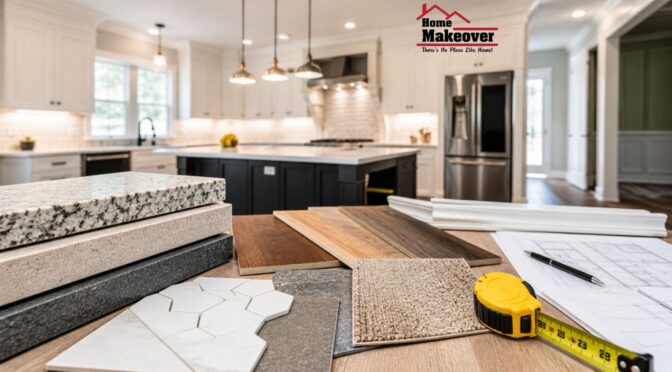
How to Choose High-Quality Materials for a Home Remodeling Project in Southern Indiana & Louisville

A successful Home Remodeling Project is not simply about choosing the most attractive tile, countertop, flooring, or fixtures. The materials you select have a direct impact on how your home looks, performs, ages, and holds up to everyday use.

This matters especially in Southern Indiana and Louisville, where homes experience seasonal temperature changes, humidity, heavy rainfall, and regular fluctuations between indoor and outdoor conditions. A material that looks impressive in a showroom may not necessarily be the right choice for a busy kitchen, moisture-prone bathroom, high-traffic hallway, or exterior application.

Homeowners also face another challenge: the enormous range of products available today. There are multiple grades of flooring, cabinets, countertops, insulation, windows, roofing products, plumbing fixtures, and finishes. Price alone rarely tells you which option offers the best value.

The better approach is to evaluate materials according to performance, application, maintenance, material durability, renovation quality, and long-term value.

Whether you are planning a kitchen update, bathroom renovation, basement finishing, whole-home renovation, or another improvement, this guide explains how to make informed material decisions. It also covers what experienced home improvement contractors in Louisville and professionals providing home remodeling services in Southern Indiana typically consider before recommending a product.

Why Materials Matter in a Home Remodeling Project

Materials are one of the biggest long-term decisions you will make during a renovation.

Paint can be changed relatively easily. A cabinet finish can sometimes be replaced. But replacing poorly selected flooring, countertops, windows, siding, insulation, or plumbing components can require substantial labor and additional disruption.

High-quality materials can contribute to:

  • Better everyday performance
  • Longer service life
  • Easier maintenance
  • Improved moisture resistance
  • Greater resistance to wear and impact
  • Better appearance over time
  • Fewer premature repairs
  • Improved energy performance in appropriate applications
  • Stronger long-term value

However, “high quality” does not automatically mean “most expensive.”

A premium material can be unnecessary for a particular application, while a budget product can become expensive if it needs frequent repairs or replacement.

The objective is to select the right material for the right application.

Materials: Start With How Your Home Will Be Used

Before comparing brands or finishes, consider how the room actually functions.

A material that works beautifully in a rarely used guest bathroom may perform poorly in a family bathroom used several times every day.

Consider Traffic and Daily Wear

Ask yourself:

  • How many people use this space?
  • Are there children or pets?
  • Will furniture frequently move across the floor?
  • Is the room exposed to water?
  • Will food, grease, or cleaning chemicals contact the surfaces?
  • How frequently will the area need cleaning?
  • Is the space likely to change purpose later?

For example, a homeowner renovating a kitchen may fall in love with a delicate surface because of its appearance. But if the kitchen receives heavy daily use, a more stain-resistant and impact-resistant option may be the better investment.

The same principle applies to flooring. A visually attractive floor is not necessarily a practical floor for an entryway where wet shoes, grit, and heavy foot traffic are common.

Remodeling: Match Materials to Southern Indiana and Louisville Conditions

Regional conditions should influence material selection.

Southern Indiana and Louisville experience four distinct seasons, including cold winter temperatures, hot and humid summers, and periods of significant rainfall. These conditions can affect building materials and the way assemblies perform.

For exterior or moisture-sensitive applications, contractors should consider:

  • Moisture exposure
  • Temperature fluctuations
  • Expansion and contraction
  • Drainage
  • Ventilation
  • UV exposure
  • Freeze-thaw conditions
  • Local construction requirements

For example, exterior materials need to tolerate repeated environmental exposure rather than simply look good immediately after installation.

Inside the home, humidity can also influence materials. Bathrooms, kitchens, laundry rooms, and basements require greater attention to moisture management than dry living areas.

This is why an experienced professional does not recommend materials solely from a catalogue. The location, application, installation method, and surrounding building system all matter.

Quality: Understand What You Are Actually Paying For

One of the most common mistakes homeowners make is assuming that a higher price automatically means higher quality.

Instead, look at what the price represents.

For flooring, quality might relate to:

  • Wear resistance
  • Core construction
  • Finish quality
  • Water resistance
  • Dimensional stability
  • Manufacturer specifications
  • Warranty coverage

For cabinets, consider:

  • Box construction
  • Joinery
  • Drawer construction
  • Hardware quality
  • Door materials
  • Finish durability
  • Adjustability
  • Warranty

For countertops, examine:

  • Material composition
  • Thickness
  • Surface characteristics
  • Stain resistance
  • Heat resistance
  • Maintenance requirements
  • Edge fabrication
  • Installation requirements

A professional contractor should be able to explain why a particular material is appropriate, rather than simply saying that it is “better.”

If the explanation focuses only on price or appearance, ask more questions.

Construction: Look Beyond the Product

Even excellent materials can perform poorly when they are installed incorrectly.

This is particularly important because homeowners sometimes spend most of their time comparing products while giving insufficient attention to installation.

For example, a high-quality waterproof flooring product can still experience problems if the subfloor is improperly prepared. A premium tile can crack if the substrate or installation system is unsuitable. High-end windows may not perform as expected if they are poorly installed or improperly flashed.

This is where construction standards and workmanship become important.

Before approving a material, ask:

  1. What preparation does the product require?
  2. Is the existing surface suitable?
  3. Are special installation methods necessary?
  4. What moisture-control measures are required?
  5. Does the manufacturer specify particular adhesives, fasteners, underlayments, or substrates?
  6. What maintenance will the finished installation require?

Material quality and installation quality should be considered together.

Home: Choose Materials That Fit the Existing Property

A remodeling decision should also respect the home’s existing architecture.

Southern Indiana and Louisville contain a wide range of housing styles and construction eras. A material that works well in a modern new-build aesthetic may look out of place in an older traditional home.

Before selecting finishes, consider:

  • Existing architectural details
  • Window and door styles
  • Flooring transitions
  • Trim profiles
  • Cabinet proportions
  • Exterior materials
  • Natural light
  • Existing colors and textures

This does not mean an older home must look traditional. Modern materials can work extremely well in older properties when they are integrated thoughtfully.

The goal is not to make every component identical. It is to create a finished result that feels intentional.

Durability: Prioritize the Areas That Take the Most Abuse

Not every room needs the same level of durability.

A useful strategy is to divide the project into high-wear, medium-wear, and low-wear areas.

High-Wear Areas

These may include:

  • Kitchens
  • Entryways
  • Mudrooms
  • Main hallways
  • Family rooms
  • Frequently used bathrooms

Prioritize stain resistance, impact resistance, easy maintenance, and appropriate moisture resistance.

Medium-Wear Areas

Bedrooms, home offices, and guest spaces may not require the same specifications.

You can often prioritize appearance and comfort while still selecting reliable materials.

Low-Wear Areas

Decorative spaces or rooms used occasionally may allow greater flexibility in material selection.

This approach can help control the overall budget without sacrificing performance where it matters most.

Prioritize the Areas That Take the Most Abuse

Premium Building Materials: When Are They Worth the Cost?

Premium building materials can be worthwhile, but they should solve a specific problem.

Consider paying more when the upgraded material provides a meaningful benefit such as:

  • Longer expected service life
  • Better moisture resistance
  • Improved energy performance
  • Greater resistance to heavy use
  • Easier maintenance
  • Better warranty protection
  • Superior compatibility with the existing structure

For example, investing in a durable countertop in a heavily used kitchen may make sense because replacing it later involves significant labor and disruption.

On the other hand, paying substantially more for a decorative finish in a low-use room may not provide an equivalent practical benefit.

A useful question is:

“What measurable benefit am I receiving for the additional cost?”

If the answer is unclear, investigate further.

Remodeling Products: Compare Specifications, Not Just Appearance

Showrooms are designed to make products look appealing. That is useful, but appearance should be only one part of your evaluation.

When comparing remodeling products, look for:

Manufacturer Specifications

Specifications can reveal information that is difficult to determine visually.

Depending on the product, check for:

  • Dimensions
  • Material composition
  • Performance ratings
  • Moisture resistance
  • Load ratings
  • Installation requirements
  • Cleaning instructions
  • Warranty terms

Warranty Details

A warranty is not a guarantee that something will never fail.

Read the actual conditions.

Check:

  • What is covered?
  • For how long?
  • Is labor included?
  • Are installation errors excluded?
  • Does professional installation have specific requirements?
  • Are certain cleaning products prohibited?

A long warranty is useful only when you understand what it actually protects.

Material Durability: Think About Maintenance, Not Just Lifespan

Durability is more than surviving for many years.

A material may technically last a long time but require demanding maintenance to remain attractive.

When evaluating a product, ask:

How much work will this material require from me?

For example, homeowners should consider:

  • Routine cleaning
  • Sealing requirements
  • Refinishing
  • Special cleaning products
  • Sensitivity to scratches
  • Resistance to staining
  • Replacement of individual components

A slightly more expensive product that requires substantially less maintenance may provide better practical value over its useful life.

Renovation Quality: Installation Can Make or Break Materials

A high-quality renovation is a complete system.

The contractor needs to understand how different components interact.

Consider a bathroom renovation. Tile is only one component. The overall result also depends on:

  • Substrate preparation
  • Waterproofing
  • Drainage
  • Tile layout
  • Grout selection
  • Sealants
  • Ventilation
  • Plumbing
  • Fixtures
  • Transitions

If one critical component is neglected, the performance of the entire installation can suffer.

The same principle applies to kitchens, basements, flooring installations, exterior renovations, and additions.

This is why homeowners researching residential home remodeling in Southern Indiana should evaluate both the proposed materials and the contractor’s approach to installation.

Long-Term Value: Don’t Choose Materials Based Only on Today’s Price

A renovation should be evaluated over its expected useful life.

Imagine two flooring options:

  • Option A costs less initially but may require replacement sooner and needs more maintenance.
  • Option B costs more but provides better durability, easier maintenance, and a longer expected service life.

The cheaper option may not actually be the less expensive choice over time.

A simple way to evaluate material value is to consider:

Initial cost + installation + maintenance + likely repairs + potential replacement

This does not produce a perfect financial calculation, but it provides a better framework than comparing purchase prices alone.

Long-term value is particularly important for materials that are difficult or expensive to replace.

Common Mistakes Homeowners Make When Selecting Materials

Choosing Based Only on Color

Color matters, but it tells you very little about performance.

Always evaluate specifications and maintenance requirements before making the final decision.

Selecting the Cheapest Product

The lowest initial price can sometimes result in higher long-term costs.

Ask why the product is less expensive and whether the difference affects durability or installation.

Ignoring Installation Requirements

Some products require specific substrates, adhesives, fasteners, underlayments, or preparation methods.

Ignoring those requirements can create performance problems.

Buying Materials Before Final Measurements

Ordering materials too early can create unnecessary waste or delays if dimensions change during demolition or preparation.

Assuming Trends Equal Quality

A material can be fashionable without being appropriate for your home.

Prioritize performance first, then aesthetics.

Failing to Check Availability

A product that is difficult to source can delay a project if replacement pieces or additional quantities become necessary.

Ask about lead times and product availability before committing.

Expert Advice: Questions to Ask Before You Buy

Before approving materials for your Home Remodeling Project, ask your contractor:

  1. Why is this material appropriate for this particular room?
  2. What alternatives did you consider?
  3. How does this product perform under local climate conditions?
  4. What maintenance will it require?
  5. What happens if part of the material needs to be replaced later?
  6. Is the product readily available?
  7. Are there manufacturer-specific installation requirements?
  8. What preparation is needed before installation?
  9. What does the warranty actually cover?
  10. What is the expected service life under normal residential use?

An experienced contractor should welcome these questions.

Good professionals understand that homeowners are making a significant investment and deserve to understand the reasoning behind material recommendations.

A Practical Material Selection Process

If you are preparing for a renovation, use this five-step process.

Step 1: Define the Function

Determine how the room will be used and what stresses the materials will experience.

Step 2: Identify Environmental Conditions

Consider moisture, temperature changes, sunlight, ventilation, and other relevant factors.

Step 3: Establish Your Budget

Create a realistic budget that includes both material and installation costs.

Step 4: Compare Performance

Evaluate durability, maintenance, warranties, specifications, and expected service life.

Step 5: Confirm Installation Compatibility

Before purchasing, make sure the material is compatible with the existing structure and planned installation method.

This process helps prevent decisions based entirely on showroom appearance or initial price.

How to Balance Appearance, Performance, and Budget

You do not have to choose between a beautiful home and a durable home.

The strongest remodeling decisions balance three factors:

Appearance + Performance + Cost

If you focus only on appearance, you may choose products that are difficult to maintain.

If you focus only on performance, you may end up with a finished space that does not reflect your preferences.

If you focus only on price, you may compromise longevity.

Instead, identify where your budget matters most.

For example, you might invest more in:

  • Kitchen cabinetry
  • Countertops
  • Primary bathroom surfaces
  • High-traffic flooring
  • Exterior materials
  • Energy-related improvements

And control costs through carefully selected finishes in lower-impact areas.

This creates a more balanced renovation without unnecessarily increasing the entire project budget.

Final Takeaway: Choose Materials for the Life of Your Home

The best material for a Home Remodeling Project is not necessarily the most expensive, newest, or trendiest option.

It is the material that fits the home’s structure, the room’s purpose, the local environment, your maintenance expectations, and your long-term budget.

When evaluating materials, look beyond appearance and price. Consider material durability, construction standards, renovation quality, maintenance, installation requirements, and long-term value.

Whether you are researching home remodeling services in Southern Indiana, comparing home improvement contractors in Louisville, or planning residential home remodeling in Southern Indiana, taking the time to understand your material choices can make the entire renovation more successful.

A well-planned project combines good design with appropriate products and sound installation practices. That approach can help your remodeled space remain attractive, functional, and dependable for years to come.

FAQS

1. What should I consider when choosing materials for a home renovation?

Start with the room’s function, moisture exposure, traffic level, maintenance requirements, expected lifespan, installation requirements, and budget. A suitable material should perform well under the actual conditions it will experience.

For example, a busy family kitchen requires different material considerations than a rarely used guest room. Discussing these conditions with a qualified remodeling professional can help narrow the options.

2. Are premium materials always better for a remodeling project?

No. Premium products can offer advantages, but the most expensive option is not automatically the most appropriate.

A higher-priced product is worth considering when it provides a meaningful improvement in durability, maintenance, performance, warranty coverage, or service life. The key is matching the product to the application rather than paying for features you do not need.

3. How does Southern Indiana and Louisville’s climate affect material selection?

Seasonal temperature changes, humidity, rainfall, and freeze-thaw conditions can affect different materials, particularly exterior products and moisture-sensitive assemblies.

Interior spaces such as bathrooms, kitchens, laundry rooms, and basements also require careful consideration of moisture management. Contractors should evaluate the complete installation rather than choosing products in isolation.

4. Should I buy remodeling materials myself?

It depends on the project and contractor arrangement.

Homeowners can sometimes purchase selected finishes themselves, but doing so without understanding quantities, specifications, lead times, compatibility, or installation requirements can create problems.

For many projects, it is more efficient to coordinate material procurement with the remodeling team, particularly for products that require professional installation or have manufacturer-specific requirements.

5. How can I tell whether a contractor recommends quality materials?

Ask the contractor to explain why a particular material is being recommended.

A knowledgeable professional should be able to discuss performance, durability, maintenance, installation requirements, warranty considerations, and alternatives.

Be cautious if recommendations are based only on statements such as “this is the best” without a clear explanation of how the product fits your project.

How to Plan a Remodeling Budget in Louisville & Southern Indiana Without Going Overboard

Remodeling a home can be one of the most rewarding improvements a homeowner makes, but it can also become difficult to manage when the original plan keeps changing. A project that begins with a clear vision can gradually expand as new ideas, material selections, hidden conditions, and unexpected decisions enter the picture.

For homeowners researching a home remodeling budget in Louisville, the challenge is not simply determining what a renovation might cost. The more important challenge is creating a financial framework that remains practical throughout the project.

The same principle applies to homeowners considering home renovation services in Southern Indiana. Whether you are updating a kitchen, renovating a bathroom, improving several living areas, or completing a larger whole-home renovation, good planning can make the process considerably easier to control.

A well-planned Remodeling Budget does not attempt to predict every possible event. Instead, it establishes priorities, defines the scope, accounts for uncertainty, and creates a process for making decisions when circumstances change.

This guide explains how homeowners can approach remodeling budget planning more strategically, what commonly causes projects to drift, and how to work effectively with home improvement contractors in Louisville without losing control of the original vision.

Budget Planning Should Begin Before You Choose Materials

Many homeowners begin their renovation by looking at flooring, countertops, cabinets, fixtures, paint colors, appliances, and other finishes.

While product research is useful, it should not be the first stage of financial planning.

The first step is understanding the project itself.

Ask:

  • What problem is the renovation supposed to solve?
  • Which areas of the home need improvement?
  • What needs to change for the home to function better?
  • Which improvements are essential?
  • Which features are preferences rather than necessities?
  • Is the goal improved functionality, appearance, comfort, durability, or a combination?
  • Are structural, electrical, plumbing, or other technical changes likely to be involved?

These questions establish the foundation of the project.

For example, a homeowner may initially describe a project as a kitchen renovation. However, after considering how the space is actually used, the real project may involve improving storage, changing the workflow, updating lighting, addressing outdated electrical components, improving ventilation, and replacing worn finishes.

The more clearly the underlying goals are defined, the easier it becomes to decide where the Remodeling Budget should be concentrated.

Remodeling Scope Is the Foundation of Financial Control

One of the most common reasons remodeling projects become difficult to manage is scope expansion.

Scope expansion occurs when additional work is gradually added after the original project has already been established.

A homeowner might begin with a bathroom renovation and later decide to replace adjacent flooring. Then they may consider repainting another room, replacing a door, adding lighting, or modifying storage.

None of these individual decisions necessarily seems significant. The problem is that several small additions can collectively change the character of the project.

Before construction begins, create a clear scope of work.

The scope should identify:

  • Areas included in the renovation
  • Demolition requirements
  • Layout changes
  • Construction work
  • Electrical requirements
  • Plumbing requirements
  • Heating or cooling considerations where relevant
  • Cabinetry and built-ins
  • Flooring
  • Lighting
  • Fixtures
  • Appliances
  • Painting and finishing
  • Cleanup and disposal
  • Any known exclusions

This does not mean every product must be selected immediately.

It means the boundaries of the project should be understood.

A clearly defined scope allows your contractor to develop a more useful remodeling estimate and gives you a reference point whenever a new idea comes up.

Costs Should Be Organized by Priority

A useful remodeling plan separates expenses according to importance rather than treating every feature equally.

Start with the elements that directly affect safety, function, durability, and the intended purpose of the renovation.

For example, during a kitchen remodel, functional cabinetry, appropriate electrical work, adequate lighting, plumbing requirements, and durable surfaces may take priority over decorative upgrades.

During a bathroom renovation, waterproofing, ventilation, plumbing, drainage, and appropriate installation practices may deserve greater attention than cosmetic accessories.

This approach helps homeowners make rational decisions when trade-offs become necessary.

A useful priority system can include:

Essential work

These are items that are fundamental to the project and should remain part of the plan.

Functional improvements

These make the space work better and can have a meaningful effect on everyday use.

Design enhancements

These improve appearance, personalization, or overall finish quality.

Optional upgrades

These are desirable but can potentially be postponed without affecting the core purpose of the renovation.

This structure prevents optional features from consuming resources that should be reserved for essential work.

Estimate Quality Matters More Than a Single Number

A remodeling estimate should help you understand the project, not simply provide a total figure.

When reviewing estimates from contractors, look beyond the final amount.

Consider whether the proposal explains:

  • What work is included
  • What materials are included
  • Which items are allowances
  • What preparation is required
  • Which trades are involved
  • What is specifically excluded
  • What assumptions were made
  • How changes will be handled
  • How unforeseen conditions will be communicated

Two estimates can appear very different because they are based on different scopes.

For example, one proposal may include extensive preparation and finishing while another may assume that certain work will be handled separately.

This is why comparing contractors solely by the lowest estimate can be misleading.

The better question is:

“Am I comparing equivalent scopes of work?”

A detailed proposal can make that comparison much easier.

Contractor Selection Should Include Communication Skills

Choosing among home improvement contractors in Louisville involves more than comparing experience, availability, and project photographs.

Communication is an important part of budget management.

A contractor should be able to explain why certain work is necessary, what assumptions were used in the estimate, where uncertainty exists, and how changes will be handled.

Before hiring, ask practical questions such as:

  • How do you handle unexpected conditions?
  • How are changes documented?
  • When will I be informed about additional work?
  • Which selections need to be finalized before construction?
  • Which portions of the estimate are based on allowances?
  • How do you coordinate different trades?
  • How do you communicate schedule changes?
  • What information do you need from me before work begins?

Pay attention not only to the answers but also to how clearly the contractor explains them.

A renovation involves many decisions. Clear communication can prevent misunderstandings from becoming financial problems later.

Contractor Selection Should Include Communication Skills

Labor Pricing Depends on More Than Time on the Job

Labor pricing is influenced by the complexity and coordination involved in a renovation.

A project requiring straightforward replacement work is fundamentally different from one involving structural modifications, detailed finish carpentry, plumbing relocation, electrical upgrades, difficult demolition, or coordination among several specialty trades.

Labor can also be affected by site accessibility and the existing condition of the property.

This is particularly relevant when renovating older homes.

Existing construction may contain previous modifications, outdated systems, concealed damage, or installation methods that require additional attention.

Homeowners should therefore avoid assuming that labor can be judged simply by the number of days workers are physically present.

The work before and after installation can also matter.

Preparation, demolition, protection of existing areas, material handling, installation, adjustment, finishing, inspection, and cleanup may all contribute to the overall labor involved.

Material Inflation Makes Early Planning More Important

Material inflation and product availability can affect remodeling decisions.

Prices and availability for building materials, fixtures, appliances, cabinetry, and specialty products can change over time. Products may also be discontinued, delayed, or replaced with newer versions.

This is why homeowners should avoid building their entire plan around old renovation examples found online.

Instead:

  • Check current product availability.
  • Confirm lead times.
  • Ask whether selections are readily available.
  • Avoid waiting until the last minute for major selections.
  • Understand whether an allowance reflects the type of product you actually want.
  • Keep alternative products in mind for items with uncertain availability.

Early planning reduces the likelihood of making rushed decisions later.

It also makes it easier to identify which selections are important enough to finalize before construction starts.

A Contingency Fund Protects the Remodeling Plan

Every renovation involves some degree of uncertainty.

A contingency fund is designed to provide financial flexibility when legitimate unforeseen conditions arise.

It should not be treated as money available for spontaneous upgrades.

Potential unexpected conditions can include:

  • Hidden moisture damage
  • Deteriorated framing
  • Damaged subflooring
  • Previously concealed plumbing issues
  • Outdated electrical components
  • Unexpected demolition complications
  • Existing construction that does not match assumptions
  • Repairs required after opening an enclosed area

The appropriate contingency depends on the type of renovation and the level of uncertainty involved.

A project involving extensive demolition in an older property generally has different risks from a limited cosmetic update.

The important principle is to establish contingency before work begins and protect it throughout the project.

If the contingency is spent on optional design upgrades early in the renovation, it cannot perform its intended purpose later.

Planning for Existing Home Conditions

New construction and remodeling are not the same.

When building a new home, much of the construction environment is known before work begins. Remodeling involves working with an existing structure.

That structure has a history.

Previous homeowners may have altered rooms, added electrical circuits, moved plumbing, enclosed spaces, replaced materials, or completed repairs that are not immediately visible.

Once demolition begins, the contractor may discover conditions that could not reasonably be confirmed beforehand.

This is one reason homeowners should be cautious about expecting an exact final outcome before existing conditions are fully understood.

The best approach is not to assume that everything will go wrong.

Instead, recognize that some uncertainty exists and create a budget and decision process capable of responding to it.

Remodeling Decisions Should Be Made Before They Become Urgent

One of the easiest ways for a project to become financially difficult is to delay important decisions until construction is already underway.

When contractors are waiting for selections, homeowners may feel pressured to choose quickly.

Rushed decisions can lead to:

  • Choosing products without sufficient research
  • Selecting alternatives that do not fit the original design
  • Paying more for expedited options
  • Changing previously completed work
  • Creating coordination problems with other trades

Whenever possible, establish major selections before they are needed on site.

Depending on the project, this may include:

  • Cabinets
  • Flooring
  • Countertops
  • Plumbing fixtures
  • Lighting
  • Appliances
  • Doors
  • Hardware
  • Tile
  • Paint finishes

Not every detail needs to be decided at the same time, but decisions should be scheduled rather than left until the last moment.

Use a Change Management Process

Changes are sometimes unavoidable.

The problem is not necessarily the existence of changes. The problem is approving changes without understanding their broader effect.

Before approving a modification, consider four questions:

What is changing?

Clearly identify the new work or product.

Why is it changing?

Determine whether the change is necessary, functional, aesthetic, or simply a new preference.

What else does it affect?

A change to one component may affect another trade, material, installation method, or schedule.

What is the documented financial impact?

The homeowner should understand the effect before approving the change.

This process creates accountability for both the homeowner and contractor.

It also makes it easier to distinguish legitimate unforeseen work from optional project expansion.

Cost Planning Should Include the Entire Project Lifecycle

Homeowners sometimes concentrate entirely on construction and forget about related expenses.

Depending on the renovation, consider whether the project may involve:

  • Temporary living arrangements
  • Storage
  • Moving furniture
  • Appliance relocation
  • Temporary kitchen arrangements
  • Additional cleaning
  • Replacement of damaged or incompatible items
  • Post-construction maintenance
  • Landscaping or exterior restoration after certain projects

These considerations may not be part of the contractor’s construction scope.

Including them in your overall planning prevents unrelated project expenses from becoming unexpected financial pressure.

Financing Options Should Support the Plan

Some homeowners use financing options to fund a renovation.

If financing is part of your strategy, treat it as a financial tool rather than an invitation to expand the project.

Consider:

  • Repayment obligations
  • Interest costs
  • Loan terms
  • Cash-flow requirements
  • Existing financial commitments
  • Emergency savings
  • Potential changes to the project scope

A renovation should remain financially comfortable after considering the financing structure.

It can be useful to establish your project priorities first and then determine how financing fits those priorities.

Do not reverse the process by deciding how much you can borrow and then designing the renovation around that amount.

Southern Indiana Homeowners Should Apply the Same Planning Principles

Homeowners seeking home renovation services in Southern Indiana can use the same fundamental approach.

Whether the property is in Southern Indiana or Louisville, the core budgeting principles remain consistent:

  • Define the scope.
  • Identify priorities.
  • Understand the existing property.
  • Review the contractor’s estimate carefully.
  • Confirm allowances.
  • Consider material availability.
  • Establish contingency.
  • Document changes.
  • Track decisions.
  • Communicate throughout construction.

The specific property, construction conditions, design goals, and contractor scope will determine the details.

The important point is that a renovation budget should be customized to the actual project rather than copied from a generic online remodeling calculator or another homeowner’s experience.

Common Mistakes That Make a Remodeling Budget Difficult to Control

Several habits repeatedly create problems during renovations.

Starting without a defined scope

Without clear boundaries, it becomes difficult to determine whether a new request is part of the original project or an additional expense.

Choosing a contractor entirely because of the lowest estimate

A low initial figure may reflect differences in scope, allowances, exclusions, or assumptions.

Ignoring allowances

An allowance that does not reflect realistic product preferences can make the budget appear more predictable than it really is.

Using contingency for upgrades

This eliminates protection against genuine unforeseen conditions.

Changing the layout after construction starts

Layout changes can affect several trades and create additional work beyond the original modification.

Making too many decisions during construction

Last-minute decisions increase the likelihood of rushed or inconsistent choices.

Failing to track changes

Even small additions should be documented so the homeowner understands their cumulative effect.

Expert Advice for a More Predictable Remodeling Experience

A practical approach to remodeling is to think of the budget as a living document.

The original plan establishes the framework, but the budget should be reviewed as decisions are finalized.

Keep track of:

  • Original scope
  • Approved changes
  • Material selections
  • Allowances
  • Remaining contingency
  • Completed work
  • Pending decisions
  • Upcoming commitments

You do not need a complicated financial system.

A simple, consistently maintained record can provide much better visibility than relying on memory.

It is also useful to schedule regular project conversations with your contractor.

Ask what decisions are coming next, whether anything has changed, and whether there are newly discovered conditions that could affect the plan.

This creates an opportunity to address issues while they are still manageable.

How Home Makeover Pro Approaches Remodeling Planning

At Home Makeover Pro, the goal of a remodeling conversation should not be limited to producing an estimate.

A successful renovation begins with understanding what the homeowner wants to accomplish, what the existing property can support, and which decisions are most important to the overall project.

Good planning means discussing the scope clearly, identifying assumptions, explaining potential uncertainties, and establishing a practical process for handling changes.

For homeowners considering a home remodeling budget in Louisville or exploring renovation possibilities in Southern Indiana, this approach can provide a stronger foundation for making informed decisions.

The objective is not to promise that a renovation will never encounter an unexpected condition.

The objective is to make sure homeowners understand their project well enough to respond intelligently when something changes.

Final Takeaway

A well-controlled Remodeling Budget is built around planning rather than guesswork.

Start by defining what the renovation needs to accomplish. Separate essential improvements from optional upgrades. Establish a clear scope before comparing estimates. Review allowances and exclusions carefully. Understand how labor and materials contribute to the project. Maintain a contingency fund for genuine uncertainty and use a documented process for changes.

Most importantly, stay involved in the decision-making process.

Homeowners do not need to control every construction detail, but they should understand what is being built, what decisions are approaching, and how changes affect the overall plan.

Whether you are planning a renovation in Louisville or researching home renovation services in Southern Indiana, thoughtful cost planning can help turn a complicated remodeling project into a more organized and manageable experience.

The strongest remodeling budget is not the one that predicts every detail perfectly. It is the one that gives you a clear plan, realistic priorities, and enough flexibility to make informed decisions when the project evolves.

Frequently Asked Questions

How early should I start planning my remodeling budget?

Begin budget planning before selecting final materials or committing to a contractor. Start by defining the project’s goals, identifying the areas involved, establishing priorities, and understanding the existing condition of the home.

Once the scope is clearer, you can obtain more meaningful estimates and begin researching material selections. Early planning also gives you time to identify decisions that could affect the scope before construction begins.

Why is a contingency fund important for a remodeling project?

A contingency fund provides financial flexibility for legitimate conditions that could not reasonably be identified before construction.

Remodeling involves existing structures, and some conditions remain concealed until materials are removed. A contingency helps address those situations without immediately disrupting the entire project.

It should remain separate from discretionary upgrade spending.

How can I compare remodeling contractors fairly?

Compare contractors based on equivalent scopes rather than simply comparing final totals.

Review what each proposal includes and excludes, the materials and allowances being used, preparation requirements, trade coordination, change-order procedures, and assumptions about the existing property.

A detailed proposal may initially appear more complex, but that detail can make it easier to understand what you are actually receiving.

What should I do if I want to make a change during construction?

First determine whether the change is necessary or optional. Then ask the contractor how it affects the scope, materials, labor, schedule, and other trades.

Have the change documented before approving it. This prevents misunderstandings and allows you to consider its impact on the overall Remodeling Budget rather than treating it as an isolated decision.

How can I prevent my renovation from gradually becoming larger than planned?

Establish priorities before construction begins and maintain a written scope.

When new ideas arise, place them on a separate upgrade list rather than automatically adding them to the active project. Review the cumulative effect of proposed changes before approving them.

Most importantly, protect your contingency and use it only for genuine uncertainty. This creates a clear distinction between necessary unexpected work and optional improvements.