



When planning a major remodel, one of the most important decisions is not simply what you want your home to look like, but where your money should go. A luxury renovation can involve imported stone, custom cabinetry, designer fixtures, architectural millwork, premium flooring, and highly engineered windows. A standard remodel may use dependable, widely available materials that deliver attractive results at a considerably lower cost.
So, which approach makes more sense?
For homeowners considering luxury home renovation in Louisville, the answer is rarely “choose the most expensive option.” The better question is: Which materials provide the right combination of performance, appearance, durability, maintenance, and long-term value for your home?
This distinction matters because a high-end material is not automatically a better investment. In some rooms, upgrading materials can dramatically improve everyday living and longevity. In others, a carefully selected mid-range product can deliver nearly the same practical benefit without consuming a large portion of the renovation budget.
This guide explains how experienced homeowners and remodeling professionals can evaluate that difference, with practical examples covering premium finishes, custom materials, remodeling upgrades, craftsmanship, resale value, and renovation budget.
Luxury Home Renovation in Louisville: Where Should Your Money Go?
A successful luxury renovation is built around priorities rather than price tags.
For example, a homeowner renovating a 1990s kitchen may have a $150,000 renovation budget. Spending the entire amount on imported marble and designer appliances may leave too little for electrical upgrades, plumbing modifications, cabinetry installation, lighting, ventilation, or skilled labor.
That creates an important principle:
Luxury is not about making every component expensive. It is about making the right components exceptional.
A thoughtful Upscale Home Renovation in Louisville often combines different material tiers. A homeowner might choose:
- Custom hardwood cabinetry
- Durable engineered quartz countertops
- High-quality plumbing fixtures
- Premium architectural lighting
- Standard but reliable under-cabinet hardware
- Professionally installed hardwood flooring
- Energy-efficient windows where they provide measurable benefits
This creates a balanced result without treating every line item as an opportunity to spend more.
The most valuable renovation decisions usually consider three things:
- How often the feature will be used
- How difficult or expensive it would be to replace later
- Whether the upgrade provides a meaningful improvement in performance or appearance
Luxury Materials: When Premium Finishes Are Worth It
Premium finishes can transform the character of a home. However, their value depends heavily on where they are installed and how they will be used.
Consider a primary bathroom. A homeowner may choose natural stone, custom vanity cabinetry, premium plumbing fixtures, heated flooring, and a frameless shower enclosure.
These upgrades can make sense because the bathroom is used every day and because quality installation can significantly affect waterproofing, durability, maintenance, and visual appeal.
By contrast, using extremely expensive tile inside a small utility room may provide very little additional practical value.
Where Luxury Materials Can Make a Difference?
High-end materials can be particularly worthwhile for:
- Kitchen countertops
- Primary bathroom surfaces
- Custom cabinetry
- Entry flooring
- Feature walls
- Architectural doors
- Hardwood flooring
- Exterior doors and windows
- Built-in storage
- Frequently used plumbing fixtures
The key is not simply selecting a premium product. The installation must match the material.
A $15,000 stone countertop installed poorly can perform worse visually and functionally than a $6,000 surface installed by an experienced fabricator and contractor.
That is why craftsmanship deserves as much attention as the material itself.
Standard Materials: Quality Does Not Always Mean Luxury
“Standard” is sometimes misunderstood as “cheap.”
That is not necessarily true.
The residential remodeling market contains a large middle tier of products that are durable, attractive, widely tested, and appropriate for most households. Many of these materials provide excellent performance without the premium associated with designer brands or specialty manufacturing.
For example, a quality porcelain tile can provide excellent durability and water resistance in a bathroom without requiring expensive natural stone.
Similarly, a well-designed semi-custom cabinet system can provide strong functionality and attractive finishes at a lower price than fully custom cabinetry.
For homeowners managing costs, this can be an intelligent strategy rather than a compromise.
When Standard Materials Make Sense?
Standard or mid-range materials may be appropriate when:
- The feature receives limited daily use
- The material is easy to replace
- Performance differences between tiers are minor
- The property is likely to be sold relatively soon
- The upgrade has little effect on resale appeal
- The visual difference is difficult to notice
- The premium mainly reflects branding rather than performance
The objective should be to avoid paying luxury prices where they do not create meaningful value.
Materials and Renovation: Compare Performance, Not Just Appearance
Two materials can look almost identical in photographs but behave very differently over time.
When evaluating a product, look beyond color and finish.
Consider:
Durability: How well will the material tolerate daily use?
Maintenance: Does it require sealing, special cleaning, refinishing, or periodic treatment?
Repairability: Can damaged sections be repaired without replacing the entire installation?
Availability: Will replacement materials still be available several years from now?
Installation requirements: Does the product require specialized labor?
Warranty: What does the manufacturer actually cover?
Environmental exposure: Will humidity, sunlight, temperature changes, water, or heavy traffic affect it?
For example, two flooring products may have a similar appearance, but one may require significantly more maintenance. Over ten or fifteen years, that maintenance can become part of the true cost.
This is why material selection should be based on life-cycle value, not only initial purchase price.
Value: Calculate the Long-Term Return on Remodeling Upgrades
A renovation should not be evaluated solely by how much it costs today.
A more useful approach is to consider:
Initial cost + maintenance + repairs + replacement risk − useful life and functional benefit
This is particularly important when comparing premium finishes with standard alternatives.
Imagine two countertop options:
- Option A costs $5,000 installed and is expected to perform reliably for many years.
- Option B costs $10,000 installed and offers better appearance, greater customization, or superior resistance to the homeowner’s specific usage.
The $5,000 difference only makes sense if those additional benefits matter to the homeowner.
For someone who cooks extensively every day, the premium may be justified.
For another homeowner who rarely uses the kitchen, the additional expenditure may provide little practical return.
A Simple Upgrade Test
Before approving an expensive upgrade, ask:
Will I notice the difference every day?
Will it last substantially longer?
Will it reduce maintenance?
Will it solve a specific problem?
Will it improve functionality?
Will it meaningfully affect the home’s appeal to future buyers?
If the answer to most of these questions is no, the upgrade deserves closer scrutiny.
Quality Home Remodeling: Craftsmanship Can Matter More Than Materials
One of the most overlooked factors in an upscale renovation is installation quality.
A premium material cannot compensate for poor workmanship.
This is particularly true for:
- Tile installation
- Cabinet installation
- Flooring
- Trim carpentry
- Stone fabrication
- Waterproofing
- Window installation
- Door fitting
- Painting
- Millwork
- Electrical work
- Plumbing
A luxury bathroom, for example, depends on accurate substrate preparation, waterproofing, correct slopes, precise tile alignment, proper grout joints, and careful fixture installation.
The homeowner may never see the waterproof membrane beneath the tile, but that hidden work can be more important than the tile’s brand.
Why Craftsmanship Protects Your Investment?
Good workmanship reduces the likelihood of:
- Premature material failure
- Water damage
- Uneven flooring
- Cracked grout
- Cabinet alignment problems
- Poor door operation
- Visible finishing defects
- Rework and additional expenses
In practical terms, spending more on a highly skilled installation team can sometimes provide greater value than upgrading from one premium material to an even more expensive alternative.
Renovation Budget: Build a Priority-Based Spending Plan
A realistic renovation budget should not start with product catalogs.
It should start with priorities.
Divide the project into three categories:
Tier 1: Essential
These are components that affect safety, structural integrity, building performance, or long-term reliability.
Examples include:
- Electrical upgrades
- Plumbing corrections
- Structural repairs
- Waterproofing
- Roofing-related work
- HVAC improvements
- Moisture control
- Proper insulation
These should generally take priority over cosmetic upgrades.
Tier 2: High-Impact
These improvements substantially affect daily use or the home’s overall appearance.
Examples include:
- Kitchen cabinetry
- Countertops
- Flooring
- Lighting
- Bathroom fixtures
- Windows
- Interior doors
- Storage solutions
This is often where a luxury renovation creates the strongest visible transformation.
Tier 3: Decorative
These are features that enhance style but may not significantly improve functionality.
Examples include:
- Decorative hardware
- Designer accessories
- Specialty wall treatments
- Highly customized decorative details
- Statement fixtures
These can be excellent additions when the core renovation is already financially sound.
Luxury vs. Standard Materials: A Room-by-Room Strategy
Not every room deserves the same level of investment.
Kitchen
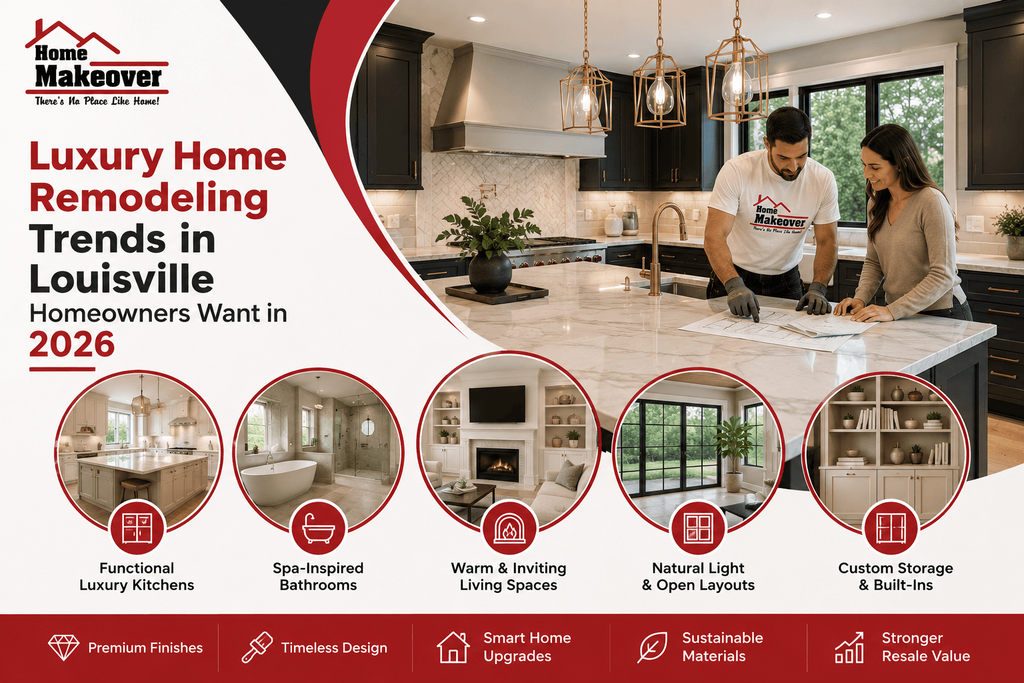
The kitchen is one of the strongest candidates for selective luxury upgrades.
Consider investing in:
- Durable countertops
- Quality cabinetry
- Functional storage
- High-quality hardware
- Good lighting
- Reliable appliances
You may not need the most expensive backsplash tile or imported decorative hardware.
Primary Bathroom
The primary bathroom is another area where premium materials can make a noticeable difference.
Potential investments include:
- Quality shower systems
- Durable stone or porcelain surfaces
- Custom vanity storage
- Heated flooring
- High-quality mirrors and lighting
- Premium hardware
Waterproofing and installation quality should remain priorities.
Living Areas
For living rooms and entertaining spaces, flooring, lighting, built-ins, doors, and architectural details often have greater visual impact than expensive decorative accessories.
A carefully designed fireplace surround or custom built-in can create a stronger impression than several unrelated luxury products.
Bedrooms
Bedrooms generally require less aggressive material spending.
Comfort, acoustics, lighting, flooring, storage, and paint quality can matter more than highly specialized finishes.
Outdoor Areas
Outdoor materials should be evaluated according to Louisville’s seasonal conditions, moisture exposure, maintenance requirements, and expected use.
Durability should take precedence over simply choosing the most expensive appearance.
Resale Value: Does Luxury Remodeling Actually Pay Back?
Homeowners frequently assume that spending more automatically increases resale value.
That is not guaranteed.
A renovation can improve marketability, but the relationship between construction cost and resale value is not one-to-one.
A highly personalized $100,000 renovation does not necessarily add $100,000 to the property’s eventual selling price.
Buyers generally respond more strongly to renovations that improve:
- Functionality
- Condition
- Energy efficiency
- Kitchen and bathroom appeal
- Storage
- Layout
- Natural light
- Overall finish quality
The local market also matters.
A renovation should be appropriate for the surrounding neighborhood and comparable properties. Over-improving a home far beyond the prevailing market can limit the amount of additional value a buyer is willing to recognize.
For homeowners considering luxury home renovation in Louisville, it is therefore useful to distinguish between personal enjoyment value and resale value.
A feature can be worth installing because you personally love it, even if it does not produce a proportional financial return.
That is not a bad investment—it is simply a different kind of return.
Premium Finishes vs. Custom Materials
Premium finishes and custom materials serve different purposes.
A premium finish may involve selecting a higher-quality version of a readily available product.
Custom materials, on the other hand, are often designed, fabricated, or modified specifically for the property.
For example:
Premium: Selecting a high-grade manufactured countertop.
Custom: Commissioning a stone surface with a unique edge profile and unusual dimensions.
Premium: Purchasing high-quality cabinetry from an established manufacturer.
Custom: Having cabinetry fabricated specifically around an unusual wall, ceiling height, appliance arrangement, or storage requirement.
Custom work can create a distinctive result, but it also introduces additional design, fabrication, coordination, and installation costs.
For homeowners seeking an Upscale Home Renovation in Louisville, custom work makes the most sense when the standard solution cannot achieve the desired function or architectural result.
Common Mistakes Homeowners Make
Choosing the Most Expensive Material Automatically
Price is not a substitute for suitability.
A premium product should solve a problem, improve performance, enhance longevity, or create a meaningful aesthetic benefit.
Spending Too Much on Visible Finishes
Homeowners sometimes focus heavily on countertops, fixtures, and flooring while underfunding electrical, plumbing, ventilation, waterproofing, or structural work.
That can create an attractive renovation with hidden weaknesses.
Ignoring Maintenance
A material that looks spectacular during installation may become frustrating if it requires frequent sealing, specialized cleaning, or delicate handling.
Always understand the maintenance requirements before purchasing.
Making Every Room Luxury-Level
A consistent design does not require identical material costs throughout the house.
Selective upgrades often create a more sophisticated result.
Forgetting Installation Costs
Material prices are only part of the project.
Specialty materials can require specialized labor, additional preparation, custom fabrication, shipping, or more complicated installation.
Designing Exclusively for Trends
Luxury renovations should have some longevity.
A timeless foundation combined with carefully selected contemporary accents is often easier to live with than an entire home built around a short-lived trend.
Expert Advice: How to Make Luxury Feel Intentional
A sophisticated renovation usually feels cohesive rather than expensive.
Choose a consistent material palette.
For example, a kitchen might combine:
- Natural or engineered stone
- Warm wood cabinetry
- Brushed metal hardware
- Carefully selected lighting
- Durable flooring
- A restrained backsplash
The result can feel luxurious without requiring every individual component to be the highest-priced option.
Another useful principle is to create focal points.
Instead of using premium materials everywhere, choose two or three locations where craftsmanship and materials receive greater attention.
Examples include:
- A dramatic kitchen island
- A custom fireplace
- A statement entryway
- A primary bathroom shower
- A custom staircase
- A built-in entertainment wall
This approach concentrates investment where people naturally look and interact.
Questions to Ask Before Approving a Material Upgrade
Before committing to a more expensive product, ask your remodeling team:
What exactly am I gaining by upgrading?
Is the improvement functional, aesthetic, or both?
How much additional installation labor is required?
What maintenance does this material require?
How long should it reasonably last?
Can it be repaired?
Is there a comparable alternative with similar performance?
Will the material be appropriate for this home’s market?
Could the same budget produce a greater improvement somewhere else?
These questions can prevent expensive decisions that look impressive on paper but provide limited real-world benefit.
What Makes an Upscale Home Renovation in Louisville Worth the Investment?
A high-quality renovation should feel better to live in, not simply more expensive.
The best projects typically combine:
- Thoughtful space planning
- Durable materials
- Appropriate premium finishes
- Skilled craftsmanship
- Good lighting
- Functional storage
- Reliable mechanical systems
- Cohesive design
- Careful project management
- A realistic renovation budget
For homeowners pursuing Upscale Home Renovation in Louisville, the strongest strategy is often selective luxury.
Spend more where performance, durability, customization, and daily experience justify it. Choose dependable standard materials where the additional premium would have little practical effect.
That balance can produce a home that feels genuinely luxurious without turning the renovation into an uncontrolled spending exercise.
Final Takeaway
The decision between luxury and standard remodeling materials should never be reduced to “expensive is better.”
The right investment depends on how the material performs, how long it will last, how it fits the home’s design, how much maintenance it requires, and how much value it creates for the people living there.
For luxury home renovation in Louisville, the smartest approach is to prioritize the structure and systems first, invest heavily in high-use areas, select premium finishes strategically, and put serious attention into craftsmanship.
A well-planned interior home remodeling project can feel luxurious without requiring every component to carry a luxury price tag. Likewise, experienced home renovation services can help homeowners evaluate where an upgrade is genuinely worthwhile and where a quality standard material is the better financial decision.
Ultimately, the best renovation is not the one with the highest material cost. It is the one where every major investment has a clear purpose—and where the finished home delivers lasting quality, comfort, functionality, and value.
FAQs
1. Are luxury remodeling materials always better than standard materials?
No. Luxury materials can provide superior durability, customization, appearance, or performance, but the difference varies by product. In many situations, a high-quality standard or mid-range material can perform extremely well. The right choice depends on the room, usage, maintenance requirements, expected lifespan, and renovation budget.
2. Which materials are usually worth upgrading during a luxury renovation?
High-use materials are often the best candidates. These can include kitchen countertops, cabinetry, flooring, bathroom fixtures, windows, exterior doors, and frequently used hardware. Structural, electrical, plumbing, waterproofing, and HVAC work should also receive appropriate investment because hidden performance problems can undermine an otherwise beautiful renovation.
3. Do luxury renovations increase resale value in Louisville?
They can improve a home’s appeal and marketability, but the renovation cost is not automatically recovered dollar-for-dollar. Buyers tend to value quality kitchens, bathrooms, functional layouts, good maintenance, attractive finishes, and well-executed improvements. Highly personalized upgrades may provide greater lifestyle value than direct financial return.
4. Is custom cabinetry worth the additional cost?
Custom cabinetry can be worthwhile when the room has unusual dimensions, specialized storage requirements, architectural constraints, or a design that cannot be achieved efficiently with standard products. However, semi-custom cabinetry can provide an excellent balance of quality, appearance, and cost when highly specialized fabrication is unnecessary.
5. How can homeowners control a luxury renovation budget without making the home feel ordinary?
Use selective upgrades rather than upgrading everything. Invest in focal points and high-use areas, choose durable materials where performance matters, maintain a cohesive design palette, and avoid paying premiums solely for brand recognition. Most importantly, protect the budget for skilled installation and essential building systems. Good craftsmanship and thoughtful design can make a home feel significantly more upscale than its material price alone suggests.